



Jupiter Exchange's COO Kash Dhanda has addressed inaccuracies regarding the "zero contagion risk" claims associated with Jupiter Lend. Dhanda acknowledged that asset recollateralization issues exist, a revelation that followed community concerns and criticism from Kamino Finance.
This admission has significant implications for trust and risk management within decentralized finance (DeFi) markets. It also highlights the competitive landscape among lenders and potential vulnerabilities within the Solana ecosystem, particularly concerning asset rehypothecation.
Community Backlash and Competitive Repercussions
Community reaction intensified after Jupiter Exchange removed a controversial claim about its lending model, which had previously promoted "zero contagion risk." Dhanda later clarified in a platform video that Jupiter Lend utilizes recollateralized assets, directly contradicting its initial marketing statements.
In response to these revised claims, Solana's Kamino Finance took the step of blocking Jupiter Lend's migration tool. Kamino cited misleading assertions about Jupiter Lend's risk model as the reason for this action. This development underscores the potential systematic risks that recollateralized assets can introduce, potentially impacting user trust and lending practices across the Solana ecosystem.
Kamino's decision sparked further discussion within the Solana community, raising questions about the integrity of Jupiter Lend's risk models. Kash Dhanda, in a video statement, asserted, "These vaults are indeed isolated," but simultaneously admitted that recollateralization is present. This dual statement has led to varied industry responses concerning transparency standards.
Kash Dhanda, COO of Jupiter, acknowledged the inaccuracy of the "zero contagion risk" claim, stating: "This claim [zero contagion risk] … was inaccurate and that the protocol does rely on rehypothecation to boost yields."
Jupiter Token Performance and Regulatory Scrutiny
The issue with Jupiter Lend's recollateralization echoes historical parallels in DeFi, where undisclosed rehypothecation practices have led to market disruptions. These events bear resemblance to the risks associated with the wildcat banking era.
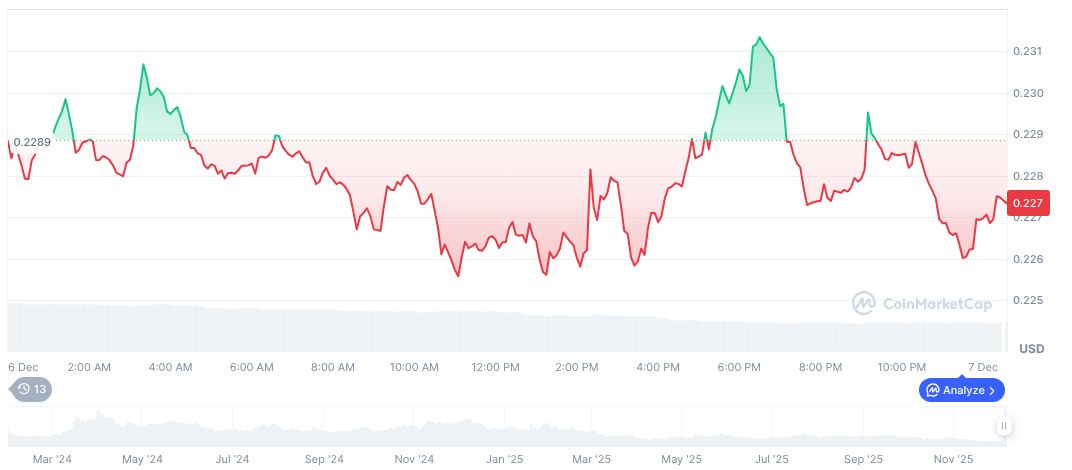
As of December 7, 2025, the Jupiter (JUP) token was trading at $0.23. Over the preceding 30 days, the token experienced a decline of 33.06%. The token currently holds a market capitalization of $712.88 million and has a maximum supply of 7 billion tokens. Trading volume decreased by 37.38% within a 24-hour period, according to CoinMarketCap data.
Industry research suggests that regulatory scrutiny may intensify as platforms re-evaluate their transparency in risk disclosures. As the Solana ecosystem continues to evolve, protocols are expected to adapt their security and risk management practices to align with increasing industry demands.