



- •Bloomberg’s report claims Justin Sun controls over 60% of TRON, raising transparency concerns about network decentralization and investor confidence.
- •Legal disputes with Bloomberg could require Sun and his team to disclose evidence, potentially impacting TRON’s long-term reputation.
A recent report from Bloomberg has triggered new debate in the cryptocurrency world by alleging that Justin Sun controls more than 60% of all TRON (TRX) tokens. The report, based on figures provided by Sun’s own team, brings renewed attention to TRON’s claims of decentralization and the true distribution of its network.
TRON has positioned itself as a decentralized smart contract platform, aiming to advance the decentralization of the internet. However, the suggestion that a single individual maintains majority control over the token supply has caused observers to question whether TRON meets its stated goals. In blockchain systems, decentralization is considered a core value, as it reduces the influence of any single participant and supports the credibility of the network.
After the news broke, the price of TRX displayed volatility, though the reaction has not yet resulted in a prolonged downward trend. Traders are assessing whether the story will translate into lasting reputational effects or if the market will adapt as more information becomes available.
In parallel, Justin Sun is facing legal challenges related to these claims. Courts recently ruled against him in an ongoing case about his holdings and their disclosure. Previous attempts to contest negative coverage in the media have been unsuccessful, and if Sun pursues further legal action against Bloomberg, both parties could be required to present detailed evidence in court. Such a development could further shape market perception.
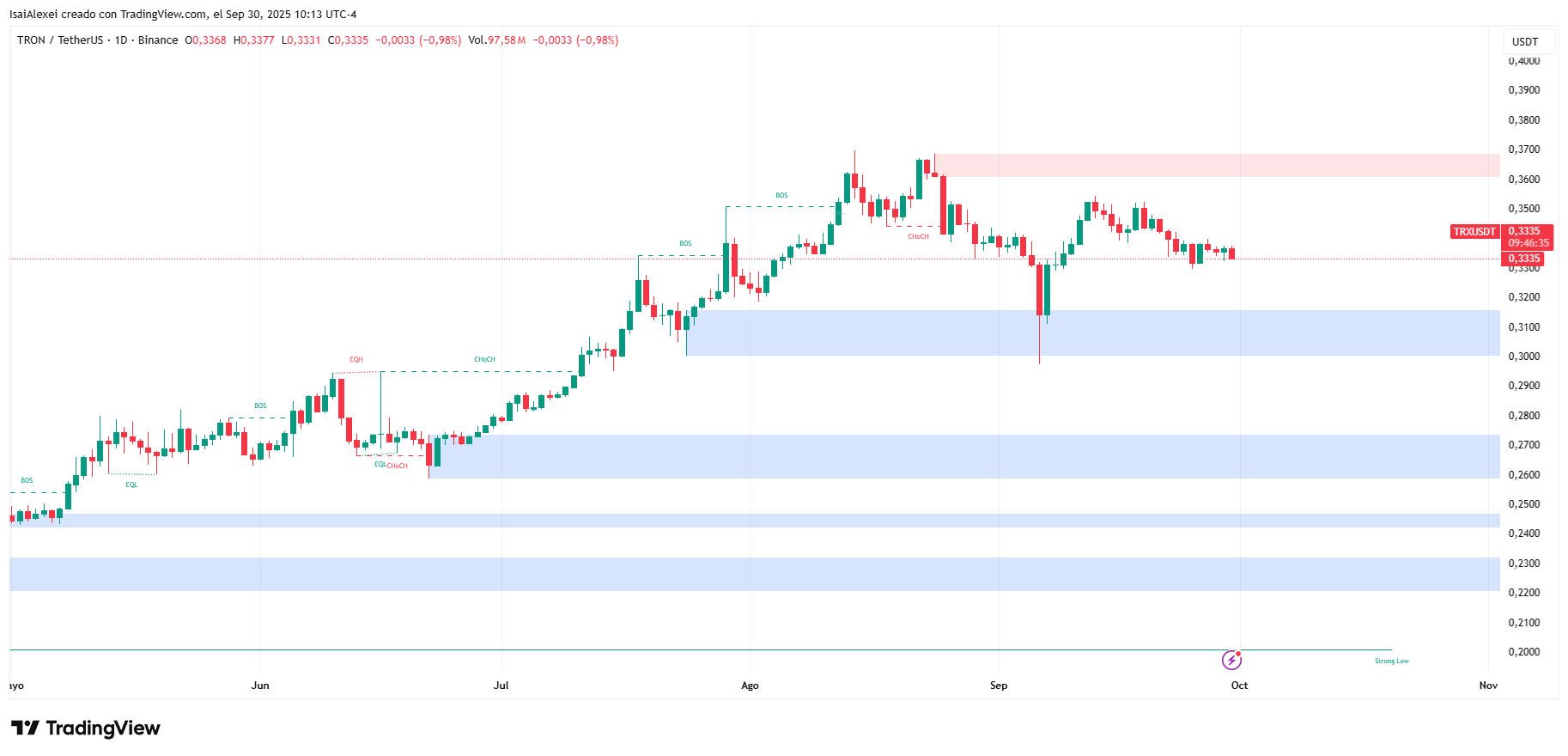
TRON (TRX) is trading at $0.333, down 1.05% in the last 24 hours. On a weekly scale, it has lost 1.95%, while the monthly decline sits at 1.63%. However, TRX has gained 42.5% in the last six months and 113% year‑over‑year, with a market capitalization of $31.58 billion and a 24‑hour trading volume of $593 million.
TRON continues to stand out as a major blockchain for stablecoin settlements, processing over $80 billion in USDT transactions and surpassing Ethereum in transfer volume, averaging 2.3 to 2.4 million daily transactions worth $23–25 billion. This highlights its role as one of the key infrastructures in global digital payments.
Recent headlines reveal controversy around founder Justin Sun, who reportedly controls more than 60% of TRX’s circulating supply, raising centralization concerns. Legal challenges continue as well: a U.S. judge recently denied Sun’s bid to block Bloomberg from publishing details about his crypto holdings.
On the adoption front, TRON integrated PayPal’s PYUSD stablecoin, alongside Avalanche and six other blockchains, marking another step in mainstream financial connectivity.
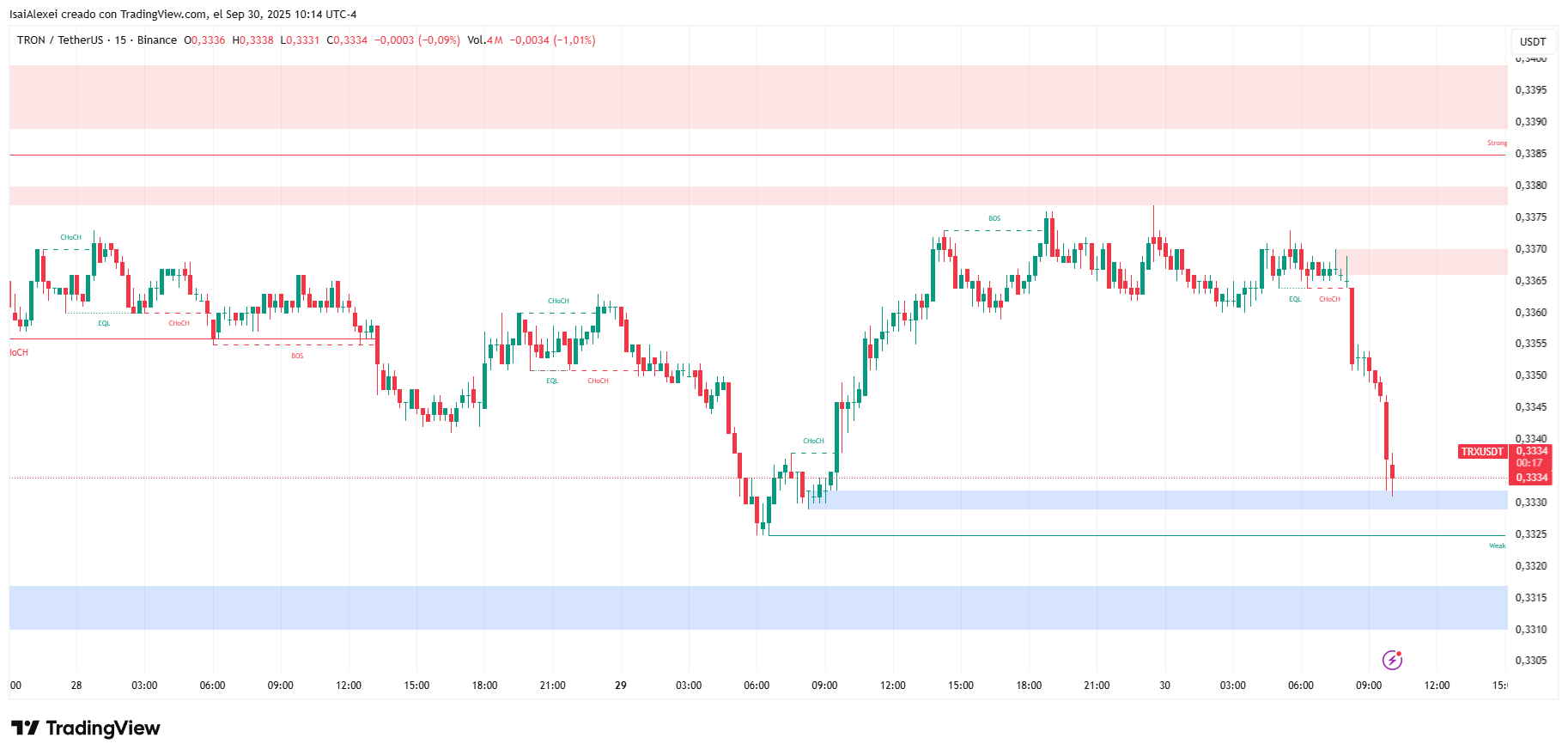
From a technical perspective, TRX trades below resistance at $0.35, with immediate support around $0.32–$0.33. Analysts suggest that if TRX holds above this zone, it could aim for a rebound toward $0.36–$0.38, while a break below $0.32 might lead to a deeper correction toward $0.30.