


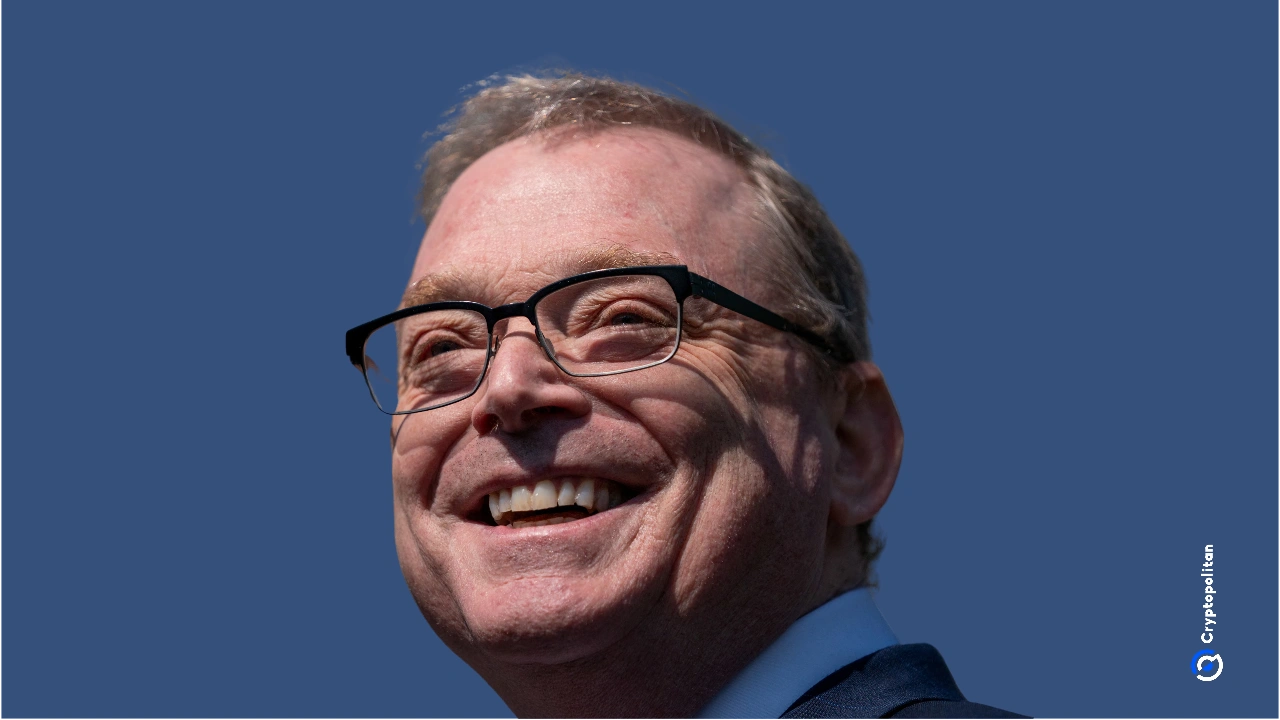
White House economic adviser Kevin Hassett has announced he is backing out of the race to lead the Federal Reserve, a decision that President Trump seems to accept readily.
Hassett stated on Fox News’ The Sunday Briefing that he and the president had been discussing his potential role, weighing whether he would be more valuable remaining in the West Wing or transitioning to the Fed. He indicated that a final decision had not yet been made.
However, Trump had previously signaled his preference. During a White House event last week, he directly addressed Hassett, expressing his desire to "keep you where you are, if you want to know the truth."
Hassett's recent comments echo this sentiment. He remarked on Sunday that "There are a lot of great candidates," and acknowledged that "the president’s right to make the decision that this is the best place for me right now."
Hassett further conveyed his appreciation for Trump's comment, describing himself as "humbled and gratified" and referring to the president as "such a good guy."
Fed Chair Race Narrows as Rieder Gains Late Support
With Hassett's withdrawal, the field of candidates for the Federal Reserve chair position has narrowed to what is now considered a four-man race. The prominent names reportedly in contention are Christopher Waller, Kevin Warsh, and Rick Rieder.
Rick Rieder's profile appears to be rising significantly. Sources familiar with the selection process suggest that his nomination might face a smoother path in the Senate, as he is perceived as more easily confirmable, a factor that holds considerable weight in the current political climate.
The political atmosphere surrounding the Fed has become increasingly contentious. A criminal investigation has been initiated into Federal Reserve Chair Jerome Powell, focusing on substantial costs associated with renovations at the Fed's Washington headquarters.
However, it is widely understood in Washington that the investigation is linked to Powell's refusal to lower interest rates as demanded by President Trump. Powell has publicly stated that the threat of criminal charges stems from the Federal Reserve's practice of setting interest rates based on its assessment of public interest, rather than adhering to presidential preferences.
Powell addressed the matter publicly in a video posted on the Fed's website, stating, "The threat of criminal charges is a consequence of the Federal Reserve setting interest rates based on our best assessment of what will serve the public, rather than following the preferences of the president." The case is connected to Powell's congressional testimony regarding cost overruns, with the subpoena reportedly signed off by Jeanine Pirro, the U.S. attorney for D.C.
Senate Resistance Grows as Powell and Cook Face Pressure
This situation has generated significant opposition, not from Democrats, but from within President Trump's own Republican party. Senator Thom Tillis, a member of the Banking Committee, has indicated that any Fed nominee put forward by Trump will now undergo heightened scrutiny.
This challenge appears distinct from the "lawfare" disputes Trump often criticizes, with the pressure originating from within the GOP. This internal resistance could potentially derail plans to replace Powell before his term as chairman concludes on May 15.
Even if Trump cannot directly remove Powell, he is attempting to alter the composition of the Fed's board. The Federal Reserve Act of 1913 establishes 14-year terms for governors, who can only be dismissed "for cause," a term that has not been definitively defined. Powell is eligible to remain on the board until 2028, even if he relinquishes the chairmanship.
Concurrently, Trump is pursuing the removal of Governor Lisa Cook based on a separate accusation of mortgage fraud, which she denies. This situation is evolving into another legal dispute. If Trump succeeds in ousting both Powell and Cook, he could significantly shift the balance of the board.
Currently, three of the seven governors on the board are considered to align with Trump's preference for lower interest rates. Appointing two more governors with similar views would effectively control the entire board.
The search for a new Fed chair is being overseen by Bessent, who Trump has stated has withdrawn his own name from consideration. Trump has repeatedly asserted publicly that he is not involved in the investigation into Powell. However, during a speech at the Detroit Economic Club, he commented with a smile to the audience, "That jerk will be gone soon."