



Key Market Influences and Expectations
Kevin Hassett is considered a frontrunner for the Federal Reserve Chair position under a potential early 2026 nomination by Donald Trump. This development could significantly influence U.S. bond yields, the dollar's value, and broader financial markets. Initial market reactions might involve a decrease in yields and the dollar, potentially benefiting risk assets such as Bitcoin and Ethereum, followed by a stabilization phase that would then impact overall market dynamics.
"We’ll be announcing somebody, probably early next year, for the new chairman of the Fed." — Donald Trump, U.S. President
Market sentiment is currently driven by these expectations rather than concrete policy changes. There are no formal statements from U.S. policymakers that directly align with this speculative research. Industry insiders are discussing the potential impacts on U.S. equities and major cryptocurrencies.
Cryptocurrency Market Faces Potential Volatility Under New Fed Chair
Following the easing pivot and quantitative easing implemented during 2019–2020, Bitcoin experienced a substantial surge. This growth was attributed to increased market liquidity, a context that is relevant to the potential market impacts stemming from Hassett's anticipated dovish stance.
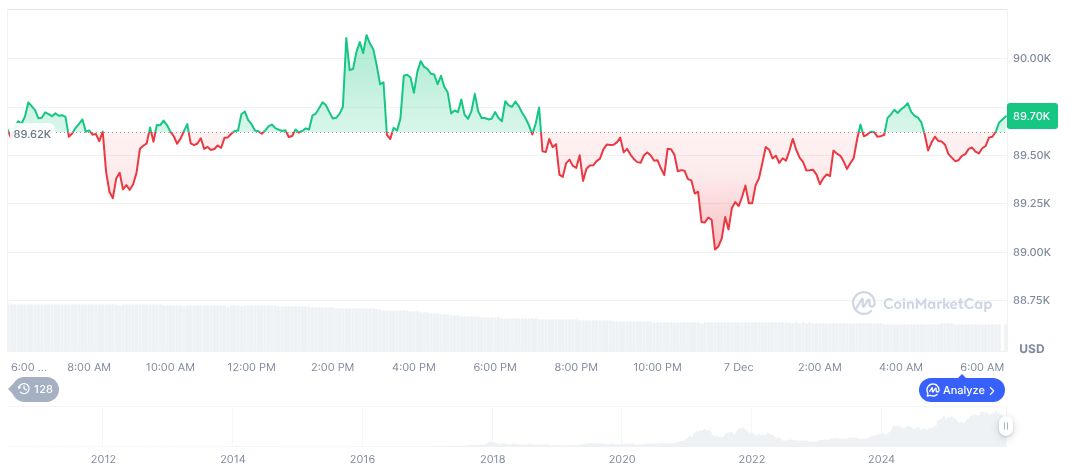
Bitcoin (BTC) is currently trading at $90,238.17, with a market capitalization of $1.80 trillion and a dominance of 58.78%, according to data from CoinMarketCap. The 24-hour trading volume stands at $47.06 billion, reflecting a 2.07% increase over the past week. Recent performance indicates volatility, with Bitcoin experiencing downturns across 30, 60, and 90-day periods.
Insights from Coincu Research suggest that financial markets could experience volatility with Hassett's prospective chairmanship, which is expected to influence interest rate expectations. Historical trends indicate that initial market gains might be subject to adjustments as U.S. economic growth is reassessed. This highlights the critical importance of effective communication from policymakers to manage market expectations.