



Key Findings on U.S. Tariffs
Research from the Kiel Institute reveals that 96% of U.S. tariff costs are borne by domestic importers and consumers, challenging the notion that foreign producers primarily pay these tariffs.
This finding suggests that while foreign exporters may maintain their prices, they often do so by reducing the volume of goods shipped. Consequently, the economic burden falls predominantly on U.S. entities.
Despite the timing of these tariffs and their impact on domestic liquidity, there is no direct or confirmed evidence linking them to the observed stagnation in cryptocurrency markets. Primary sources and market analyses have not established a causal relationship.
Tariff Impact on Domestic Liquidity
The Kiel Institute's research, covering the period from January 2024 to November 2025, indicates that U.S. consumers and importers are absorbing approximately 96% of the costs associated with U.S. tariffs. This economic reality contrasts with common political narratives that suggest foreign exporters bear the brunt of these tariffs.
This economic situation leads to a decrease in disposable liquidity for both consumers and businesses. This reduction in available funds can curb the capacity for investment in various assets, including cryptocurrencies. While the timing of tariff implementation and cryptocurrency market trends may appear correlated, there is no substantive link that has been confirmed since October 2025.
Reactions from both the market and government entities have been minimal. There have been no major statements or policy changes that confirm a direct connection between the imposition of U.S. tariffs and any observed shifts in the liquidity of crypto assets. The prevailing narrative remains largely speculative, lacking concrete data from exchanges or regulatory bodies to support it.
Historical Context and Crypto Market Dynamics
During the U.S.-China trade conflict that spanned 2018-2019, U.S. buyers also experienced significant tariff pass-through, with some analyses suggesting they bore up to 100% of the costs. However, during that period, there was no discernible impact on the cryptocurrency market.
As of January 20, 2026, Bitcoin is trading at $91,328.08, with its market capitalization exceeding $1.82 trillion. Over the past 90 days, Bitcoin has experienced a decline of 14.96%, yet it continues to hold a dominant market share of 59.26%. These figures are based on data from CoinMarketCap.
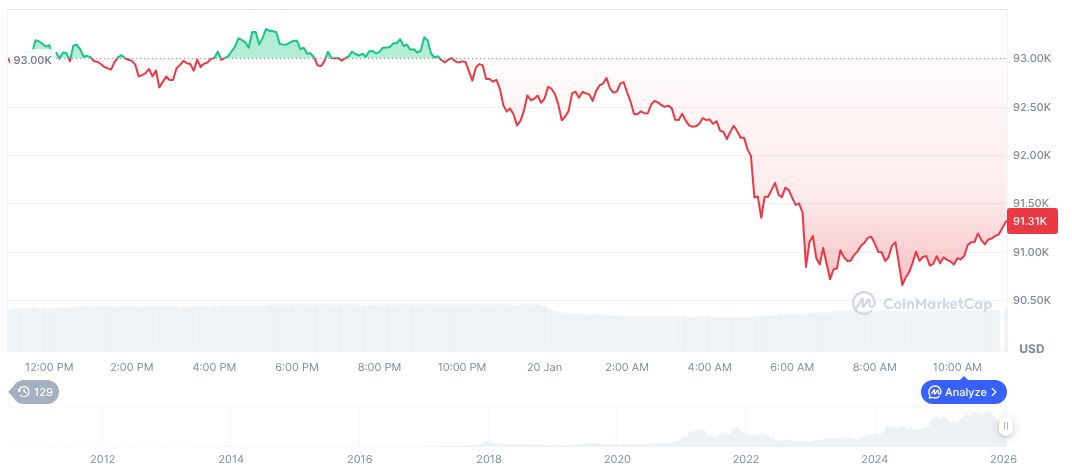
The Coincu research team has observed a notable absence of tangible evidence that directly links the economic effects of U.S. tariffs to shifts within the cryptocurrency market. This suggests that any stagnation observed in the crypto market might be attributable to other, broader economic trends. Ongoing detailed analyses are continuing to examine these potential influences and their interconnections.