


Discovery of Critical Vulnerability
A team of security researchers has discovered a critical security flaw in a widely used Android chip that could grant attackers complete access to devices, thereby endangering cryptocurrency users. This finding was detailed in a recent report by Ledger.
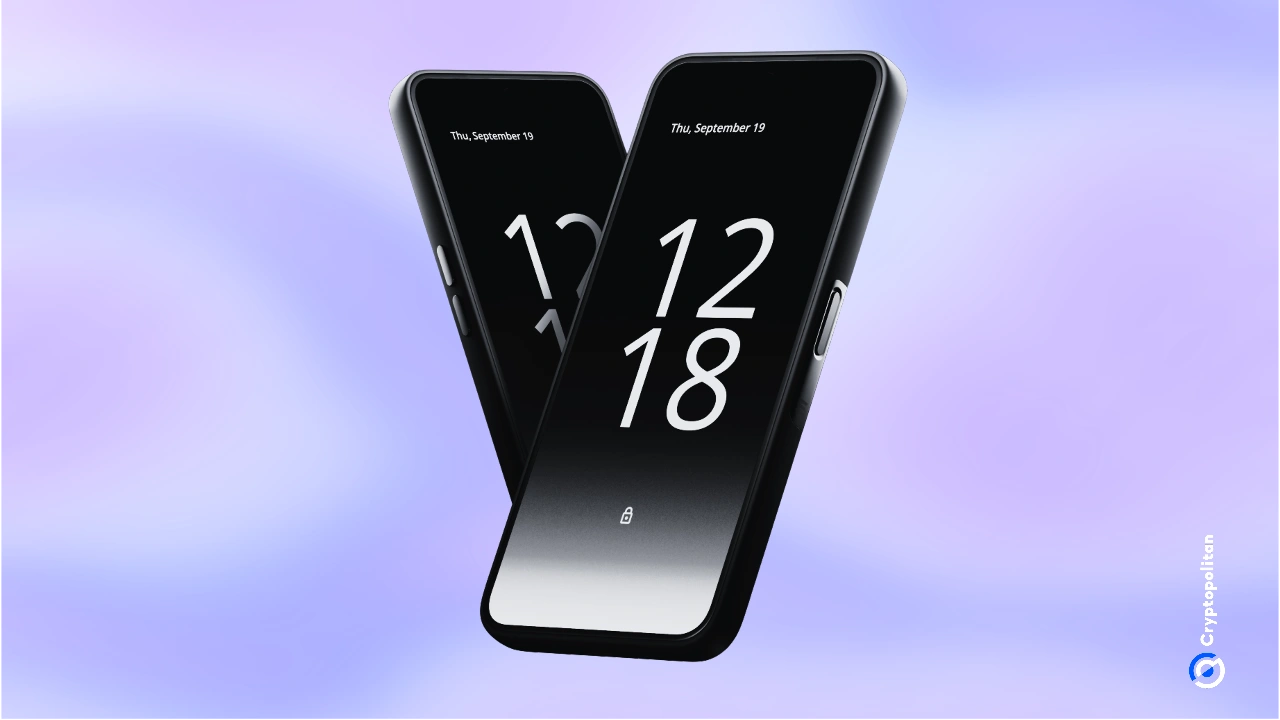
The vulnerability resides within a specific chip manufactured by the Taiwanese company MediaTek, identified as the Dimensity 7300, also known as MT6878. This chip is incorporated into a multitude of Android smartphones currently available on the market, including the Solana Seeker.
The severity of this security issue is amplified by its location. The weakness is situated in the chip's boot ROM, which is the initial component that activates when a phone is powered on. Because this code is permanently embedded within the physical chip, it cannot be rectified through standard software updates or security patches.
Ledger's Research and Implications
Ledger's research division, the Donjon team, conducted an in-depth analysis of the chip's operation. They found that by applying precisely timed electromagnetic pulses to the chip during its boot-up sequence, they could manipulate it into granting the highest level of access. This effectively allowed them to reach EL3, the most privileged execution level in ARM chip architecture.
The researchers stated, "From malware that users could be tricked into installing on their machines, to fully remote, zero-click exploits commonly used by government-backed entities, there is simply no way to safely store and use one’s private keys on those devices."

This disclosure comes at a time when attacks targeting cryptocurrency owners are escalating. A study published in July by Chainalysis revealed that over $2.17 billion has been stolen from cryptocurrency services in 2025, surpassing the total amount stolen throughout all of 2024.
While the majority of cryptocurrency thefts occur through online methods such as phishing schemes and fraudulent operations, this research highlights the existence of physical vulnerabilities.
The Donjon researchers determined that once the precise timing for delivering the electromagnetic pulse was identified, each attempt took approximately one second. Their success rate per attempt ranged from 0.1% to 1%, enabling them to gain complete control over a device within minutes under laboratory conditions.
Ledger, known for its Nano hardware wallets, did not explicitly advise against using smartphone wallets entirely. However, the findings reveal a new attack vector that could target both software developers and general users.
A cryptocurrency wallet is a software application that stores a user's public and private keys, facilitating the sending, receiving, and tracking of digital assets. Hardware wallets, often referred to as "cold wallets," maintain these private keys offline on a separate, internet-disconnected physical device, thereby offering protection against online threats to phones or computers.
Software wallets, also known as "hot wallets," are applications that allow users to store their digital assets on various devices. This convenience, however, leaves users susceptible to hacking attempts and phishing operations.
MediaTek's Response to the Vulnerability
In response to the discovery, MediaTek issued a statement, included in Ledger's report, asserting that electromagnetic fault-injection attacks were considered "out of scope" for the MT6878 chip. The company explained that the chip was designed as a standard consumer product, not as a high-security component intended for financial systems or sensitive data.
MediaTek stated, "For products with higher hardware security requirements, such as hardware crypto wallets, we believe that they should be designed with appropriate countermeasures against EMFI attacks."
Ledger emphasized that devices utilizing the MT6878 chip will continue to be susceptible to this vulnerability due to the flaw being inherent in the immutable silicon material. The company reiterated the importance of secure-element chips for individuals managing their own cryptocurrency or engaging in other sensitive security operations, as these specialized components are engineered to withstand both hardware and software attacks.
Ledger commented, "Smartphones’ threat model, just like any piece of technology that can be lost or stolen, cannot reasonably exclude hardware attacks. But the SoCs they use are no more exempt from the effects of fault injection than microcontrollers are, and security should really ultimately rely on Secure Elements, especially for self-custody."