



Key Market Observations
A recent report by Matrixport highlights a substantial reduction in cryptocurrency trading volume, even as the overall market capitalization has seen an increase. This trend suggests a structural caution within the industry and potential challenges for trading platforms, impacting liquidity and revenue. The analysis indicates that Bitcoin may be entering a potential bear market phase.
Cryptocurrency Market Activity Dips by 50%
Matrixport's November market analysis reveals a significant decline in cryptocurrency trading volumes, contrasting with a rise in market capitalization from $2.40 trillion to $3.70 trillion. This discrepancy is noted as a structural flag amidst otherwise bullish metrics, as detailed in the November 12th report.
The average daily trading volume has decreased from $352 billion to $178 billion, signaling a potential cooling of the market. This reduction in weak liquidity and decreasing activity significantly affects the revenue of trading platforms and impacts overall market health.
Industry stakeholders are expressing concern over shrinking trading volumes. An analyst from Matrixport stated, "Relative to market size, cryptocurrency trading volume remains weak. Over the past 12 months, the total market capitalization has risen from $2.4 trillion to $3.7 trillion, while daily trading volume has decreased from $352 billion to $178 billion, a decline of 50%."
Bitcoin Price Movement and Market Conditions
According to CoinMarketCap, Bitcoin's price is currently $103,411.51, with a market cap of $2.06 trillion. The 24-hour trading volume stands at $61.49 billion, reflecting a 10.68% decrease. Recent price movements show a 1.65% decline over 24 hours, alongside broader downward trends.
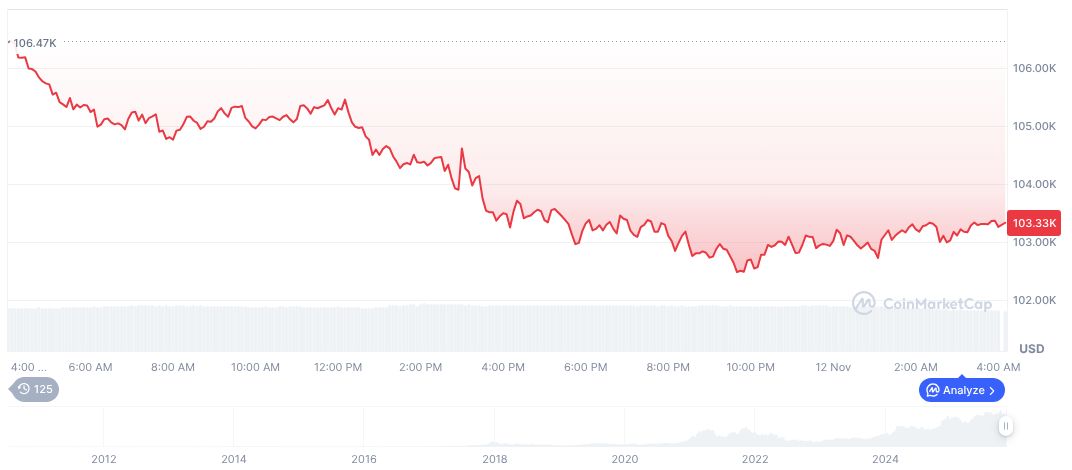
The Coincu research team anticipates that low liquidity and weak buying interest could prolong current market conditions. Regulatory focus on stablecoins and potential rate hikes may further influence market trends, as historical patterns suggest limited short-term reversal potential. A decline in trading volumes often precedes a consolidation phase, as observed in past cycles, such as the post-stimulus decline in 2021.