



Key Developments in Tokenized Securities Trading
The New York Stock Exchange plans to introduce a 24/7 trading platform for tokenized U.S.-listed stocks and ETFs. This platform is designed to enable instant settlement and enhance accessibility for investors.
This initiative represents a significant step for traditional finance, offering continuous trading opportunities. The potential impact on cryptocurrencies is yet to be fully determined, and no immediate shifts in the cryptocurrency market have been observed.
NYSE Introduces Continuous Trading for U.S. Stocks
The New York Stock Exchange's announcement to establish a 24/7 trading platform for tokenized U.S. stocks and ETFs highlights the exchange's commitment to digitization. This platform, which will support instant settlement and dollar-sized orders, aims to provide greater flexibility for global investors.
The introduction of round-the-clock trading is expected to enhance accessibility and could potentially alter the operational dynamics of traditional securities markets. This new model allows investors to respond to global events in real-time, aligning with the pace of the global economy.
Market reactions have been marked by curiosity, and official statements from key financial authorities are still anticipated. Given the innovative nature of this platform, experts are closely monitoring the responses from both the market and regulatory bodies.
Historical Milestone: NYSE's Leap into 24/7 Trading
Established in 1792, the NYSE is making an unprecedented move by adopting continuous trading hours for tokenized securities. This signifies a remarkable progression from its traditional trading schedules to a modern 24/7 operational model.
According to CoinMarketCap, Bitcoin (BTC) is currently trading at $93,093.02, with a market capitalization of $1.86 trillion. Despite a 2.20% decrease over the past 24 hours, BTC has seen a 1.79% increase over the week, reflecting the broader volatility trends in the market.
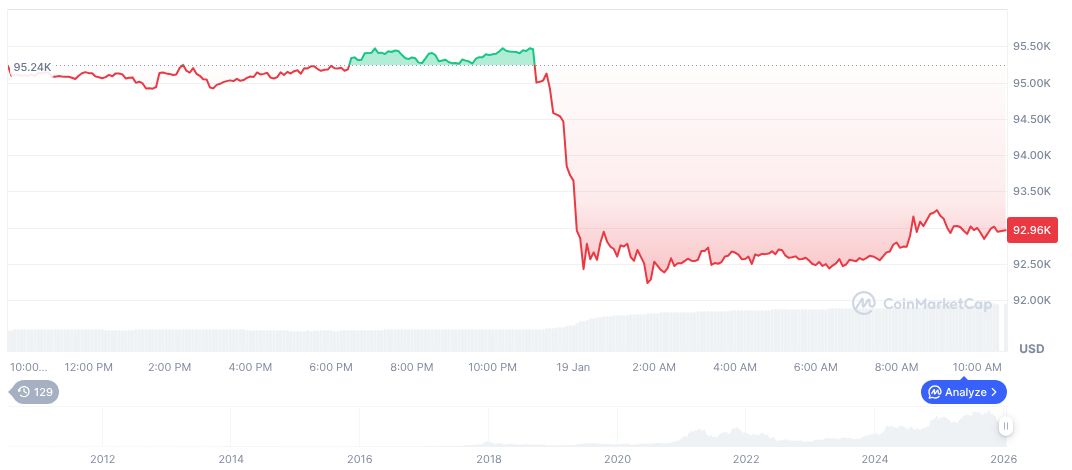
Expert analysis from Coincu suggests that the NYSE's strategic shift may prompt regulatory updates, potentially leading authorities to revise compliance measures to accommodate these digitally native securities. Furthermore, advancements in technology are expected to streamline processes, fostering a greater integration between traditional and digital asset markets.