



Key Developments in Digital Asset Banking
The U.S. Office of the Comptroller of the Currency (OCC) has issued a new interpretive letter enabling banks to act as intermediaries in cryptocurrency transactions nationwide. This directive allows banks to broker crypto trades, potentially increasing their involvement in digital asset markets without holding cryptocurrencies directly, affecting market dynamics and financial services.
OCC's New Guidelines Enable Banks as Crypto Intermediaries
The Office of the Comptroller of the Currency (OCC) recently issued Interpretive Letter 1188, authorizing U.S. banks to act as intermediaries in cryptocurrency transactions. This development allows banks to purchase crypto-assets from one party and sell them to another without holding any crypto-assets.
This move is significant as it provides regulatory clarity to traditional banks engaging in digital assets. The guidelines indicate that intermediary services in cryptocurrency fall within the business scope of banks, akin to riskless principal transactions in securities.
"Conducting riskless principal crypto-asset transactions is part of the business of banking and is permissible for a national bank." - Michael J. Hsu, Acting Comptroller of the Currency
Market reactions have been limited regarding public endorsements or critiques from industry leaders. Still, analysts expect a rise in institutional interest as banks can now legally support crypto trading activities without holding risks.
Bitcoin's Market Trends as OCC Reframes Banking Roles
The OCC's guidelines could significantly reshape how traditional banks engage with the cryptocurrency market, potentially leading to a more integrated financial system.
Bitcoin (BTC) currently trades at $92,155.91 with a market cap of $1.84 trillion, holding 58.38% dominance. Over the past 24 hours, it has gained 2.13%, although it has decreased by 19.17% over 90 days.
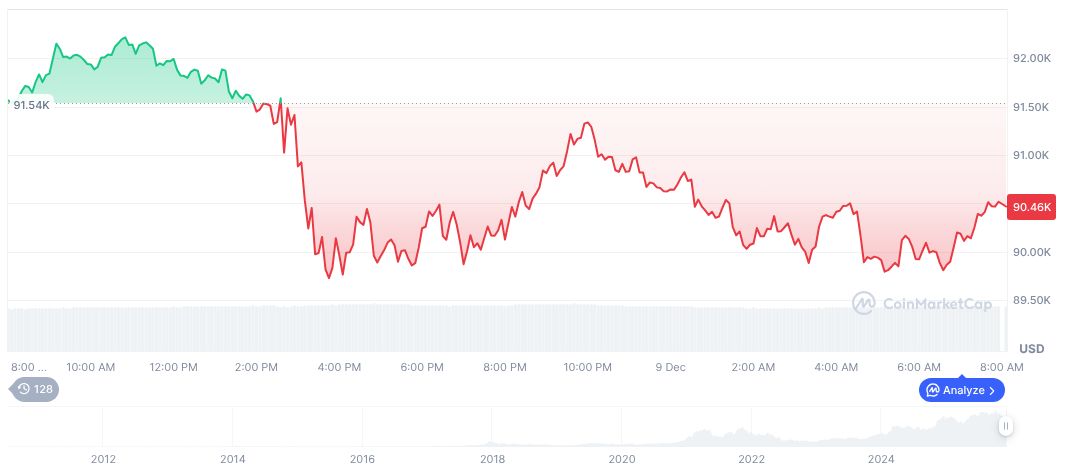
The Coincu research team projects that the OCC's guidelines may lead to increased use of major tokens in institutional trading. This change could promote more robust crypto integration into financial systems, enhancing network effects and liquidity.