



Fraudulent Promises of High Crypto Returns Exposed
Travis Ford, CEO of Wolf Capital Crypto Trading LLC, has been sentenced to five years in prison for orchestrating a cryptocurrency fraud scheme that defrauded approximately 2,800 investors of $9.4 million. Ford admitted to misappropriating investor funds, operating under the guise of Wolf Capital Crypto Trading LLC, where he promised investors daily returns of 1-2%, equating to an unsustainable annualized rate of about 547%. The investigation into this fraudulent scheme was led by the U.S. Postal Inspection Service, with prosecution handled by the Department of Justice's fraud division.
As a consequence of his conviction, Ford has been mandated to forfeit over $1 million and pay $170,000 in restitution. This judgment reflects the legal repercussions for deceptive practices within the cryptocurrency investment space and underscores the legal system's commitment to penalizing such fraudulent activities.
Market observers have noted that this fraud had no direct impact on major cryptocurrencies such as Bitcoin and Ethereum, as the scheme primarily involved fiat-to-crypto flows and did not significantly affect established market assets.
Regulatory Efforts and Market Insights on Crypto Fraud
Did you know? The legal actions against Wolf Capital align with increasing regulatory attention on cryptocurrency fraud. This highlights efforts similar to past investigations, stressing investor protection and deterrence against fraudulent actors in the crypto sphere.
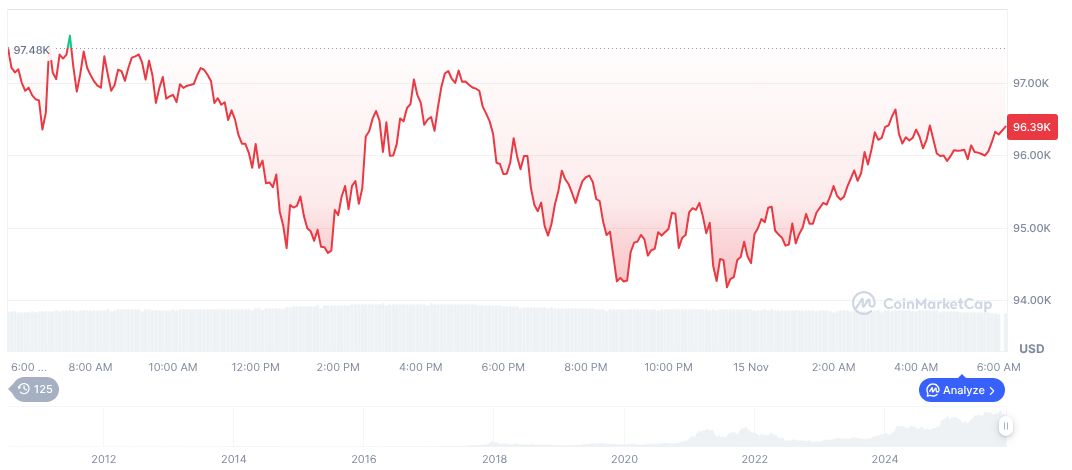
Recent market data indicates Bitcoin's price stands at $95,787.40, with a market capitalization of 1,910,844,756,315 and a dominance of 58.86%. Over the past 24 hours, Bitcoin has seen a 1.39% decrease, and over the last 90 days, it has declined by 19.03%, highlighting the inherent volatility of the market.
The Coincu research team points to the potential for increased regulatory scrutiny and advancements in blockchain oversight. Historical trends suggest that such crackdowns may serve as a deterrent to future investment schemes, thereby reinforcing blockchain's resilience amidst evolving regulatory landscapes.