



Understanding On-Chain Malware and EtherHiding
On-chain malware refers to harmful code that is stored or referenced on a public blockchain, as opposed to a traditional web server. Hackers can conceal instructions or data within smart contracts, employing techniques such as EtherHiding. This method involves attackers placing small pieces of malicious code, or payloads, on blockchains like Ethereum or the BNB Smart Chain. Subsequently, normal-looking web pages or downloads are used to fetch this code. This approach allows the harmful program to reach a victim without the attacker needing to host the malware on their own servers.
State actors have utilized this tactic in recent campaigns. Security researchers discovered that a group identified as UNC5342, which is linked to North Korea, employed EtherHiding to conceal a JavaScript loader named JADESNOW within a web page. This loader then reads code from a smart contract, subsequently executing a backdoor known as INVISIBLEFERRET. Because smart contract data is public and cannot be removed, this makes the malware exceptionally difficult to eliminate once it has been deployed on-chain.

Attackers do not always distribute a standard program file to victims. Instead, they employ social engineering tactics, such as fake job offers or coding tests that prompt a developer to run a sample. When the sample executes, it silently contacts the blockchain and retrieves the actual malicious code. The blockchain call often utilizes a read-only method, which avoids leaving a typical transaction trail, thereby enhancing stealth and diminishing the effectiveness of traditional detection tools.
Implications for DeFi Security and Auditing
DeFi and other blockchain projects depend on smart contracts and their immutability to foster trust. However, this same immutability and openness can be exploited by adversaries. When attackers store malware or control information on-chain, they establish a persistently accessible command channel that is resistant to censorship or removal. This introduces new concerns regarding cyberwarfare, as nation-states can leverage blockchain vulnerabilities to conduct long-term operations that are difficult to dismantle.
Smart contract security teams and auditors have historically concentrated on bugs within the on-chain code. Now, they must also account for off-chain behaviors that are orchestrated from the chain. A contract might appear secure during a static audit but could still function as a storage repository for malicious payloads. Auditors will need to broaden their scrutiny to encompass patterns in data stored within contracts and the ways contracts are referenced by external scripts. This shift necessitates changes in how DeFi projects approach threat modeling and design their monitoring systems.
The utilization of on-chain malware by groups associated with North Korea demonstrates that blockchain-based attacks can be integrated into state-level strategies. These attacks are not solely aimed at cryptocurrency theft but also at acquiring credentials, conducting espionage, and establishing resilience against standard law enforcement and takedown efforts. For security professionals, this underscores the need to treat blockchain vulnerabilities as a national and industry security imperative.
Potential Defence Frameworks for Protocols
A more robust approach to smart contract security is essential. One critical step involves the runtime monitoring of contract storage and calls. Security teams can develop tools to detect unusual patterns in smart contract data, such as encoded payloads or frequent storage updates that deviate from the contract's intended purpose. This type of monitoring can help identify instances where a contract is being used as a hidden content store. Research initiatives that incorporate dynamic analysis and runtime shields for smart contracts indicate that this is both feasible and beneficial.
Another defensive measure involves hardening developer environments and mitigating risky behaviors. Companies should regard unsolicited coding tests and downloads with a high degree of caution. Websites used for recruitment should be rigorously vetted, and developers should execute unknown samples exclusively within isolated sandbox environments. Employing dedicated full nodes for blockchain queries, rather than public RPC endpoints, can also enhance visibility and enable teams to filter or log suspicious read-only calls.
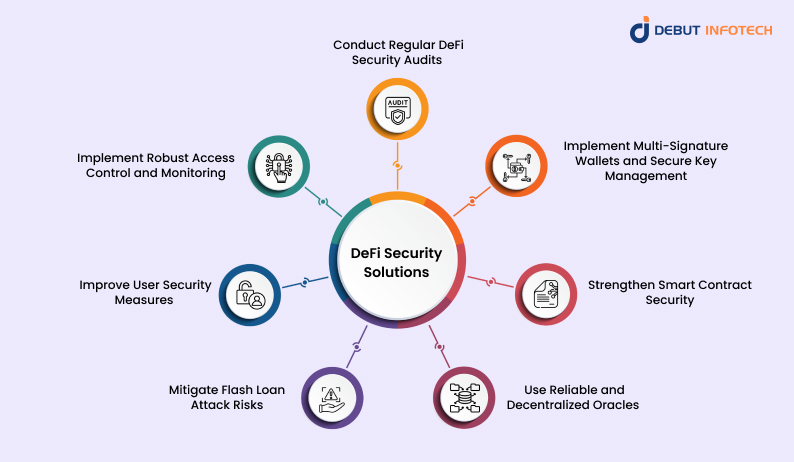
Advancements in smart contract security tooling are also necessary. Novel detection systems capable of identifying malicious intent within bytecode or on-chain storage could provide earlier alerts to security teams. Machine learning and opcode-level analysis can uncover anomalous control flows and unusual data patterns that might be overlooked by human reviewers. The sharing of threat intelligence regarding suspicious contract addresses and known EtherHiding infrastructure among firms will expedite detection and response across the industry.
In Conclusion
On-chain malware represents a new and significant threat, with state actors, including groups linked to North Korea, adopting techniques like EtherHiding. These methods embed malware within smart contracts and leverage the blockchain as a resilient delivery mechanism. This evolution highlights how threat actors are exploiting the very characteristics that make blockchain technology valuable, such as permanence, decentralization, and open access. It also signals a shift in cyberwarfare towards environments previously considered too transparent for covert operations. By concealing malicious code within contract storage or by directing off-chain scripts to retrieve instructions directly from on-chain data, attackers can establish command channels that are exceptionally difficult to disable and challenging to trace.
This development elevates the stakes for smart contract security and complicates cyberwarfare, as defenders must now address risks extending beyond conventional vulnerabilities like reentrancy or access-control flaws. Instead, they face a novel category of threats that utilize the blockchain as infrastructure rather than as a direct target. To adapt, defenders must revise their methodologies for auditing contracts and securing developer workflows. Security teams need to scrutinize not only contract logic but also unusual data patterns, obscure storage fields, and unexplained calls to public RPC endpoints. Developer onboarding and hiring processes require enhanced security measures, as many of these attacks commence with social engineering tactics that trick engineers into executing compromised code samples.
If the blockchain ecosystem evolves swiftly, it can convert its inherent openness and transparency into a strategic advantage, making malicious storage more detectable and harder for attackers to camouflage. Conversely, if it fails to adapt, on-chain malware could emerge as a persistent challenge, eroding trust in Web3 systems and equipping state actors with a potent new instrument for covert operations.