


OpenAI has officially transitioned into a public benefit corporation, a strategic shift designed to enhance its ability to raise capital and fuel growth within the intensely competitive artificial intelligence landscape. This evolution in its corporate structure comes amidst significant investments, particularly from Microsoft, and ongoing innovation in AI-powered applications. The company's new structure aims to balance profit-driven motives with a commitment to broader societal impacts, a critical consideration in the rapidly expanding domains of cryptocurrency and blockchain technology.
As a public benefit corporation, OpenAI gains greater flexibility in attracting investments and issuing equity, which is crucial for funding its ambitious AI development projects. This new structure allows the company to pursue its growth objectives while still emphasizing its commitment to societal benefit.
Microsoft's Enhanced Partnership and Investment
The restructuring includes a significant commitment from Microsoft, which has secured a 27% stake in the new entity. This stake is valued at approximately $135 billion. The extended partnership guarantees Microsoft continued access to OpenAI's leading AI technologies for the next seven years, further solidifying their strategic alliance. This deepens the collaboration between the two tech giants in the rapidly evolving AI and crypto markets.
In addition to equity, the partnership involves a substantial commitment of $250 billion in Azure cloud services. This commitment underscores the depth of the strategic alliance and provides OpenAI with the robust infrastructure needed for its extensive AI research and development initiatives.
Debate Over Mission and For-Profit Status
Despite the transformation into a public benefit corporation, OpenAI remains a for-profit entity. This aspect has sparked ongoing debate and criticism, particularly from figures like Elon Musk, who argue that the company has diverged from its original nonprofit mission. These concerns resonate within the AI and crypto community regarding the trajectory of major technology firms and their ultimate goals.
ChatGPT's Expanding Influence in AI and Cryptocurrency Trading
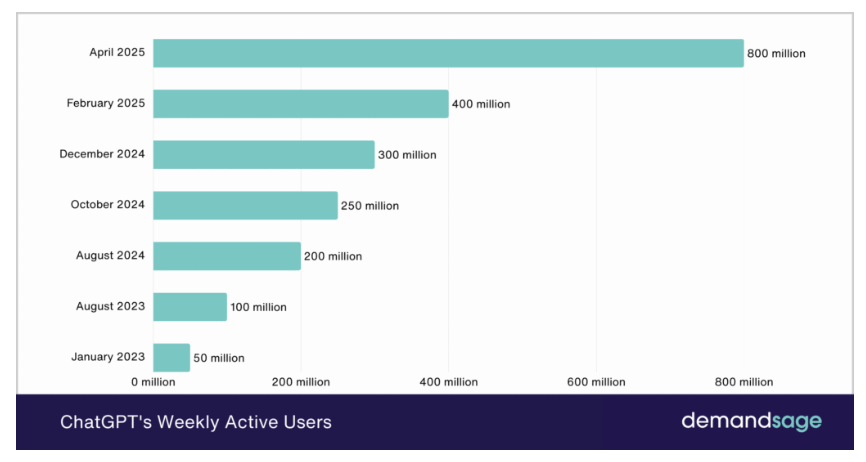
ChatGPT continues to solidify its position as the world's most popular large language model, boasting an estimated 800 million weekly active users. Its capabilities are increasingly being integrated beyond conversational AI, notably into AI-powered trading bots for both cryptocurrencies and traditional stocks. These advanced bots utilize ChatGPT's analytical prowess to interpret complex market data, adapt dynamically to trading patterns, and optimize strategies in real time, showcasing its growing utility in financial markets.
Recent research indicates that specialized AI models are demonstrating a competitive edge in cryptocurrency trading. Studies have shown that models such as Grok, developed by an unnamed AI lab, and China's DeepSeek have outperformed both ChatGPT and Google's Gemini in simulated crypto trading scenarios. These models, starting with an initial investment of $200, were reportedly able to scale their portfolios up to $10,000 by executing trades on decentralized exchanges like Hyperliquid.
This increasing sophistication and market integration highlight the growing influence of artificial intelligence in shaping the future of digital asset trading. As AI capabilities advance, more investors and traders are turning to automated solutions powered by sophisticated language models to navigate the complexities of the financial markets.