


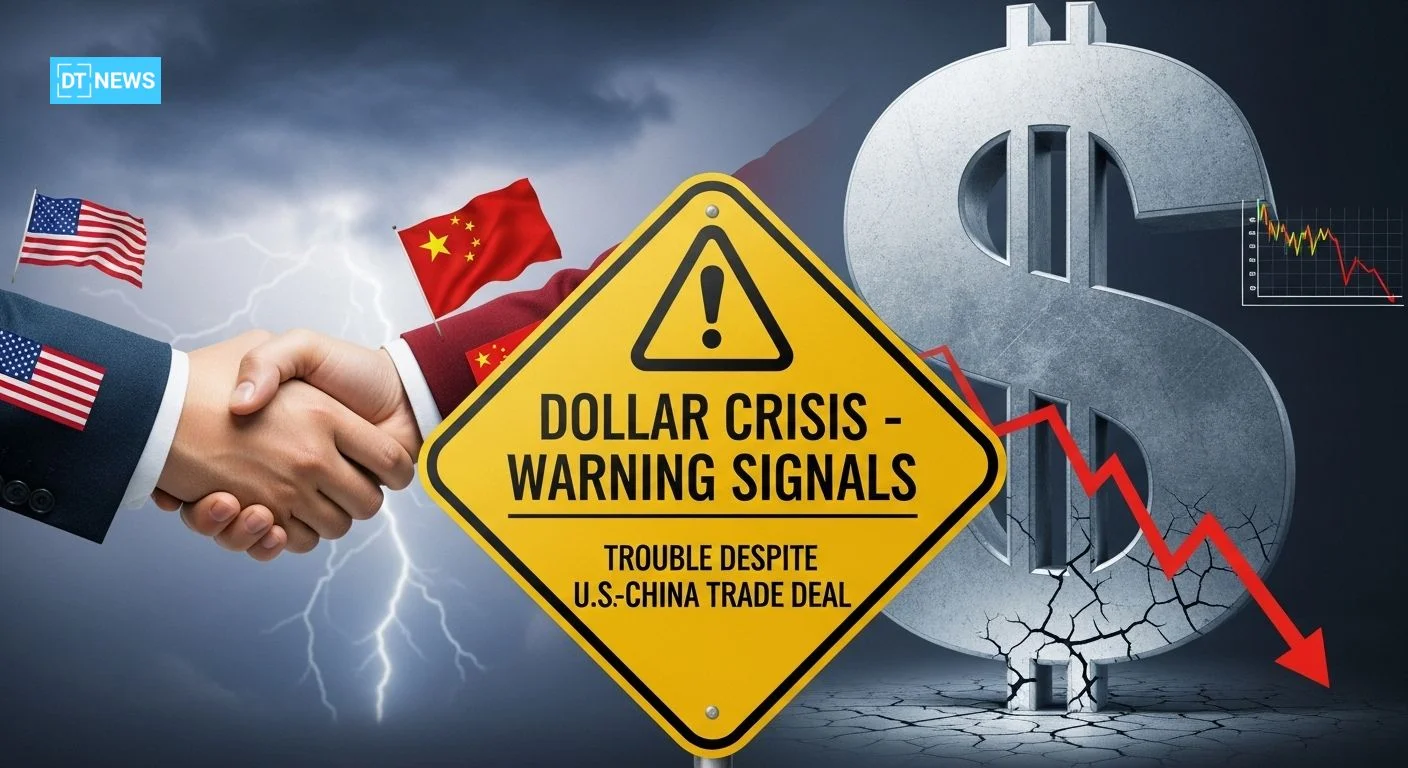
Economist and gold advocate Peter Schiff has issued a warning that a recent US-China trade deal, while potentially calming markets temporarily, fails to address deeper structural issues. These issues include soaring budget deficits, persistent inflation, and accelerating de-dollarization, all of which he believes will continue to weigh on the US dollar.
Schiff stated in a recent post, "But the deal will do nothing about soaring budget deficits, rate cuts, inflation, or de-dollarization." He views the trade deal euphoria as masking a weakening foundation of US financial credibility.
Understanding Schiff's "Dollar Crisis Warning"
When Peter Schiff issues a "dollar crisis warning," he is referring to a potential threat to the US dollar's status as the world's primary reserve currency. He attributes this threat to unchecked fiscal deficits and inflationary pressures within the United States. In a recent post on X, he wrote, "Gold will keep rising."
Schiff contends that the dollar crisis is a tangible and measurable phenomenon. Reports indicate that global central banks are progressively reducing their holdings of US dollar-denominated assets. Data suggests that China alone divested approximately $23 billion in US dollars and Treasuries in early 2025.
Essentially, Peter Schiff's dollar crisis warning frames the optimism surrounding the trade deal as superficial, failing to address what he perceives as the fundamental causes of the dollar's weakening position.
The Role of the US-China Trade Deal
Markets reacted positively to the news of an impending trade deal between the US and China. However, according to Schiff, this reaction is misplaced. He observed that investors were celebrating news of a deal despite the underlying fundamentals remaining unchanged.
"Stock futures & Bitcoin are up and gold is down on news that the extra 100% tariffs on Americans buying Chinese goods, which were set to go into effect on Nov. 1st, will be delayed as the U.S. & China are close to another meaningless trade deal that Trump can tout as another win."
In other words, while the trade deal may alleviate geopolitical tensions, Schiff believes it does nothing to counteract the structural forces contributing to the dollar's weakness. He suggests that the deal might offer a temporary boost to the dollar, but this does not alter the trajectory of de-dollarization or deficit expansion.
Why Markets Should Consider the Warning
Although Peter Schiff is known for his criticism of fiat currencies and his advocacy for gold, his warning warrants serious consideration due to the important issues it raises.
To begin with, the interplay between budget deficits, inflation, and de-dollarization can have severe repercussions on everything from exchange rates to global finance.
The intense focus of markets on the trade deal might simply indicate complacency. Schiff suggests that the real risks lie "behind the scenes," rather than in the prominent headlines.
If the dollar's status as the global reserve currency begins to decline, it could become more expensive for the US to borrow money, and simultaneously, it could make it more difficult for citizens to obtain credit.
Furthermore, any assets denominated in US dollars could begin to lose value.
Conclusion
The trade deal may provide a temporary reprieve, but the scenario Schiff outlines for the future of the US dollar is becoming increasingly apparent.
If the US continues to issue more Treasury debt to finance its budget deficits, it could diminish investors' willingness to hold dollar-denominated investments.
Inflation could begin to rise, which would negatively impact the value of the dollar.
Countries might start to shift away from the dollar and towards other currencies, or even gold.
Each of these potential problem areas points to the same fundamental theme: that significant attention should be paid to underlying economic conditions, not just superficial developments.
Frequently Asked Questions About Peter Schiff's Dollar Crisis Warning
What does Peter Schiff mean by a “dollar crisis”?
He refers to a situation where the US dollar's global dominance erodes due to persistent deficits, inflation, and a loss of its reserve currency status, leading to a decline in confidence.
Why is the US-China trade deal not enough according to Schiff?
While the deal may ease trade tensions, Schiff argues that it does not address the underlying issues of deficits, inflation, or de-dollarization.
What evidence is there for global de-dollarization?
Examples include China selling US Treasuries and increasing its holdings of gold and other currencies, indicating central banks are diversifying away from the dollar.
Is Schiff’s view universally accepted?
Some critics suggest his strong affinity for gold and aversion to fiat currencies make his outlook overly alarmist. However, his analysis prompts consideration of the broader risks associated with the dollar.