


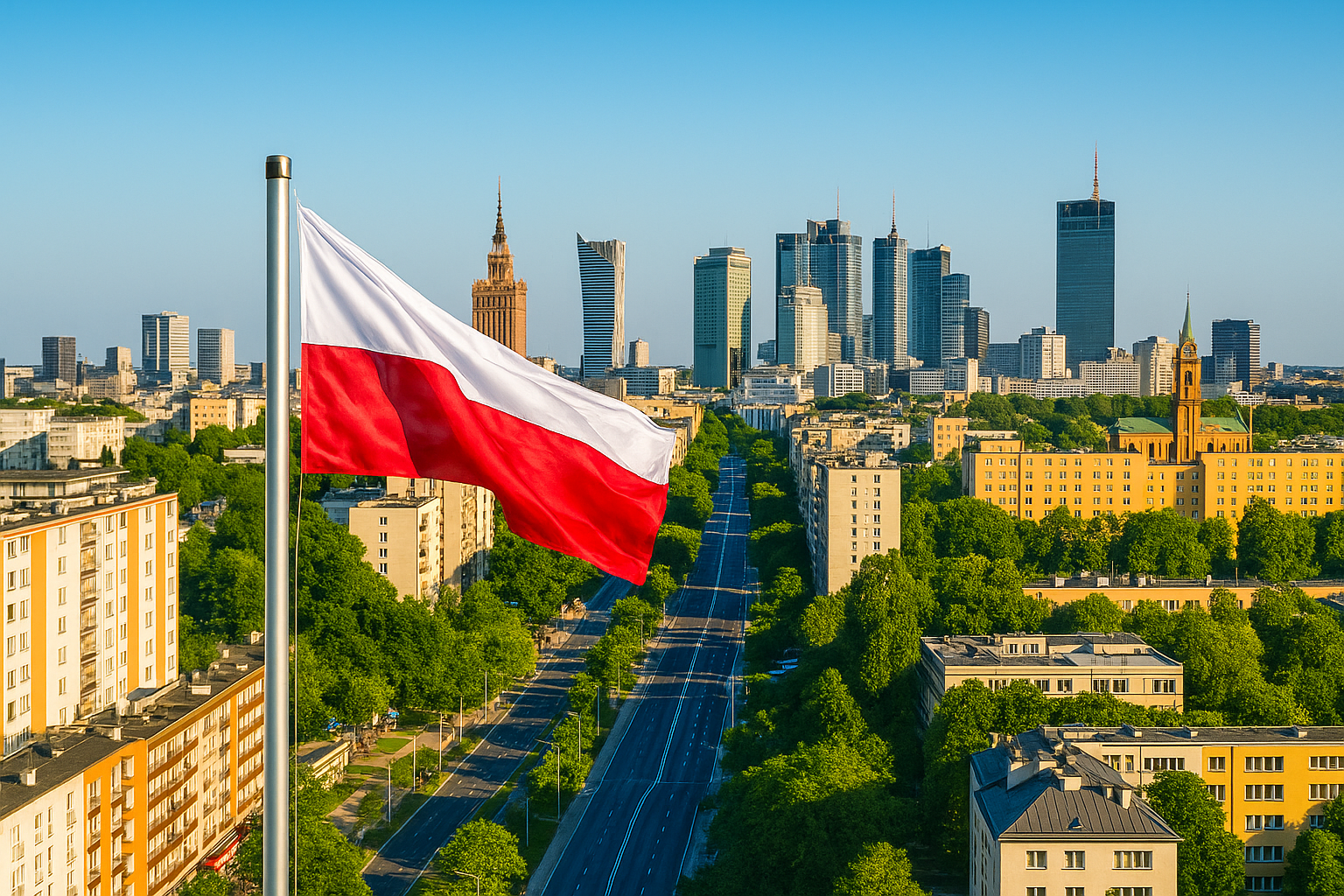
Poland's lower house of parliament, the Sejm, approved the Crypto-Asset Market Act on Friday with 230 votes in favor and 196 against. The legislation now advances to the Senate for consideration, introducing comprehensive restrictions on crypto asset service providers operating within Poland's borders.
Bill 1424 establishes the Komisja Nadzoru Finansowego (KNF) as the primary regulator for the country's crypto asset market. The measure aligns Poland's framework with the European Union's Markets in Crypto-Assets Regulation (MiCA), though critics argue the implementation exceeds EU requirements in scope and severity.
All crypto asset service providers, including exchanges, issuers, and custody providers, must obtain KNF licenses regardless of their domestic or foreign status. The licensing regime requires comprehensive applications detailing corporate structure, capital adequacy, internal controls, compliance systems, risk management policies, and Anti-Money Laundering procedures.
Companies operating in Poland face a six-month transitional period to secure the required licenses once the bill becomes law. Failure to obtain proper licensing could result in operational shutdowns and legal consequences for providers attempting to serve Polish customers.
The bill introduces criminal liability for violations, imposing fines up to 10 million Polish zlotys, equivalent to approximately $2.8 million. Prison terms of up to two years may apply for certain infractions, representing some of the strictest penalties for crypto-related violations in the EU.
Janusz Kowalski, a Sejm member from the opposition Law and Justice party, criticized the implementation as excessively restrictive. He warned the legislation could jeopardize Poland's crypto market and its three million crypto holders, describing the measure as “the largest and most restrictive cryptocurrency law in the EU.”
Kowalski highlighted the law's length, characterizing it as “118 pages of overregulation” compared with significantly shorter crypto legislation adopted by Germany, the Czech Republic, and other EU member states. The extensive requirements contrast sharply with more streamlined approaches taken by Poland's European neighbors.
Blockchain advocate and Polish politician Tomasz Mentzen emphasized implementation challenges posed by regulatory processing times. He noted that KNF maintains an average application processing time of 30 months, making it “the slowest-acting regulator in the EU.”
Mentzen warned the Sejm's approval signals potential “destruction of blockchain and stablecoins” in Poland. He urged the Senate and President Karol Nawrocki to veto the legislation to protect the country's crypto ecosystem from what he characterized as excessive regulatory burden.
President Nawrocki, who won office in June 2025 with 50.9% of the vote, previously pledged to support crypto during his campaign. Days before the runoff election, he stated that innovations must emerge in Poland rather than regulations, promising to serve as guarantor against “tyrannical regulations restricting freedom and innovation.”