



Key Developments in Poland's Crypto Regulation
Polish lawmakers in the Sejm were unsuccessful in overturning President Karol Nawrocki's veto of a bill designed to regulate digital assets. This failure on December 5th significantly hinders Prime Minister Donald Tusk's efforts to establish a regulatory framework for the cryptocurrency market.
The presidential veto effectively delays Poland's implementation of regulations aligned with the European Union's Markets in Crypto-Assets (MiCA) framework. This prolonged period of market uncertainty could discourage cryptocurrency firms from operating within Poland, especially given the absence of a clear regulatory structure and ongoing security concerns.
The Standoff: National Security and Regulatory Alignment
Prime Minister Donald Tusk has characterized the presidential veto as a critical national security measure, citing concerns about potential Russian interference within the digital asset sector. The proposed bill was intended to bring Poland into compliance with EU regulations, thereby providing authorities with essential tools to combat money laundering and counter foreign intelligence operations.
With the veto remaining in place, the Polish cryptocurrency market faces an extended period of uncertainty. This lack of defined regulation may prompt crypto businesses to relocate to jurisdictions with more established legal frameworks, such as Lithuania or Malta. Such a shift could impact the industry's presence in Poland and affect potential tax revenues.
"Parts of Poland’s crypto market are infiltrated by Russian and Belarusian entities. This bill is essential for giving authorities the tools they need to combat money laundering and hostile intelligence activity." - Donald Tusk, Prime Minister of Poland
Public discourse following the veto has highlighted concerns regarding consumer protection and national security risks associated with the unregulated crypto space. The existing trading rules remain in effect due to the absence of new legislation. While some proponents of cryptocurrency innovation view the veto's failure as potentially beneficial for development, policy experts are cautioning that the delay could diminish Poland's influence in shaping regional cryptocurrency trends.
Impact on Poland's Crypto Market and Historical Context
Historically, successfully overriding presidential vetoes in Poland has been a rare occurrence, suggesting that the recent legislative outcome aligns with past patterns and underscores the challenges associated with enacting significant policy changes.
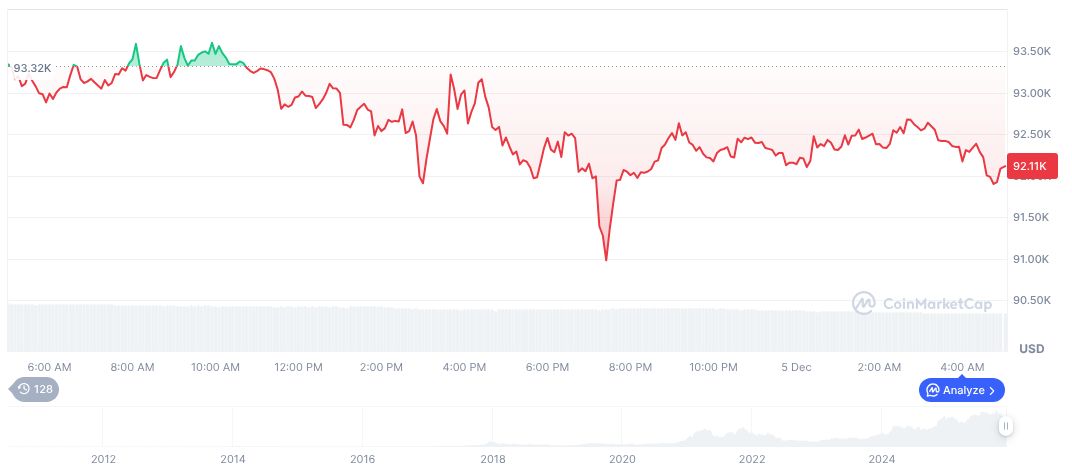
As of December 5, 2025, Bitcoin (BTC) was trading at $89,680.06, with a market capitalization of $1.79 trillion and a market dominance of 58.72%. According to available data, BTC experienced a 24-hour trading volume of $62.91 billion, reflecting a decrease of 7.98%. The 30-day price trend showed a decline of 13.75%, indicating a broader negative momentum over recent months.
Research indicates that the prolonged absence of a clear regulatory framework could discourage investment and hinder technological advancements within Poland's cryptocurrency ecosystem. While some stakeholders may prefer to wait for more precisely defined future legislation, others express concerns about the instability arising from non-standardized rules. This situation could potentially limit Poland's capacity to influence the direction of regional crypto trends.