


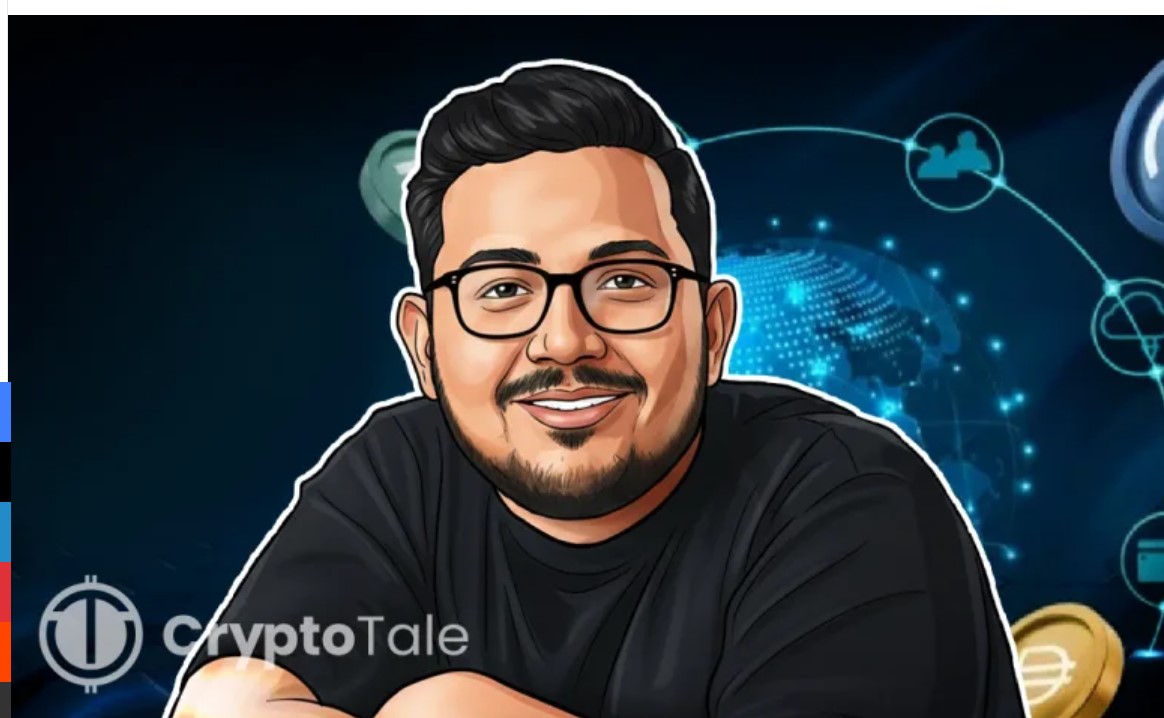
Polygon Foundation CEO Sandeep Nailwal has stated that the U.S. dollar may experience increased power in the near to medium term. These remarks offer a direct counterpoint to Bridgewater Associates founder Ray Dalio, who has previously cautioned that the dollar's global dominance might diminish due to escalating U.S. debt levels.
Nailwal shared his perspective on X, asserting that stablecoins are fundamentally altering the way the dollar engages with international markets. He characterized this ongoing evolution as "Dollarisation 2.0," a transformation that is already evident in developing regions.
Stablecoins are Redefining Dollarisation on a Global Scale
Nailwal explained that stablecoins not only generate consistent demand for U.S. debt but also reshape the dollar's relationship with the rest of the world. Historically, the dollar's influence was primarily exerted at the corporate and governmental levels.
According to Nailwal, stablecoins have now extended this relationship to encompass a business-to-consumer dynamic. Individuals with internet access can now directly hold and utilize digital dollars through blockchain-based systems. He believes this transition signifies a new era of dollarisation, granting individuals the same level of access that was once exclusive to large institutions.
He indicated that the dollar is becoming more influential because stablecoins make it accessible to anyone with an internet connection. Nailwal highlighted the rapid adoption observed in Latin America and Africa, where high inflation and underdeveloped banking systems have prompted individuals to seek out digital dollar solutions.
In these regions, stablecoins such as Tether's USDT and Circle's USDC have emerged as preferred instruments for savings and transactions. Data from DeFiLlama indicates that the total market capitalization for stablecoins now surpasses $300 billion, with significant growth in usage observed in emerging markets.
Governments Face New Monetary Challenges
Nailwal also issued a warning that this trend could pose a challenge to national monetary sovereignty. He suggested that governments will face increasing pressure to authorize and encourage the adoption of "open-loop" local stablecoins to maintain their economic competitiveness.
Such systems would enable citizens to conduct transactions using digital dollars while retaining local oversight through established regulatory frameworks. Nailwal posited that this approach could help strike a balance between fostering innovation and ensuring adequate supervision in economies that are rapidly embracing digital technologies.
Stablecoins are increasingly becoming integral to decentralized finance (DeFi) ecosystems and global payment infrastructure. As blockchain technology gains wider adoption, stablecoins are bridging traditional finance with decentralized networks, facilitating faster and more cost-effective cross-border transactions.
Nailwal Contrasts with Ray Dalio's Warning on the Dollar
His statements stand in direct opposition to the views expressed by Ray Dalio, who has cautioned that the United States' fiscal challenges could undermine the dollar's status as a reserve currency. Dalio has argued that excessive money printing, political polarization, and mounting national debt could erode global confidence in the U.S. dollar.
Nailwal, conversely, contends that stablecoins are actually reinforcing the dollar's global reach rather than diminishing it. By integrating digital dollars into blockchain systems utilized worldwide, he believes the U.S. currency is now operating closer to end-users than at any previous point in history.
This integration on-chain, he argued, provides the dollar with a novel level of global connectivity that traditional financial systems are unable to replicate. Both perspectives underscore the transformative impact of blockchain technology and stablecoins on the international financial landscape. As "Dollarisation 2.0" continues to unfold, the dollar remains central to this digital paradigm shift, emerging as stronger, faster, and more accessible to individuals across the globe.