


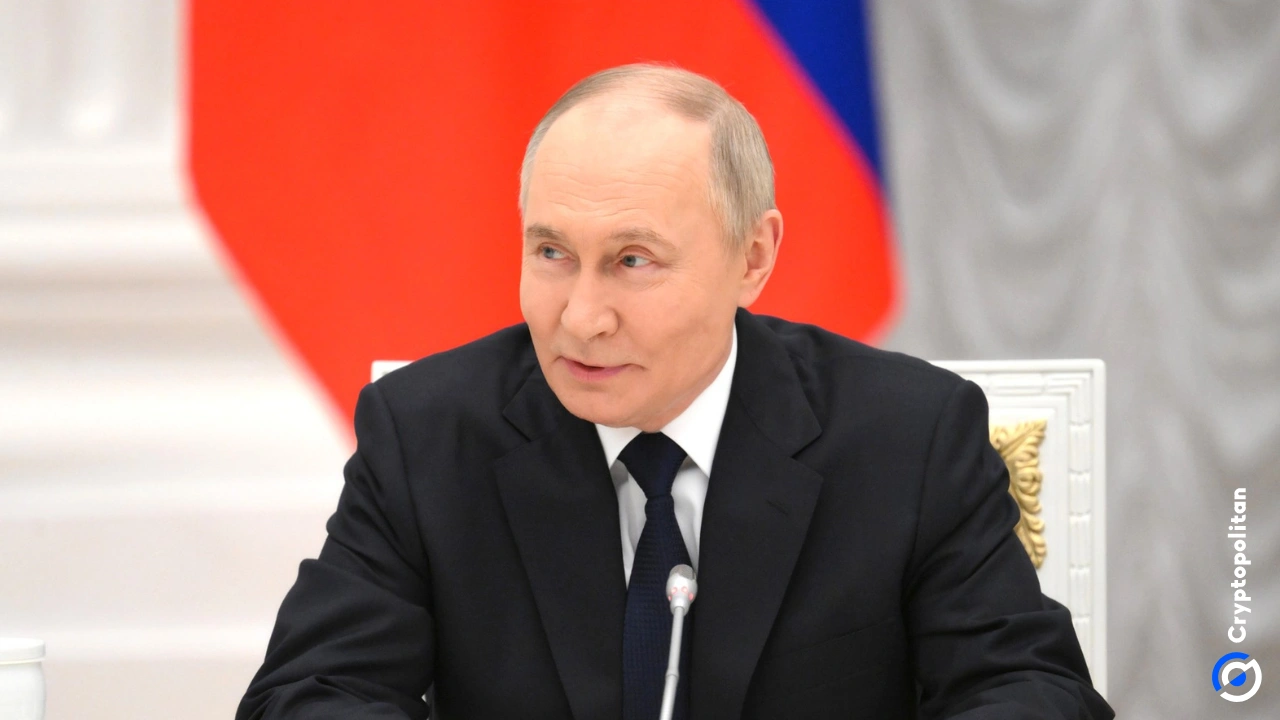
Putin Urges Transition from Autonomous System Trials to Mass Adoption
President Vladimir Putin has called for a rapid shift from testing autonomous transportation systems to their widespread implementation across Russia. Speaking at a meeting focused on the development of these technologies, Putin emphasized the urgency for the nation to catch up with global leaders in the field.
“I would like to draw the attention of participants and all the colleagues in the government: there is a need to move quicker from experiments to mass use of autonomous solutions.”
He further stated that both federal and regional authorities must take a leading role in driving these efforts. Putin acknowledged that while Russia has made progress, it still lags behind countries that have achieved complete self-sufficiency in producing components for autonomous vehicles and are already deploying them on a large scale.
“For example, robotic taxis are engaged and carry passengers in certain cities of the world, not as part of individual experiments but in mass numbers,” he noted.
Despite this assessment, Putin expressed admiration for the autonomous vehicle prototypes showcased at the meeting. He was presented with a diverse range of products and applications, spanning sectors such as agriculture, construction, and security.
“It should be said it is impressive! The boldness and variety of designers’ proposals, and how technologies created by them dramatically change life around us, forming the real economy of autonomous systems,” Putin remarked, underscoring the strategic importance of accelerating this industry's growth.
Plans for Scaling Driverless Truck Production and Export Potential
Russian companies are actively increasing their domestic production of autonomous vehicles. As of the latest reports, 95 self-driving trucks have been manufactured and are currently operating in commercial transportation routes, including the Central Ring Road around Moscow and the M-11 Neva highway connecting Moscow to St. Petersburg.
According to materials presented at the exhibition held alongside the presidential meeting, the plan is to expand this fleet to 920 units by the end of 2028. The ambitious goal outlined in the presentation aims to increase the production of driverless trucks from a few hundred units in 2026-2027 to thousands of units by 2030.
Putin expressed confidence in Russia's ability to secure a significant position in the global market for autonomous systems, particularly through scaled-up exports, which he believes will foster a robust and economically viable industry.
“It is very large, this international market. We are awaited there, I assure you. I simply know that. All our friends, our partners told us that.”
He stressed the importance of streamlining customs and other procedures to support national companies, enabling them to compete effectively with international manufacturers.
Domestically, Putin anticipates that self-driving solutions will contribute to substituting low-skilled labor, enhancing productivity, improving the quality of life, and fostering an economy with higher wages.
Broader Context: Russia's Focus on Advanced Technologies
President Putin has consistently advocated for Russian officials to prioritize the development of advanced technologies within the country. This focus extends to artificial intelligence (AI), which he has described as a double-edged sword.
In December, Putin highlighted the transformative potential of AI, warning that failing to engage with it would lead to significant disadvantages, while also cautioning against its unthinking application. He commented that not using AI “would mean losing everything we care about,” but warned that “if we use it thoughtlessly, it will also end up in the loss of everything we value.”
In November, Putin visited an exhibition showcasing Russia's advancements in AI and robotics. During the event, he interacted with a humanoid robot named Green, developed by engineers at Sber. This demonstration followed an earlier, less successful debut of Russia's "first" AI robot, Aidol, which experienced a public malfunction at an event in Moscow.