Key Points
- •SEC Chairman Paul Atkins has spoken about the potential for tokenization to be adopted in U.S. markets within the next few years.
- •The integration of blockchain technology is expected to enhance market efficiency.
- •Regulatory frameworks may need to adapt as digital assets become more integrated into financial systems.
Tokenization's Role in Modernizing U.S. Financial Markets
SEC Chairman Paul Atkins recently indicated on Fox Business that U.S. markets could embrace tokenization within a few years. Atkins' comments suggest a potential openness to integrating blockchain technology into financial systems, hinting at future regulatory shifts and increased institutional involvement in tokenization.
Paul Atkins announced the move towards tokenization, advising that it could become a core feature in U.S. markets in a few years. His comments emphasize the potential transformation of markets through digital assets and blockchain technology. This concept aims to modernize financial systems and improve efficiency. In his words, "Tokenization could become a core feature of U.S. markets in just a few years."
As Paul Atkins highlighted, tokenization would support broader regulatory and technological progress in markets, potentially unlocking new financial avenues. This evolution could lead to increased adoption of blockchain technology and digital asset exchanges. Market reactions have been mixed, with industry leaders contemplating the potential impact on regulatory frameworks and financial operations.
Blockchain Integration and Its Economic Implications
The integration of blockchain technology is expected to enhance market efficiency. Regulatory frameworks may evolve with digital asset integration.
Insights from the Coincu research team suggest tokenization could lead to substantial regulatory updates and advancements in market technology. By integrating blockchain more fully, experts foresee enhanced transparency and transaction speed, supporting widespread economic benefits across sectors.
Did you know? In the late 1990s, online trading revolutionized traditional stock markets, akin to how tokenization could, within a few years, modernize and potentially reshape financial systems.
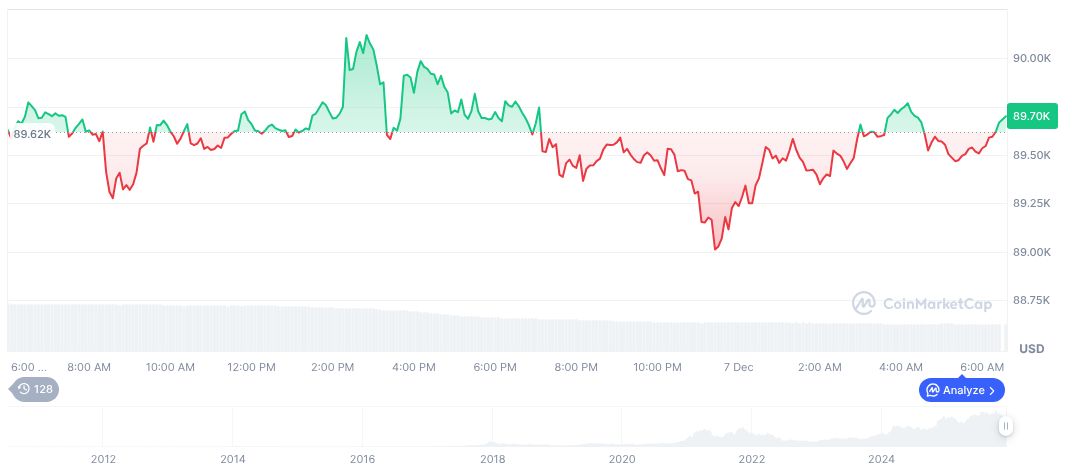
According to data, Bitcoin (BTC) is currently valued at $91,110.20 with a market cap of $1.82 trillion. BTC's market dominance stands at 58.83%, amid fluctuating prices over the past 90 days. Recent trading volumes reached $51.14 billion, reflecting a 1.84% 24-hour price increase.