


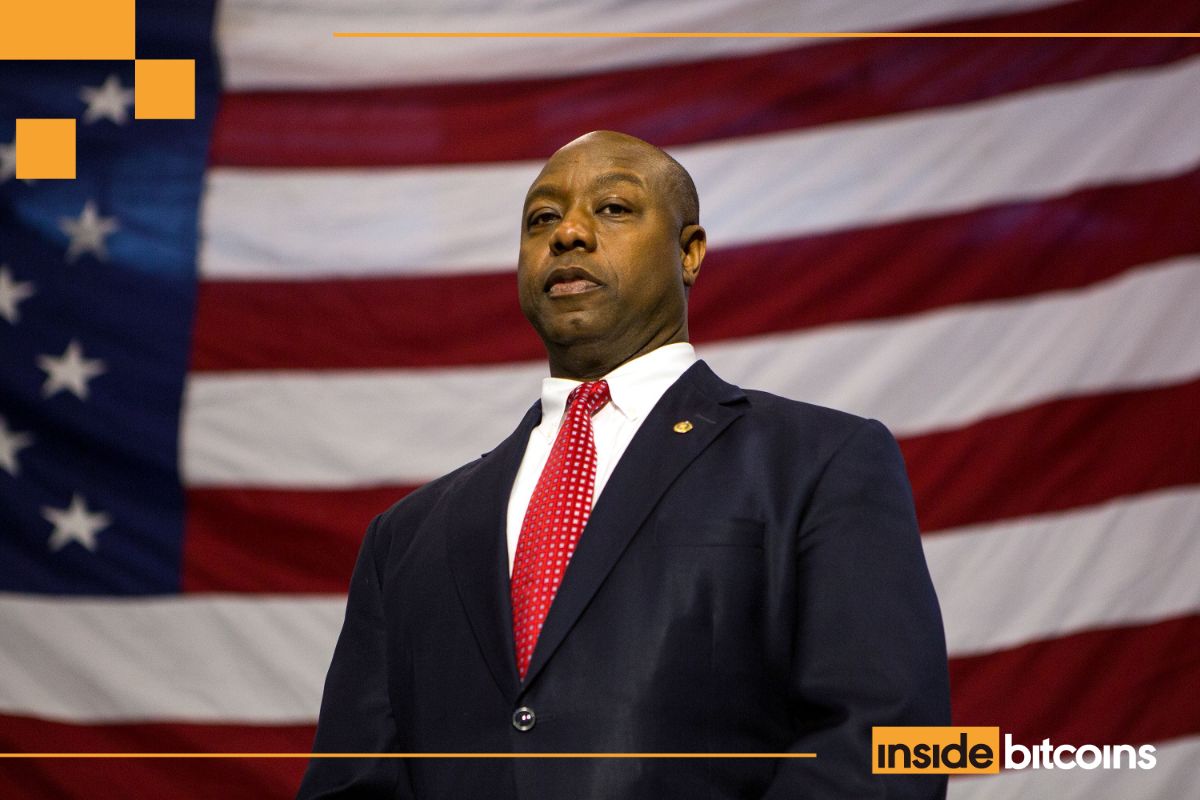
Senate Banking Committee Chair Tim Scott stated that he is advocating for the markup of a crypto market structure bill before the end of the year, with the aim of sending it to President Donald Trump's desk shortly thereafter.
“Next month, we believe we can mark up in both committees and get this to the floor of the Senate early next year so that President Trump will sign the legislation making America the crypto capital of the world,” Scott said in a recent interview with Fox Business.
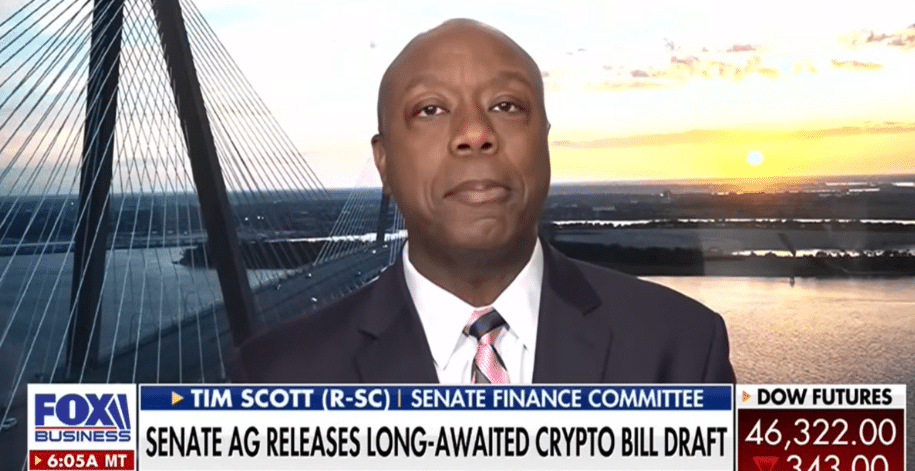
Scott added that the committee has been engaged in discussions with Democrats and is attempting to negotiate a deal. However, he accused the party's senators of hindering progress.
Lawmakers Working on Separate Drafts of the Crypto Market Structure Bill
Earlier this year in July, the House of Representatives passed the CLARITY Act, which delineates the authority of the Commodity Futures Trading Commission (CFTC) and the Securities and Exchange Commission (SEC) in regulating the crypto market.
The Senate has been developing its own draft bill. Republicans on the Senate Banking Committee released a discussion draft concerning their portion of the bill in July. They also indicated that their proposed bill would be integrated with the CLARITY Act.
Concurrently, in December, the Senate Agriculture Committee released its own discussion draft on November 10, leaving significant portions of the bill open for amendment.
The Agriculture Committee holds jurisdiction over the CFTC, while the Banking Committee oversees the SEC. The latter committee is also leading the parts of the bill related to securities laws.
Democrats Divided on Crypto Regulation
As US senators negotiate the bill's language and debate its specifics, vocal crypto critic and Democratic Senator Elizabeth Warren continues to emphasize President Trump's potential conflict of interest, citing his family's connections to the digital asset industry and his advocacy for pro-crypto policies in the US.
Recently, the Senator, along with ally Senator Jack Reed, sent a letter to US Treasury Secretary Scott Bessent and Attorney General Pam Bondi requesting information regarding reports that the Trump-linked World Liberty Financial allegedly sold tokens to entities associated with "North Korea, Russia, and other illicit actors."
According to the senators, these sales, as highlighted by Accountable.us, "raise serious questions about WLF’s due diligence policies or procedures, including whether its tokens or other products enable sanctions evasion, money laundering and terrorist financing."
While Senator Warren's opposition to crypto policy could further impede progress and pose challenges for the industry, a division has begun to emerge among Democrats on the Senate Banking Committee regarding crypto policy.
While Warren maintains her position that the industry is excessively risky and the President's involvement constitutes a conflict of interest, other members are continuing to negotiate legislative language.
"Good Chance That Bill Mark Up Will Come in December," Says Coinbase CEO
Despite resistance from Senator Warren and other Democrats, Coinbase CEO Brian Armstrong stated in a recent video posted on X that he was in Washington, D.C., and was "pushing for market structure legislation." He also noted that "a lot of progress" has been made.
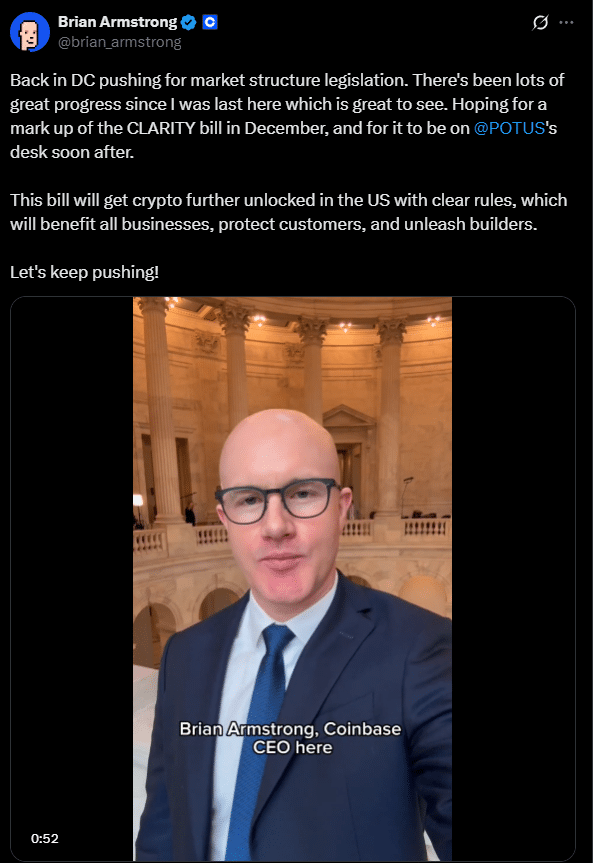
“Senate banking is also working nights and weekends to get the next iteration of their text out, so we’ve got a good chance, I think, of a markup for this bill in December,” Armstrong said.
“This would be a big milestone to get crypto unlocked with clear rules in the US, which would benefit all companies,” he added.
Next Steps for the CLARITY Act
The CLARITY Act is one of three significant bills that the House passed in July following a 10-hour voting session. The other two acts are the GENIUS Act, which aims to establish a regulatory framework for stablecoins, and the Anti-CBDC Surveillance Act, which prohibits central bank digital currencies.
As the Senate is developing its own version of the CLARITY Act, the bill will need to return to the House for final approval if it passes the Senate. Subsequently, it will be sent to President Trump's desk to be signed into law.
Currently, Republicans hold the majority in the Senate with 53 seats, while Democrats hold 47 seats. Any proposed legislation will require 60 votes to pass.