


Key Developments in Crypto Regulation
The U.S. Senate Banking Committee, under the leadership of Chairman Tim Scott, has postponed a critical vote on the crypto market structure bill. This vote was initially scheduled for January 15 and has been delayed following significant lobbying efforts from the cryptocurrency industry.
This postponement introduces a period of heightened uncertainty within the cryptocurrency sector. It impacts the legislative clarity surrounding Decentralized Finance (DeFi) classification, stablecoin yields, and token issuance, particularly as divergent perspectives from key stakeholders continue to emerge.
Legislative Impact and Industry Concerns
The passage of this bill could significantly reshape crypto market structures and potentially boost adoption by providing clearer regulatory guidelines. However, opposition has been voiced by prominent figures, including Brian Armstrong, who has highlighted potential privacy concerns and the implications for the Commodity Futures Trading Commission's (CFTC) authority.
These potential changes could have a broad influence on the financial landscape, especially concerning institutional interest and investment in digital assets. Market reactions to the delay have been mixed, with some analysts noting a negative sentiment. Coinbase CEO Brian Armstrong has underscored the importance of finalizing these legislative efforts, suggesting that national regulatory clarity is essential for the industry's growth.
This bill reflects months of serious bipartisan negotiations and real input from innovators, investors and law enforcement, and affirmed, “everyone remains at the table working in good faith.”
Market Performance and Historical Parallels
In a notable historical parallel, the GENIUS Act in 2025 prohibited interest on stablecoin reserves, a concept that resonates with current proposals affecting DeFi classification. This comparison serves to illustrate the inherent complexity of crypto regulation.
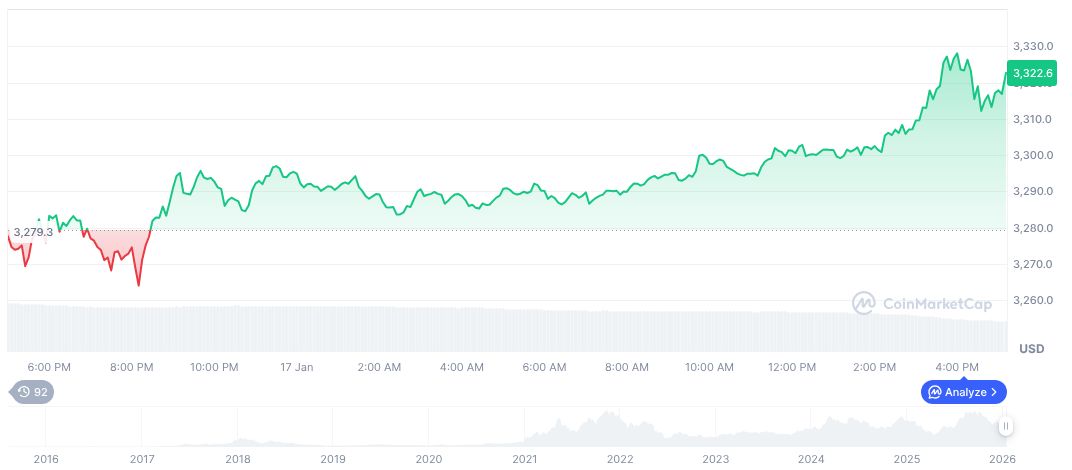
Ethereum (ETH) has experienced price fluctuations, currently trading at $3,313.96 with a market capitalization approaching $399.98 billion. While it saw a 0.57% increase in the past 24 hours, ETH has recorded an 18.01% decline over the last 90 days. Data from CoinMarketCap also indicates a significant drop in trading volume, down by 42.87%.
The Coincu research team anticipates that the future trajectory of crypto markets will be significantly influenced by ongoing legislative developments. They emphasize that while the bill's potential passage could foster greater regulatory clarity, its failure to pass might impede innovation and integration efforts within the sector. Balancing the necessity for regulatory oversight with the imperative for industry growth remains a critical challenge.