



Unverified Inflows and Data Integrity Concerns
Reports from Farside Investors suggest net inflows for a SOL Spot ETF, with claims that Bitwise's BSOL received $3.58 billion. However, these assertions have not been verified by credible primary sources or official Solana ETF issuers. The lack of verified information from official channels raises questions about data integrity and suggests potential misinformation. This situation emphasizes the critical importance of direct verification in cryptocurrency markets to prevent misleading investor decisions.
Skepticism and Absence of Official Confirmation
The announcement of a purported $382 million influx into a SOL Spot ETF has been met with significant skepticism. Official sources, including major platforms and issuers like Bitwise and Grayscale, have remained silent on such listings. Michael Sonnenshein, CEO of Grayscale, stated, "Currently, our focus remains on Bitcoin and Ethereum; any claims about Solana ETFs are unverified and unsupported by primary sources." Industry leaders have also refrained from commenting, with critical voices stressing the need for verified disclosures and transparency in decentralized finance and ETF products.
Solana Market Trends and Expert Opinions
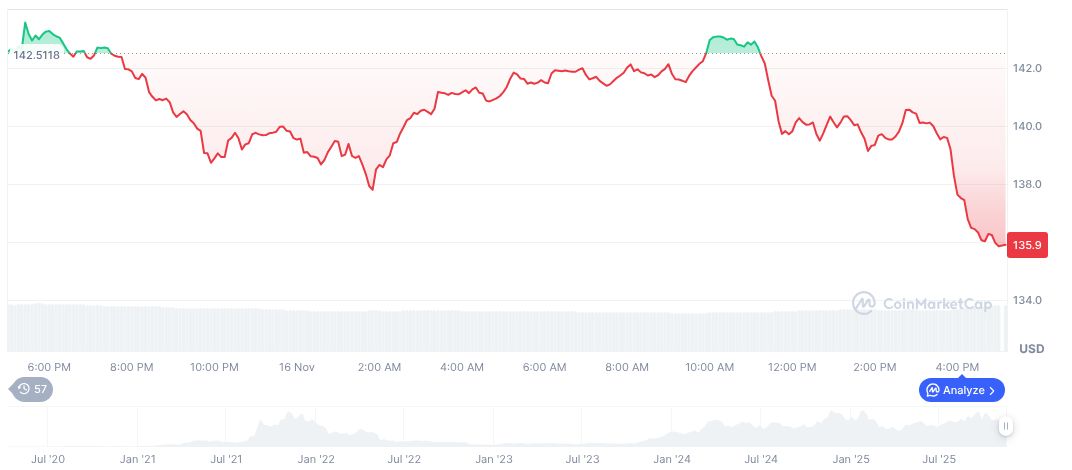
The alleged SOL Spot ETF inflows, if genuine, could have marked one of the shortest unverified periods of significant inflows in crypto ETF history. Bitcoin and Ethereum ETFs have historically shown a pattern of trailing broader crypto adoption post-listing. Current data indicates that Solana (SOL) is priced at $135.95, with a market cap of $75.34 billion and a trading volume of $3.82 billion, showing a decrease of 3.36%. Recent volatility reveals a 42.00% decrease over 60 days, reflecting downturns connected to broader digital asset market weaknesses.
The Coincu research team suggests that without authentic primary sources to support these ETF product claims, the impact on the broader market is minimal. Historical trends show that prior ETF listings have influenced major assets' volatility and volume, but regulatory oversight continues to be the authority over validity and listing practices.