


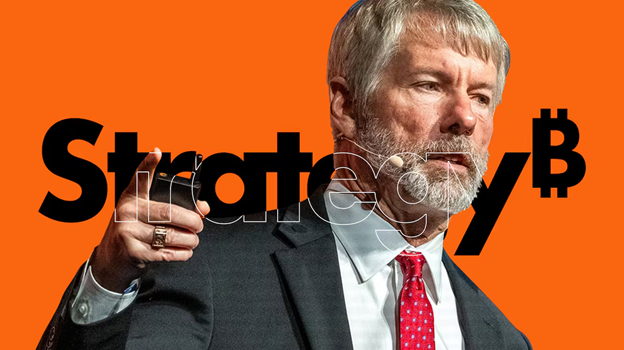
S&P Global Ratings has assigned Michael Saylor’s Strategy a B- credit rating, categorizing the Bitcoin treasury company within the speculative, non-investment-grade bracket. The agency has maintained a stable outlook for the company, as detailed in a note published on Monday. S&P identified several weaknesses, stating, "We view Strategy’s high bitcoin concentration, narrow business focus, weak risk-adjusted capitalization, and low U.S. dollar liquidity as weaknesses." This assessment specifically highlights the company's substantial reliance on Bitcoin as its primary asset and its limited diversification in business operations. The rating marks a significant development, making Strategy the first Bitcoin-treasury-focused company to undergo an S&P Global assessment and establishing a benchmark for how traditional credit rating agencies evaluate the risks associated with businesses centered on digital assets.
Investor Takeaway
Strategy’s speculative rating underscores the credit challenges inherent in a corporate model that is almost entirely built around Bitcoin. Liquidity and timing risk remain the paramount concerns for investors.
Debt and Currency Exposure
Strategy currently holds 640,808 BTC, which has been accumulated predominantly through a combination of equity and debt financing. S&P’s stable outlook is contingent on the company’s prudent management of its convertible debt maturities and preferred stock dividends, which may involve new debt issuances. The agency pointed out an "inherent currency mismatch," noting that Strategy's debt obligations are denominated in U.S. dollars, while its reserves are primarily held in Bitcoin. Furthermore, the company uses these funds to support its enterprise software operations, which are currently generating cash flow at approximately breakeven. S&P issued a warning that a sharp correction in Bitcoin's price could rapidly tighten the company's liquidity position. The agency also cautioned that convertible debt could become due during periods of market stress, potentially compelling Strategy to liquidate Bitcoin holdings at significantly reduced prices. The company's credit rating could be further downgraded if its access to capital markets diminishes or its capacity to refinance existing debt deteriorates.
Comparison With Sky Protocol
Strategy’s B-minus rating is identical to that of Sky Protocol, formerly known as MakerDAO, which S&P rated in August. Both companies were classified as speculative-grade due to their limited capitalization and concentrated asset exposure. For Sky Protocol, S&P cited high depositor concentration, centralized governance, and weak capital buffers as critical vulnerabilities. To move beyond the "junk" status and achieve investment-grade, Strategy would require six rating upgrades to reach BBB-minus, the lowest investment-grade threshold. Industry analysts suggest that while an upgrade within the next twelve months is improbable, S&P might reassess the rating if Strategy enhances its U.S. dollar liquidity, reduces its dependence on convertible debt, and maintains consistent access to credit markets, even during market downturns.
Stock Market Reaction and Outlook
Strategy’s stock, which was recognized as one of the Nasdaq's top performers in 2024 with a remarkable 430% rally, has experienced a 13% decline year-to-date in 2025, according to Google Finance data. However, shares saw a 2.27% increase on Monday following the S&P announcement, indicating that investors were not significantly deterred by the speculative credit rating. The company's Bitcoin-centric business model has historically been a point of contention among analysts. Proponents view it as a high-beta proxy for Bitcoin's price movements, while critics argue that this strategy amplifies financial risk. Currently, S&P's rating places Strategy in the same category as other highly leveraged, crypto-exposed entities operating within a volatile market environment, characterized by limited dollar liquidity buffers.
Investor Takeaway
While S&P’s rating has not adversely affected Strategy’s share price at present, it fundamentally underscores the company's deep dependence on Bitcoin's market cycle and its significant exposure to currency and refinancing risks.