


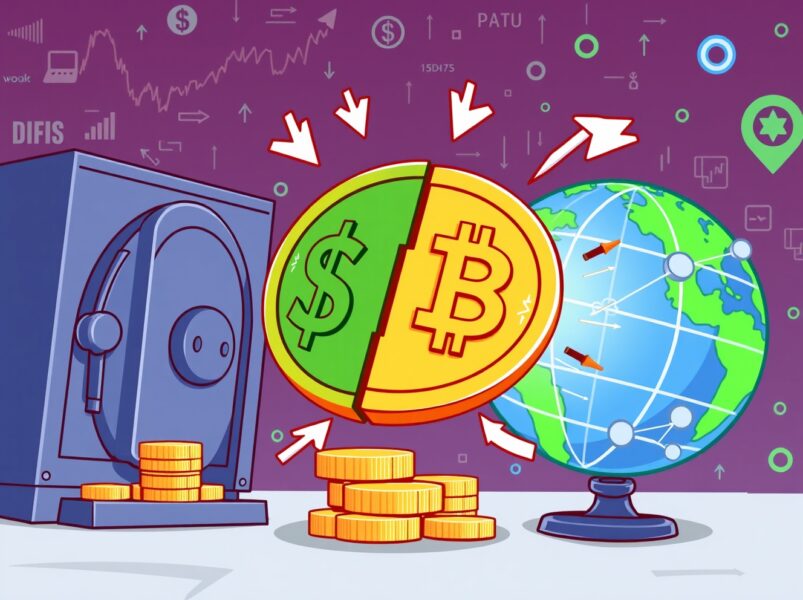
Could the digital tokens in your crypto wallet actually help fund the U.S. government? A recent Bloomberg analysis reveals a fascinating debate: experts are divided on whether stablecoins will become a powerful new source of dollar liquidity or simply reshuffle existing money. This discussion sits at the critical intersection of cryptocurrency innovation and global finance.
The Stablecoin Dollar Liquidity Debate
Bloomberg highlights a central question with major implications. If stablecoin legislation passes in the U.S., these digital assets pegged to the dollar could create massive new demand for U.S. Treasurys. Think of it this way: to back each digital stablecoin, companies would need to hold real dollar assets, often U.S. government debt. This potential influx of capital could lower government borrowing costs and reinforce the dollar’s global dominance. However, the opposing view is cautious. Skeptics argue this growth might not create new money but simply pull it from bank deposits or money market funds.
Skepticism from Traditional Finance Experts
The path for stablecoins to become a true source of dollar liquidity is not guaranteed. Bloomberg notes several significant hurdles that temper optimism:
- •Limited Use Cases: Beyond crypto trading, real-world adoption for payments and remittances is still growing.
- •Regulatory Uncertainty: Without clear rules from Congress, large-scale institutional adoption remains stalled.
- •Trust Issues: Past failures in the sector make users and regulators wary.
- •Slow Market Penetration: Widespread public and merchant acceptance is a gradual process.
Therefore, the traditional financial sector questions if stablecoins can genuinely unlock new demand or if they will just compete with existing dollar instruments.
Potential Impact on U.S. Debt and Global Finance
Let’s explore the optimistic scenario. If stablecoins see explosive growth, the mechanism is straightforward. For every new dollar-pegged stablecoin minted, the issuer must acquire a corresponding dollar asset. This could directly translate into increased purchases of U.S. Treasurys. The potential benefits are compelling:
- •Lower Borrowing Costs: Increased demand for U.S. debt can reduce the interest rates the government pays.
- •Dollar Strength: It could cement the dollar’s role as the world’s primary reserve currency in the digital age.
- •Financial Innovation: It creates a novel bridge between decentralized finance and traditional monetary systems.
This vision positions stablecoins not just as a crypto tool, but as a potential pillar of modern dollar liquidity.
The Realistic Future for Stablecoin Adoption
The journey from niche to mainstream is the core challenge. For stablecoins to fulfill their potential as a major source of dollar liquidity, they must move beyond crypto exchanges. They need to become a preferred tool for:
- •Cross-border payments and remittances
- •Everyday retail transactions
- •Corporate treasury management
This requires not only technological reliability but also regulatory clarity and a seismic shift in public trust. The current divide in outlook, as reported by Bloomberg, stems from whether you believe this adoption will happen quickly or incrementally.
Conclusion: A Pivotal Moment for Digital Assets
The debate over stablecoins and dollar liquidity is more than a financial technicality. It’s a referendum on the future role of digital assets in the global economy. Will they become a transformative new source of capital, or a digital repackaging of the old system? The answer hinges on adoption, regulation, and market trust. One thing is clear: the outcome will significantly shape the next decade of both cryptocurrency and traditional finance.
Frequently Asked Questions (FAQs)
Q1: What are stablecoins?
A1: Stablecoins are a type of cryptocurrency designed to have a stable value, typically pegged to a fiat currency like the U.S. dollar. They aim to combine the benefits of digital assets with the price stability of traditional money.
Q2: How could stablecoins increase demand for U.S. Treasurys?
A2: If a stablecoin is pegged to the dollar, its issuer often holds U.S. dollar assets, like Treasurys, as collateral. More stablecoins in circulation could mean these issuers need to buy more Treasurys to back them, increasing demand.
Q3: What is meant by ‘dollar liquidity’?
A3: Dollar liquidity refers to the availability of U.S. dollars for lending, borrowing, and transactions in the global financial system. A new ‘source’ would mean a new, large pool of dollars entering this system.
Q4: Why is the traditional finance sector skeptical?
A4: Traditional institutions question whether stablecoins will attract truly new money or simply divert funds from existing products like bank deposits and money market funds. They also cite regulatory and trust barriers.
Q5: What needs to happen for stablecoins to succeed as a liquidity source?
A5: Key requirements include clear U.S. legislation, broader real-world use cases beyond crypto trading, building public trust after past failures, and achieving widespread adoption for payments.
Q6: Could this debate affect the average crypto user?
A6: Absolutely. Positive regulatory developments could lead to more secure, widely accepted stablecoins for everyday use. Conversely, stringent rules or a loss of confidence could limit their utility and growth.