


Supreme Court Examines Legality of Presidential Tariffs
On November 5, 2025, the U.S. Supreme Court heard oral arguments concerning the legality of tariffs imposed by former President Trump. The proceedings in Washington D.C. delved into the extent of Congress's power over taxation and trade policy.
The potential ruling carries significant implications for U.S. trade policy, with the possibility of affecting financial markets, including cryptocurrencies, due to increased legal scrutiny and regulatory uncertainties.
Justices Question Presidential Tariff Powers
The core of the legal challenge revolves around the U.S. President's authority to impose or restrict tariffs without direct Congressional approval. Several Supreme Court justices, including those appointed during the Trump administration, expressed skepticism regarding this executive power, raising concerns about the balance of power between the branches of government.
Immediate consequences of this legal examination may include heightened volatility in financial markets as investors evaluate the potential shifts in U.S. trade policy. The Supreme Court's decision could establish a significant legal precedent concerning the scope of executive authority.
Key figures have reacted to the proceedings. Chief Justice Roberts, in particular, framed tariffs as taxes historically managed by Congress. Former President Trump has characterized the situation as "ridiculous," underscoring the ongoing tension between executive and legislative powers in matters of trade.
Donald Trump, Former U.S. President, stated, "So, can we get this straight? The President of the United States is allowed (and Congress fully approves!) to stop all trade with foreign countries (which is much more complicated than imposing tariffs!), and can even issue licenses to foreign countries, but cannot impose simple tariffs on foreign countries, even for national security. This is not at all what our great Founding Fathers intended! This is simply ridiculous!"
Market Implications and Historical Context of Tariffs
Historically, disputes over U.S. tariffs have frequently influenced global market dynamics, signaling broad implications for international trade and economic policies. This historical context is crucial in understanding the potential impact of the current Supreme Court case.
Bitcoin (BTC) was trading at $102,730.61 with a market dominance of 59.30% as of the latest reports. While the cryptocurrency saw a 0.80% growth in the past day, it experienced a 6.88% decline over the last week and a 15.85% decrease over the past month.
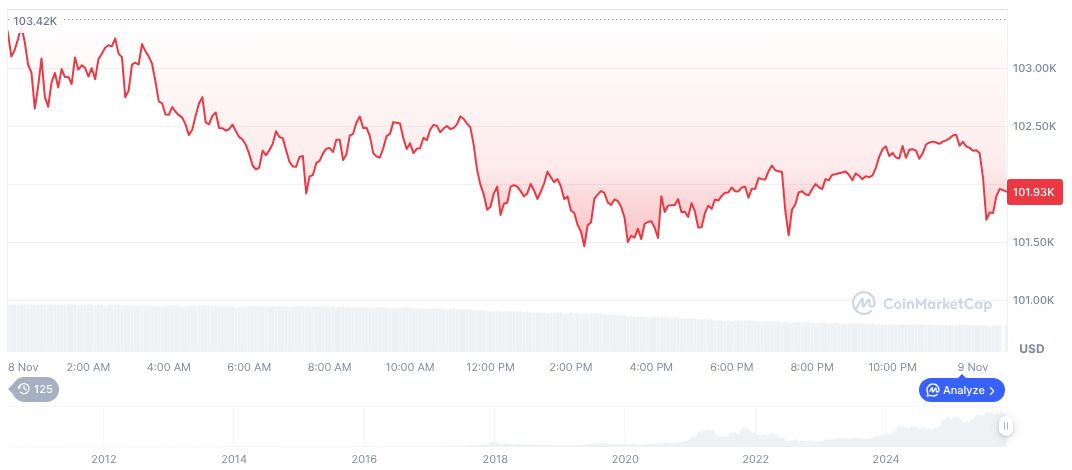
Analysis suggests that any Supreme Court decision could profoundly impact U.S.-centric markets and regulatory frameworks, potentially triggering shifts across digital asset landscapes. Historical trends indicate that periods of heightened legal scrutiny often correlate with increased market volatility.