


Initiative to Address Student Mobility Challenges
The Tertiary Education Trust Fund (TETFund) has announced plans to introduce electric vehicles across 12 selected Nigerian university campuses by November. This initiative is a key component of TETFund's intervention strategies aimed at alleviating the mobility challenges faced by students within Nigerian tertiary institutions.
During a disclosure on Tuesday, the Executive Secretary of TETFund, Arc. Sonny Echono, explained to the National Association of Nigerian Students (NANS) that the program is designed to mitigate the risks and reduce the significant time students spend commuting on campus, particularly those residing off-campus. He emphasized that this plan aligns with President Tinubu's agenda to enhance the welfare and improve the learning conditions for Nigerian students.
"Students currently face many risks and spend so much time moving around campuses, especially those who live off-campus. From next month, we will be launching electric vehicle services in selected institutions," Echono stated.
Echono further elaborated that electric vehicles offer lower transportation costs, contributing to a reduced cost of living and ensuring affordability for students. He confirmed that the vehicles will be managed by students to foster accountability and ensure the sustainability of the project. The rollout will also include the installation of charging stations to support the seamless operation of the electric shuttles.

Broader Government Intervention in Tertiary Education
This electric vehicle project is part of a larger federal government effort to address critical issues in tertiary education, including power supply, accommodation, and learning infrastructure across Nigerian institutions. The initiative complements the ongoing National Student Loan Scheme through NELFund, aimed at improving the quality of tertiary education and providing essential support to students.
"The President challenged us to improve the conditions under which our students study, from hostels and classrooms to how they commute. We are massively investing in student hostels across 72 institutions and will begin commissioning more projects from December," Echono added.
The NelFund scheme, launched in May 2024, has successfully onboarded over 282 institutions and more than 850,000 students. As of September 26, 2025, the scheme has disbursed over N107 billion across 231 institutions, with N61 billion allocated for institutional fees and N46 billion for student allowances.

Enhancing Research and Learning Infrastructure
TETFund is also prioritizing investment in learning equipment to bolster research capabilities and enhance the quality of higher education. This includes increased support for research laboratories, digital learning systems, and sustainable power projects.
"We are building multi-purpose research laboratories across universities, in Kano, Port Harcourt, Lagos, and Abuja, so that Nigerian researchers can conduct world-class research without having to send samples abroad," Echono stated.
Pioneering Institutions in Electric Vehicle Adoption
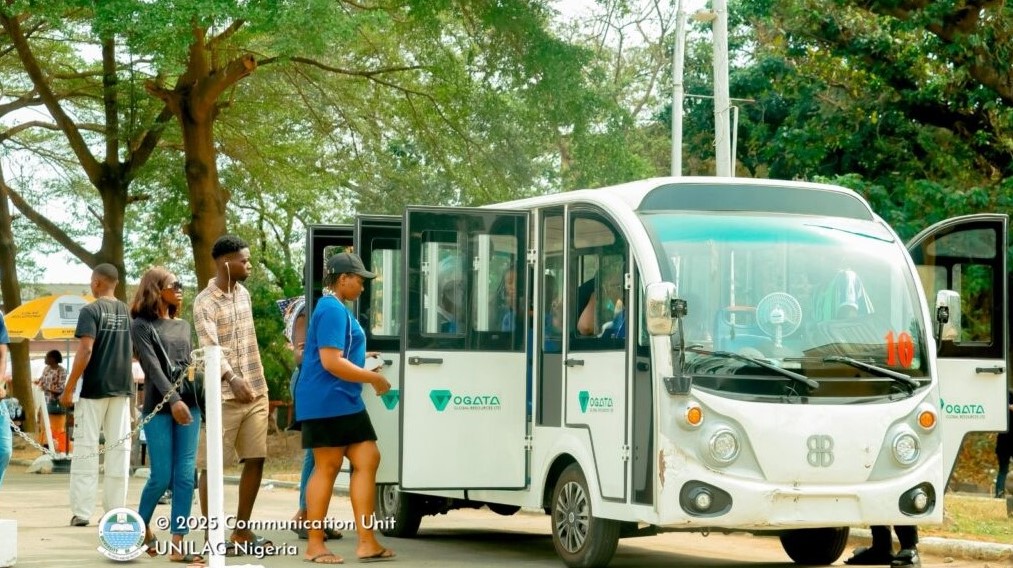
The University of Lagos (UNILAG) has been a notable pioneer in sustainable transportation within Nigerian higher education. In January 2025, the university launched its electric vehicle initiative in collaboration with Ogata Global Resources and Chart Eco Global Services. The program began with an initial fleet of 10 buses, which covered over 102,000 kilometers and resulted in a reduction of 16.78 metric tons of CO₂ emissions. The fleet was later expanded with an additional 20 electric vehicles, bringing the total to 30, with a projected mileage coverage of 700 kilometers. This expansion is expected to contribute to a projected reduction of 124 metric tons of CO₂ by the end of 2025.
The UNILAG electric vehicle initiative has set a national benchmark for cleaner and more inclusive mobility in higher learning institutions. It represents one of several green initiatives by the university aimed at reducing transportation costs, lowering carbon emissions, and fostering a healthier campus environment.
Similarly, the Federal Polytechnic, Offa, introduced its indigenous electric vehicle, the OKIN EV1, in August. This vehicle operates entirely on electricity and features a solar-energy system, enabling it to travel up to 125 kilometers on a single charge, sufficient for a round trip between Offa and Ilorin, the capital of Kwara state.
The OKIN EV1 is equipped with advanced features, including a touchscreen display for real-time monitoring and control, a reverse camera for enhanced safety, and a solar-powered extension system to increase its driving range. The development of this project commenced in 2024 and was completed in less than six months.