


On November 27, U.S. financial markets, including NYSE and Nasdaq, will be closed for Thanksgiving. This holiday schedule has led to early closures for CME and ICE futures trading globally, impacting market dynamics and potentially influencing derivative and cryptocurrency markets.
The early closure affects trading volumes and liquidity across various derivative markets. Given the correlated movements between traditional assets and cryptocurrencies, these shifts in U.S. futures markets can have implications for the crypto space.
Global Trading Dynamics Shifted by U.S. Holiday Schedule
On November 27, 2025, U.S. markets, including the New York Stock Exchange (NYSE) and Nasdaq, observed Thanksgiving closures. Trading in CME Group and ICE futures concluded early, leading to alterations in the global financial trading landscape. These adjustments are a routine part of the yearly holiday schedule for various futures contracts.
Specifically, trading for precious metals, U.S. crude oil, and stock index futures ended earlier than usual. These adjustments have broader implications for global market activities, influencing future trading patterns. Investors are closely monitoring these shifts, preparing for potential ripple effects across different asset classes.
Tracy R. Wolstencroft, CEO of CME Group, stated, "CME Group's precious metals and US crude oil futures contracts will end early at 03:30 Beijing Time on November 28."
Crypto Markets' Response to U.S. Holiday Trading Patterns
Historically, U.S. market closures during major holidays like Thanksgiving often result in decreased trading activity, which can impact global financial markets. Such patterns highlight the interconnectedness of global trading systems with the U.S. holiday calendar.
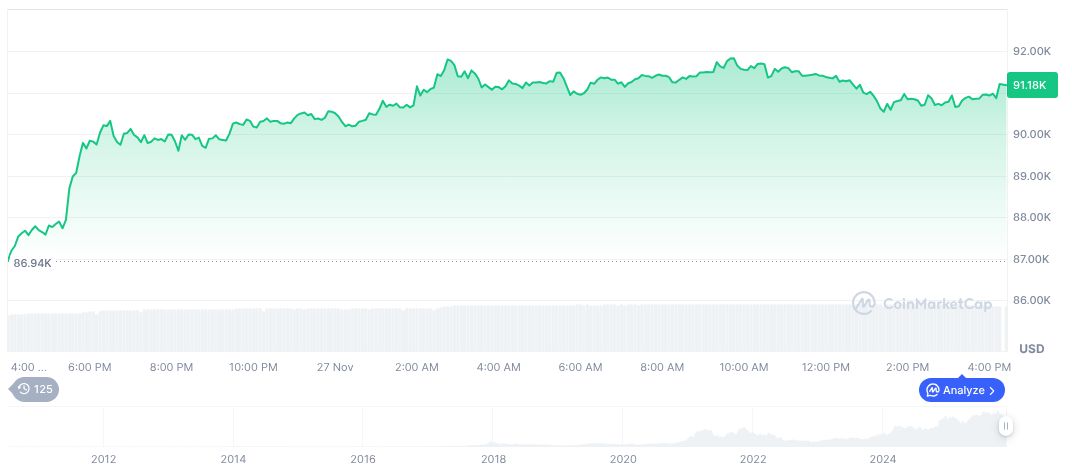
According to CoinMarketCap, Bitcoin (BTC) is currently priced at $91,513.24, with a market capitalization of $1.83 trillion and a market dominance of 58.53%. The trading volume stands at $58.97 billion, showing a decline of 10.37%. Recent price movements indicate a 1.86% increase over the past 24 hours and a 4.86% rise over the past week.
Research from Coincu's team indicates that U.S. financial market closures can trigger shifts in cryptocurrency trading behaviors. Analysis of historical trends suggests that these adjoining market closures prompt temporary changes in liquidity and transactional activities, particularly affecting derivative assets linked to traditional markets. These patterns reflect strategic adjustments by global investors who are attentive to time-sensitive trading windows.