


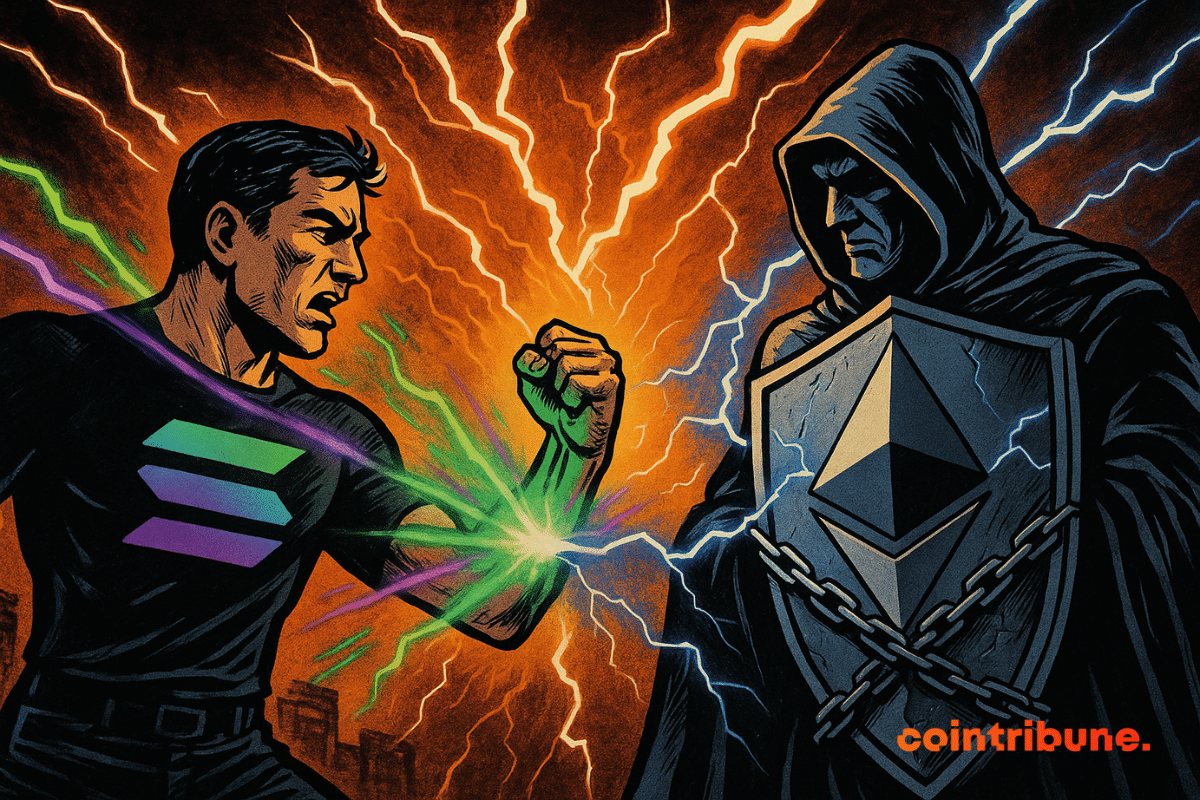
Ethereum, often hailed as a beacon of decentralization, is facing renewed scrutiny regarding the security of its scaling solutions. Anatoly Yakovenko, co-founder of Solana, has voiced significant concerns, suggesting that Ethereum's Layer-2 (L2) networks may harbor critical flaws despite their promises of enhanced scalability and inherited security from the main Ethereum chain (L1).
Key Points on L2 Security and Ethereum's Ecosystem
- •Yakovenko has highlighted that certain multisignature (multisig) controls on L2 bridges can potentially modify bridge contracts without user awareness or transparency.
- •The proliferation of over 120 Layer-2 solutions around Ethereum is creating fragmentation, user confusion, and potential security risks.
- •Binance Research has indicated that the fees collected by L2 networks may reduce revenue for Ethereum's main layer.
- •Conversely, some proponents argue that these L2 networks contribute to the strengthening of the crypto ecosystem through technological diversity.
Can Ethereum's Ecosystem Truly Guarantee Layer-2 Security?
Anatoly Yakovenko's critique, amplified by his prominent role in the Solana ecosystem, has ignited debate within the cryptocurrency community. He contends that the assertion that Layer-2 solutions are inherently protected by Ethereum is misleading. Yakovenko points to auditability challenges, a broad attack surface, and a governance model that remains too centralized on many L2s. He specifically identifies the use of upgradeable multisigs as a significant vulnerability that undermines any genuine security guarantees.
In a pointed statement on X, Yakovenko asserted, "All existing second-layer (L2) solutions have a permissioned multisig that can override the bridge contract without notice."
He drew a parallel between the risks associated with ETH transferred to Solana via the Wormhole bridge and ETH utilized on Base, an L2 developed by Coinbase. Yakovenko's argument implies that both these systems generate comparable revenue for Ethereum L1 stakers, suggesting that the L2 model may not be as robust as commonly believed.
However, some figures, such as user @lex_node, have countered this view by emphasizing Ethereum's capability to enforce transaction inclusion in L2 blocks, thereby offering a form of native security.
Layer-2 Proliferation: Multiplication or Fragmentation in the Crypto Space?
The cryptocurrency landscape currently hosts over 120 verified Layer-2 solutions, with an additional 29 awaiting evaluation, according to data from L2Beat. This extensive growth has sparked differing opinions. Adrian Brink of Anoma views this as an excessive number, while Igor Mandrigin of Gateway.fm celebrates it as necessary diversity. Anurag Arjun of Polygon highlights the value of these networks as high-throughput blockchains. Nevertheless, this rapid expansion comes at a cost, with Binance Research warning that the competitive fees charged by L2s could diminish revenues for Ethereum's base layer.
The highly competitive fee structures of L2s are under particular scrutiny for fragmenting liquidity and diverting transactions away from the Ethereum L1. Yakovenko has taken this critique further, even proposing a conceptual bridge that would effectively position Ethereum as a Layer-2 solution for Solana, a provocative technical suggestion that underscores the ongoing tensions surrounding network sovereignty.
Statistical Insights into the Layer-2 Landscape
- •As of October 2025, L2Beat reports 129 active Ethereum Layer-2 solutions.
- •Yakovenko estimates that each L2 utilizes a single, centralized multisig control.
- •For every ETH transferred to L2s like Base or through bridges like Wormhole, the L1 revenue generated is minimal.
- •The existing Ethereum bridge infrastructure does not require protocol modifications to ensure exit guarantees.
While Yakovenko's challenges to established assumptions continue to resonate, Charles Hoskinson, the founder of Cardano, has made a bold prediction, forecasting the potential demise of Ethereum within the next 15 years. This statement invites contemplation, blurring the lines between provocation and prophecy.