



In early 2025, software engineer Moore Dagogo-Hart conceived of "Cognito" while in Lagos. This word, initially elusive, began to hold significant weight as he reflected on his past challenges and ongoing ventures.
At that time, a similar concept did not exist. Moore's previous project, Syx Labs, was a survival mechanism built from the remnants of an earlier endeavor. In 2022, Apple rejected Nebula, a crypto wallet developed by his first company, Solarsoft, which aimed to introduce blockchain tools to Africa. Apple's apprehension towards cryptocurrency halted the project, prompting Moore to rebuild.
Moore described Syx Labs, a small team of software developers, as a project born of necessity—a temporary refuge and a testing ground for ideas amidst uncertainty. During this period, his friend Tobiloba Asu-Johnson was developing Zap Africa, a non-custodial crypto exchange designed to empower Nigerians with control over their assets. Moore joined Zap Africa as co-founder and CTO, and his Syx Labs team became the core engine for the platform's architecture and systems.
When Zap Africa experienced a surge of 10,000 new users in a single day, the team celebrated, but a realization soon followed. While other aspects remained stable, Syx Labs had outgrown its initial purpose, serving as a reminder that its formation was reactive rather than visionary.

It was at this juncture that Moore remembered the earlier dream and the name "Cognito," representing something more expansive than just software. If Solarsoft focused on blockchain and Syx Labs on navigating challenges, Cognito would be dedicated to developing tools that enhance human and business cognition.
“With Syx Labs, I always felt something was missing; it was still tied to the remnants of Solarsoft,” Moore explained. “When we reached the milestone with Zap, I realized I was mentally ready to build products that could shape Africa’s future. Syx Labs no longer reflected that.”
Consequently, he transformed the company into Cognito Systems, with Zap Africa as its inaugural client. They operated as a cohesive unit of 12 individuals, characterized by speed and precision. Moore described their approach as “a forge, not a factory,” a place where ideas are rapidly developed, refined, and completed.
Cognito Builds for Context, Not for Consensus
The first demonstration of Moore's vision materialized in 2023 with Zap Africa, proving that locally developed systems could achieve reliable scalability. In 2024, Cognito Systems expanded this capability with Black Pride Canada, a nonprofit organization serving queer and Black communities. The company adapted its technology to detect emotional cues and alert responders in real-time, a system that has since assisted 70 crisis callers and improved mental health response through anonymized data.
In 2025, the team developed an automated shopfront for J Bottoms, a Lagos-based fashion label, which processed over $30,000 in its initial four months. Subsequently, they assisted Pluto Homes in integrating its listings into Google's property ecosystem, converting stagnant bookings into consistent, algorithm-driven traffic.
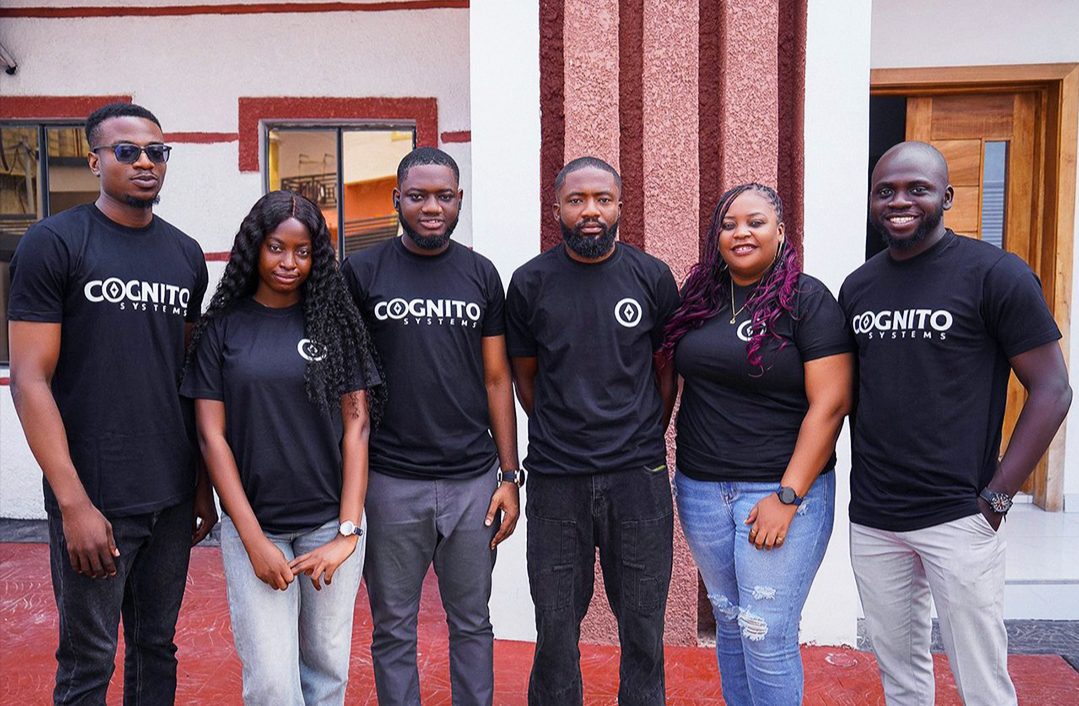
This approach signified a departure from traditional development shop models. Instead of selling hours or manpower, Cognito Systems offers sustainable solutions. Their revenue models are equally strategic, encompassing equity stakes, revenue-sharing agreements, and conventional service fees. To date, the company has generated approximately $70,000 in revenue, with an additional $60,000 in its pipeline.
The Birth of Martha AI
Cognito Systems' early projects highlighted the limitations of manual customer support. At Zap Africa, after-hours inquiries from crypto traders frequently overwhelmed the team. This experience led to the development of Martha AI, a B2B assistant designed to automate customer service operations.
Named after Moore's sister, Martha, the AI reflects a sense of familiarity. “We named it after her because she loves to talk. It felt natural for a system whose job is to constantly communicate with people,” Moore shared.
The initial objective was to streamline interactions, reduce wait times, and automate query handling. The system subsequently evolved. Leveraging customer data from Zap Africa, Martha AI was trained to communicate in Nigerian English, Pidgin, and local languages such as Hausa and Yoruba. Beyond answering questions, it is capable of analyzing sentiment and context.
The beta version of Martha AI is scheduled for release in November, with a full launch planned for early 2026. Early testers are invited to join a waitlist and provide feedback to influence future development. Moore stated that the aim is to gather real-world insights before the system undertakes critical workloads.

Martha AI has already demonstrated significant value. In addition to optimizing client support systems, its deployment with Black Pride Canada refined real-time sentiment analysis and assessed AI performance in sensitive human interactions, revealing its broad potential for both commercial and social applications.
Its core strengths lie in localization and adaptability. Built upon OpenAI technology, Martha AI delivers context-aware responses that incorporate local language and culture, nuances often missed by global tools like Intercom or Zendesk. An upcoming feature, "smart escalation," will route complex queries to the appropriate team members. This product aligns with a larger strategy to automate complete business workflows, extending to engineering, product development, and finance.
Cognito Systems is now transitioning from client-based projects to developing in-house products, aiming to establish a new paradigm for local technology. This new model will be built on tools that possess contextual understanding and act with empathy.