


Key Takeaways
- •Cryptocurrency is compelling traditional banks to re-evaluate their dominance by offering transparency as an alternative to institutional trust.
- •Stablecoins and Decentralized Finance (DeFi) are significantly impacting core banking services, illustrating why banks are apprehensive about cryptocurrency.
- •Many financial institutions are adapting, demonstrating that cryptocurrency and traditional banking can coexist through innovation and tokenization.
- •The central question is not about destruction but evolution: Will cryptocurrency replace bank operations or redefine them?
Why Banks Can’t Ignore Crypto Anymore
For centuries, traditional banks wielded significant power over financial transactions, dictating who could save, borrow, or transfer funds internationally. The advent of cryptocurrency has fundamentally challenged this system, introducing a financial model that enables peer-to-peer transactions without requiring permission from any central authority.
What began as a niche concept has grown into a substantial market. According to CoinGecko’s 2024 Annual Crypto Report, the total cryptocurrency market capitalization reached $3.91 trillion. This figure signifies a maturation of the market beyond mere speculation.

The approval of Bitcoin Exchange-Traded Funds (ETFs), increasing institutional involvement in DeFi, and the proliferation of Central Bank Digital Currency (CBDC) pilots all underscore a critical development: digital assets are now an integral part of the global financial landscape.
Cryptocurrency directly competes with banks in key areas such as payments, lending, and custody services. Blockchain networks now facilitate cross-border transfers that previously took days, completing them in mere seconds. DeFi platforms often provide yields significantly higher than traditional savings accounts, while stablecoins facilitate trillions of dollars in transactions annually, rivaling established financial systems.
This landscape highlights the evolving relationship between blockchain technology and traditional banking. Banks can no longer afford to dismiss cryptocurrency as a fleeting trend. A recent report indicates that 76% of financial executives anticipate digital assets will become viable alternatives to fiat currency within the next decade.
Stablecoins and DeFi Eating into Banking’s Core Business
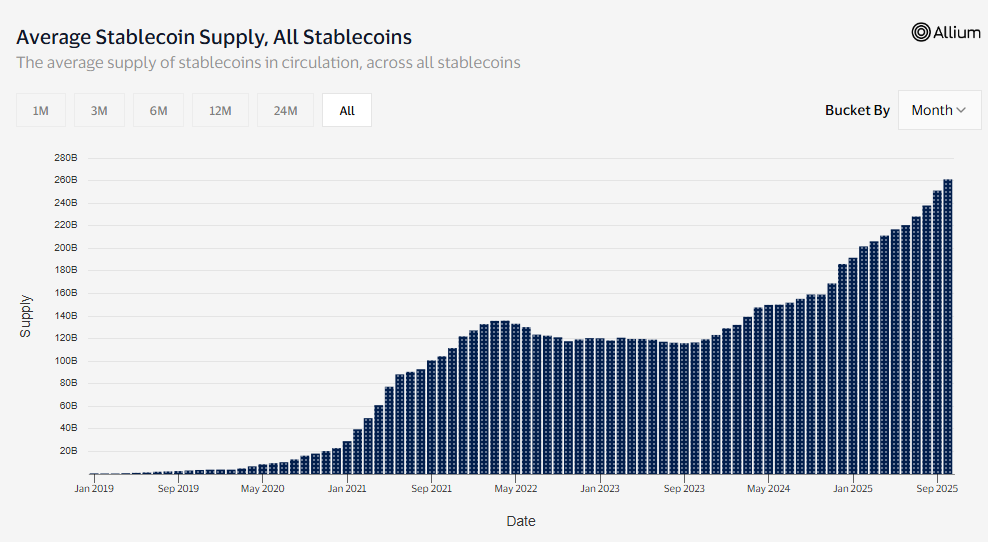
Stablecoins and decentralized finance (DeFi) are fundamentally altering the traditional banking sector. Stablecoins act as a crucial bridge between the cryptocurrency and fiat worlds, offering capabilities that banks have historically struggled to deliver efficiently. They enable instant, low-cost global payments. With over $240 billion in stablecoins currently in circulation, these digital currencies are increasingly used for remittances, business-to-business transfers, and payroll processing, facilitating transactions across continents in seconds – a speed that traditional banking systems cannot match.
DeFi takes this disruption a step further. Built on smart contracts, DeFi platforms allow users to lend, borrow, trade, and earn yield without intermediaries. These processes bypass traditional requirements like credit checks, extensive paperwork, and lengthy approval periods. All transactions are conducted on-chain and governed by transparent code, replacing the bureaucracy often associated with institutional finance. Services that once required a physical bank branch or a loan officer can now be accessed with a few simple clicks.
This transformation explains the apprehension banks feel towards cryptocurrency; it’s a concern about potential obsolescence rather than outright hostility. Recognizing the inevitability of change, traditional banks are beginning to adapt. Many are exploring tokenization, a process that converts traditional assets like bonds, funds, and real estate into digital tokens. These tokens can then be traded or settled instantaneously. The tokenization of real-world assets (RWAs) represents a significant area of convergence for cryptocurrency and traditional banking, suggesting that the technologies disrupting banks may also be key to their future evolution.
How Banks are Adopting Crypto’s Playbook
Instead of resisting cryptocurrency, many traditional banks are now adopting its innovative approaches. They are integrating its principles, adapting its technologies, and combining them with their established regulatory frameworks and operational strengths. This strategic shift indicates a move from competition to collaboration. By merging their institutional trust, compliance expertise, and extensive customer base with the speed, transparency, and programmability of blockchain technology, banks are redefining their role within the digital finance ecosystem.
This evolution reflects the deepening connection between cryptocurrency and traditional banking. In 2022, BNY Mellon launched its Digital Asset Custody Platform in the U.S., enabling select clients to hold and transfer Bitcoin and Ethereum. By 2025, major institutions like BNY Mellon and State Street were frequently discussing stablecoins, tokenization, and digital asset custody in their earnings calls, signaling that digital finance is no longer a secondary concern but a core strategic focus.
Standard Chartered’s Zodia Custody platform bridges regulated banking services with crypto-native systems. Visa now supports stablecoin settlements on its network, enhancing payment efficiency. Mastercard has taken further steps by collaborating with multiple crypto firms and successfully tokenizing 30% of its transactions in 2024, effectively integrating traditional payment infrastructure with decentralized technology.
Beyond strategic partnerships, banks are establishing dedicated digital asset divisions, piloting blockchain-based settlement systems, and investing in advanced security solutions. These actions signify a broader transformation. Banks are not merely defending their market share; they are actively adopting core crypto mechanics, such as tokenization, on-chain settlement, and cryptographic custody, to ensure their continued relevance in an increasingly digitized financial world.
Can TradFi and DeFi Coexist, or is One Bound to Consume the Other?
The relationship between traditional finance (TradFi) and decentralized finance (DeFi) is evolving from a potential conflict into a complex coexistence. While DeFi challenges the established structures of centralized finance, many traditional institutions are realizing that they do not need to choose between tradition and innovation. Instead, they are finding ways to integrate both. Banks and asset managers are discreetly adopting blockchain technology to improve efficiency and transparency, without relinquishing the centralized control that defines their operations.
This ongoing evolution prompts a critical question: Will cryptocurrency completely replace traditional banking operations, or will it primarily drive them to adapt? The emerging trend suggests a more nuanced outcome: collaboration rather than outright replacement.
A notable example of this collaboration is the pilot program involving SWIFT, UBS Asset Management, and Chainlink, focused on tokenized fund settlements. Similarly, BlackRock is experimenting with tokenized fund initiatives that merge traditional asset management with blockchain infrastructure. HSBC has also integrated blockchain technology into its gold trading and trade finance systems, demonstrating how established players can innovate while maintaining oversight and compliance.
The likely future is not a complete decentralization that displaces banks, but rather a hybrid evolution. This new financial ecosystem will likely see banks selectively adopting the efficiency and transparency offered by cryptocurrency technologies while retaining the trust, regulatory compliance, and established structures of traditional finance. In this scenario, blockchain technology will not render banks obsolete; instead, it will refine their operations. The future of finance may not be a dichotomy between TradFi and DeFi, but rather a fusion, where the established reliability of traditional systems merges with the innovative capabilities of the new digital landscape.