


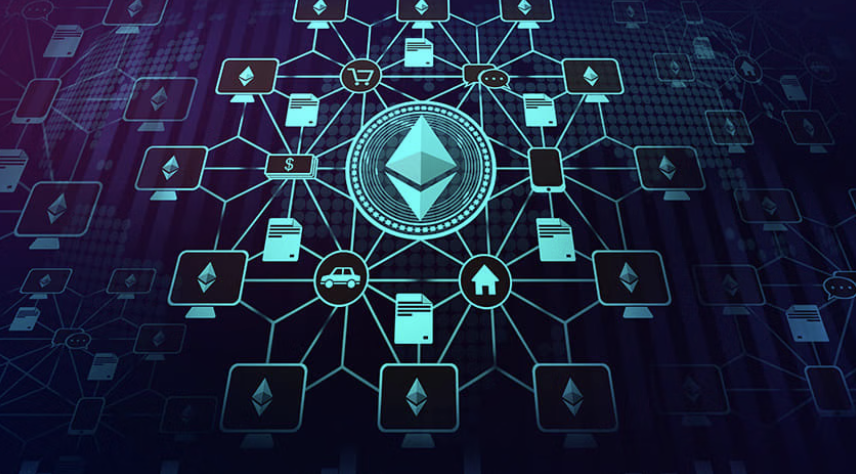
The initial wave of blockchain technology introduced a revolutionary concept: the smart contract. These self-executing digital agreements were, at their heart, like the world’s most dependable vending machines. They were founded on simple, inflexible logic: if you input currency (payment), the machine guarantees an immediate output (a product or token). This determinism provided absolute trust; the contract executed precisely what was written, blind to the outside world.
This pioneering generation of digital logic proved the power of trustless automation, laying the foundation for decentralized finance (DeFi) and the token economy. However, the true promise of this technology lies in evolution. The crucial question facing us today is this: What happens when the vending machine learns to monitor global supply chains, track real-time demand, adjust its prices dynamically based on competitor rates, and manage its own treasury, all without human intervention?
This transition, from rigid, fixed logic to dynamic, AI-assisted self-governance, is charting the path toward truly autonomous digital economies. Smart contracts were always meant to be digital law; now we are seeing them become digital judges, capable of interpreting external context and adapting their rulings.
The Evolutionary Journey of Contractual Logic
Generation 1.0: Static Logic and Efficiency Constraints
The first era of smart contracts focused almost entirely on fundamental guarantees: immutable execution, basic escrow functions, and standard token generation (like ERC-20). These systems established the core principle of resource-conscious coding, largely driven by the economics of the network itself.
Blockchain execution is expensive, and early development was dominated by the constraint of gas costs. This necessity forced developers to treat every line of code as a resource to be minimized, focusing on micro-efficiency to ensure scalability. For instance, our early work on gas-optimized escrow contracts focused rigorously on techniques designed for highly scalable on-chain automation. This involved minimizing storage operations (since writing data to the blockchain is costly), avoiding redundant calculations, and employing methods like variable packing to consolidate multiple pieces of data into a single storage slot.
This intense focus on microscopic efficiency was more than a technical pursuit; it was the first mandatory economic filter that dictated smart contract design. The dedication to resource-conscious code in Generation 1.0 established the necessary foundation for the complex, multi-layered systems that would follow.
Generation 2.0: Composability and the DeFi Legos
The DeFi revolution proved that smart contracts could transcend simple one-off agreements. Composability allowed different protocols to integrate and build upon each other’s functionalities, creating complex financial structures, often referred to as “money Legos”. Lending protocols, automated market makers, and synthetic asset platforms demonstrated that functionality could scale exponentially through interoperability.
However, even these complex systems were bound by a fundamental limitation: they remained fundamentally static in their logic. They could interact seamlessly with other contracts and manage millions in capital, but they were largely blind to real-world context outside the blockchain, such as global interest rates, real-time weather events, or supply chain bottlenecks. The success of composability quickly exposed the primary limitation of this generation: the data bottleneck. While functionality could scale through integration, reliance on internal blockchain state created a critical, unmet demand for reliable, external data. This constraint set the stage for the necessity of intelligent agents.
The Dawn of Adaptive Agents: Integrating AI
Bridging the Gap: The Indispensable Role of Decentralized Oracles
Smart contracts operate within deliberately isolated environments for security. This means they cannot access external information directly. Oracles are the necessary infrastructure that bridges this gap, securely fetching and verifying real-world information, such as market prices, election results, or weather conditions and feeding it reliably onto the blockchain.
For autonomous agents to manage real value and make complex, high-stakes decisions, the integrity of the data input is paramount. This necessitates decentralized verification. Decentralized oracles, exemplified by networks like Chainlink, gather and aggregate data from multiple independent sources, minimizing the risk of manipulation and ensuring that the contract’s decision-making process is based on accurate, reliable input.
This infrastructure is non‑negotiable for the next era. An autonomous contract relying on predictive analysis is only as resilient as its data input. Therefore, the rise of AI‑driven contracts directly dictates a new, highly robust requirement for decentralized data infrastructure.
The Intelligence Layer: Predictive and Dynamic Decision‑Making
With reliable external data flowing in, smart contracts can move far beyond simple IF (condition met) THEN (execute action) logic. We are transitioning to systems that can implement PREDICT (market trend) AND ADAPT (contract terms) strategies. Artificial intelligence provides the crucial capability to handle the complexity and uncertainty of real‑world inputs that static code simply cannot manage.
This intelligence layer transforms rules into adaptive, proactive strategies:
- Dynamic DeFi: In sophisticated lending platforms, an AI agent can autonomously assess market fluctuations, dynamically adjust interest rates, and predict borrower behavior. It can then modify the terms of a loan contract in real time to maximize profit and minimize risk, all without human intervention.
- Predictive Payments: In supply chain or complex payment scenarios, AI agents can analyze data to anticipate potential delays or discrepancies before they occur. Upon prediction, the agent can automatically adjust the contract terms, proactively preventing failed transactions.
The combination of AI and smart contracts fundamentally redefines risk management, shifting it from relying on slow, costly human oversight to continuous algorithmic optimization in real‑time. This is the first critical step toward embedding genuine economic autonomy within our digital systems.
Infrastructure for Autonomy: Enhancing the User Experience
For autonomous economies to thrive, they must be accessible. The traditional blockchain account model, the External Owned Account (EOA), presents significant friction: complex key management, the risk of total loss if keys are compromised, and the constant need for native cryptocurrency (gas) to execute every transaction.
The Smart Wallet Revolution: Account Abstraction (ERC‑4337)
The emergence of Account Abstraction (ERC‑4337) is the necessary UX foundation for mainstream adoption. This standard separates the cryptographic key used to sign a transaction from the actual logic of the account, allowing smart contracts to become primary accounts.
This innovation solves the major UX bottlenecks that plagued earlier contract generations, allowing for decentralized applications (DApps) to feel as intuitive as traditional web services. Specifically, ERC‑4337 enables gasless transactions, where a third party (a ‘paymaster’) can sponsor the fees, and automated recurring payments, since the contract can be programmed to execute actions based on defined parameters.
Defining Next‑Generation Smart Accounts
Our team’s work developing an ERC‑4337‑compliant SmartWallet demonstrates these practical benefits, proving that the tools for true autonomy are already here. This wallet features transaction batching, gasless execution, and, most importantly, robust security mechanisms.
Features like transaction batching allow a user to execute multiple, complex on‑chain actions (such as swapping a token, staking the result, and lending a portion) in a single, streamlined transaction. This greatly reduces operational friction.
Furthermore, we are moving away from the single point of failure inherent in EOAs by implementing social recovery. If a user loses access to their account, the smart wallet can utilize a decentralized proof‑of‑identity system, often relying on trusted ‘guardians’ or the accumulation of on‑chain interactions to regain access. This mechanism represents a philosophical shift from cryptographic self‑sovereignty to social self‑sovereignty, providing superior resilience necessary for smart accounts that will eventually manage billions in autonomous funds.
The Vision of Autonomous Digital Economies
From Protocols to Self‑Governing Entities
The journey culminates in systems capable of genuine Economic Autonomy. This term signifies the capacity of a digital entity, a smart contract organization, to make independent economic decisions, manage its own resources, and pursue financial strategies with minimal external human influence or coercion.
This autonomy is fundamentally linked to resilience. Just as a diversified company weathers economic downturns more effectively, a fully autonomous digital economy can dynamically reallocate capital, adjust risk parameters, and optimize resource deployment based on predictive modeling. This capacity for algorithmic self‑governance is essential for maintaining resilient agency within the global digital system.
Decentralized Autonomous Organizations (DAOs) 2.0
Autonomous agents provide the necessary operational upgrade for Decentralized Autonomous Organizations (DAOs). Current DAOs often suffer from slow, human‑centric voting processes for tactical decisions, making them inefficient when competing with centralized financial institutions. DAOs 2.0 leverage AI‑driven agents to address this efficiency gap.
In the future, we foresee AI agents autonomously managing DAO treasury operations, moving capital instantly based on market signals detected via decentralized oracles. They will handle diversification, yield generation, and liquidity provisions algorithmically. Moreover, AI agents can draft and analyze governance proposals, streamlining the voting process and focusing human input only on the highest‑level strategic decisions. The integration of AI into DAOs addresses the fundamental paradox of human governance, efficiency versus decentralization, by preserving decentralized decision‑making while achieving near‑instantaneous execution efficiency.
Navigating the Road Ahead: Challenges and Responsible Development
A visionary understanding of the future must be tempered by a sober assessment of the risks. As smart contracts transition from simple logic to complex, adaptive, and external‑data‑reliant entities, we face significant security, ethical, and regulatory hurdles.
Security, Logic, and Resilience
The inherent risk of complexity is that it expands the attack surface. Introducing external data feeds (oracles) and dynamic logic (AI) increases the complexity of code exponentially. Traditional vulnerabilities, such as over/under flows (where variables exceed their defined limits) and recursive calling (or re‑entrancy attacks), remain potent threats that can exploit complex logic flows.
While the dollar value lost to major DeFi hacks saw a positive decline in 2023, the overall number of crypto hacking incidents has actually increased, indicating that the threat landscape is evolving. The security threat has subtly shifted from defending against external, network‑level attacks to defending against internal, human‑coded logic flaws made more intricate by the incorporation of AI and external data. Rigorous auditing and formal verification are not optional, they are an existential necessity for protocols handling autonomous capital.
Legal and Ethical Frameworks
Perhaps the greatest external bottleneck to achieving widespread autonomous economies is the regulatory quagmire. The lack of clear legal classification for decentralized autonomous organizations (DAOs) creates significant uncertainty regarding liability, tax status, and the legal standing of autonomous agents that make financial decisions. The patchwork of regulations across different jurisdictions places developers in the difficult position of choosing between compliance and necessary innovation. Until governments define the legal agency and liability of a self‑governing smart contract, the deployment of large‑scale, institutionally backed autonomous economies will remain constrained.
Ethical considerations must also be paramount. If the AI agents governing billions in funds are trained on skewed or biased data, the resulting autonomous economic decisions could unintentionally perpetuate or even amplify existing inequalities. Robust ethical guardrails and transparent mandates for data sourcing are required to ensure that the rules of the autonomous world are fair.
Conclusion: Defining the Rules of Digital Life
The evolution we are witnessing, from the cost‑efficient simplicity of static logic, through the versatility of composable protocols, and now to the intelligence of adaptive agents is fundamentally changing how we define trust and automation. Smart contracts are no longer merely tools for conditional execution; they are rapidly becoming the infrastructure for digital self‑governance and economic resilience.
The infrastructure required for this leap is maturing rapidly, demonstrated by innovations like Account Abstraction, which removes the user friction of gas, and the development of intelligent agents that turn data into strategy. Our collective work on gas‑optimized contracts and ERC‑4337‑compliant SmartWallets serves as concrete evidence that today’s technology is focused intently on building the scaffolding necessary for this autonomous future.
Our next step is not just building smarter code, but building responsible code, systems that are inherently secure, ethically sound, and capable of operating within, and helping to define, future legal structures.
The future of smart contracts isn’t just about automation; it’s about embedding resilience, intelligence, and self‑governance directly into the operating rules of our digital world.