


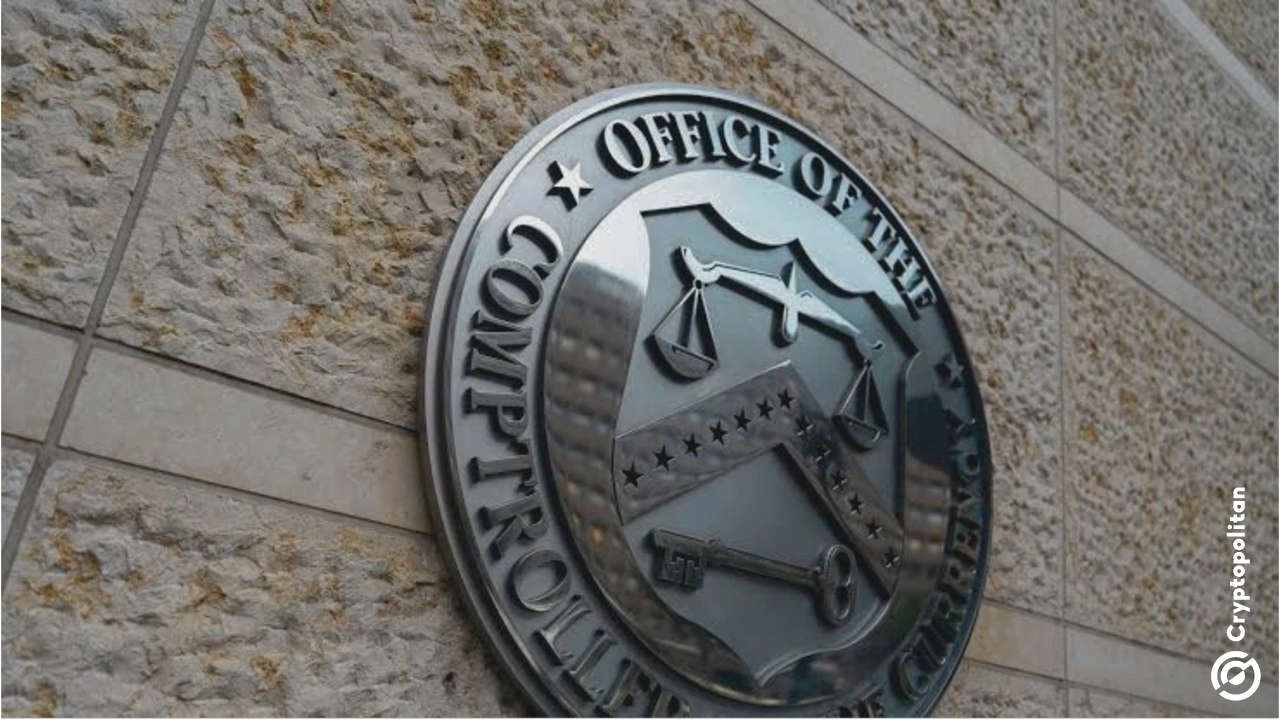
The United States Office of the Comptroller of the Currency (OCC) has issued a letter, released on December 9, that permits banks to conduct riskless principal transactions related to crypto assets. This clarification allows traditional finance (TradFi) banks, which may have previously engaged in crypto through pilot programs, to pursue full-scale integration of digital assets.
The OCC has shifted from its previously cautious stance, which it maintained between 2021 and 2024. During that period, the regulator imposed strict guardrails and, alongside the Federal Reserve, issued warnings about the inherent risks associated with crypto, including liquidity and volatility concerns.
Currently, only a select number of purely crypto-focused banks, such as Anchorage Digital, hold OCC charters. However, with the release of this new letter, the landscape is expected to change, potentially leading to the emergence of more hybrid banking models.
OCC Letter Authorizes Riskless Principal Crypto Transactions
The OCC's letter explicitly permits traditional banks to engage in riskless principal crypto-asset transactions. In these transactions, banks act as matched intermediaries in trades, meaning they do not need to hold the underlying assets themselves.
According to the letter, offering these riskless principal crypto-asset transactions is expected to benefit bank customers by providing them with a wider array of options and access to services offered by a highly regulated institution. This allows customers to transact in crypto-assets through a regulated bank, offering a more secure alternative to less regulated or unregulated options.
Furthermore, by acting as an intermediary, banks can connect customers with counterparties with whom they might not have a direct relationship. This service can assist customers in managing their exposure to unregulated crypto-asset exchanges and pseudonymous participants on such platforms, while also providing the necessary operational capacity for these transactions.
The OCC concluded its letter by emphasizing that, as with all banking activities, any bank engaging in riskless principal crypto-asset transactions must do so in a safe and sound manner and in full compliance with all applicable laws. The OCC will incorporate the examination of these riskless principal crypto-asset activities into its ongoing supervisory processes.
OCC Head Views Crypto as a Catalyst for TradFi Evolution
During a blockchain conference on Monday, Jonathan Gould, the head of the Office of the Comptroller of the Currency (OCC), stated that custody and safekeeping services have been conducted electronically for many years. He argued that there is no valid reason to treat digital assets differently.
Gould highlighted the importance of not limiting banks, including current national trust banks, to outdated technologies or business models. He believes the banking system possesses the inherent capacity to evolve, likening the transition from the telegraph to blockchain technology.
At the same conference, Gould revealed that the OCC had received 14 applications to establish new banks in the current year, a figure that includes entities involved in novel or digital asset activities. This number is nearly equivalent to the total number of similar applications received by the OCC over the preceding four years.
He further explained that chartering plays a crucial role in ensuring the banking system keeps pace with financial evolution and supports the modern economy. Therefore, he believes that entities engaged in activities involving digital assets and other innovative technologies should have a clear pathway to becoming federally supervised banks.
Addressing concerns raised by banks and financial trade groups regarding crypto companies obtaining banking charters and the OCC's oversight capabilities, Gould dismissed these worries. He insisted that such concerns risk hindering innovations that would better serve bank customers and bolster local economies. Gould reiterated that the OCC possesses extensive experience in supervising a crypto-native national trust bank, suggesting minimal danger in this area.