



Key Developments and Market Reactions
On October 21, 2025, the U.S. national debt reached $38 trillion, according to the U.S. Treasury. This significant milestone has drawn considerable attention from policymakers and industry observers alike.
The escalating debt levels underscore ongoing concerns regarding fiscal responsibility. These concerns have the potential to influence the store-of-value narratives within crypto markets, as the debt's impact on interest rates and inflation expectations becomes a focal point.
Cryptocurrency Reactions to Surging U.S. Debt Levels
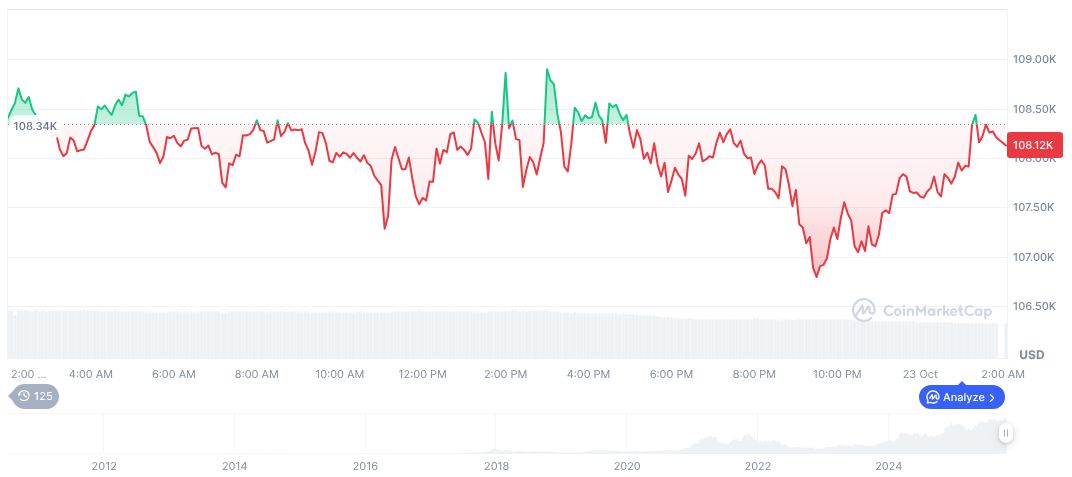
Bitcoin's price is currently hovering around $108,273.47, with a market capitalization of $2.16 trillion and a 24-hour trading volume of approximately $77.05 billion. Despite a 0.32% decline in the past 24 hours, Bitcoin maintains a market dominance of 59.20%. These figures reflect speculative trends surrounding global fiscal policies, particularly during periods of economic volatility such as the current one.
Research suggests that fiscal events of this nature often lead to increased demand for digital assets as a hedge against inflation. Historically, investments have tended to shift towards cryptocurrencies perceived as secure stores of value during times marked by economic uncertainty and high debt burdens.
"Reaching $38 trillion in debt during a government shutdown is the latest troubling sign that lawmakers are not meeting their basic fiscal duties. If it seems like we are adding debt faster than ever, that's because we are."
The market has reacted with concern, with significant discussion on social media platforms primarily focused on potential shifts toward Bitcoin and other assets perceived as 'hard assets.' Policymakers and financial analysts are continuing to dissect the broader economic implications, exploring connections to ongoing crypto adoption.
Market Data and Future Insights
Did you know? Historically, breaking debt thresholds often leads to heightened interest in Bitcoin, particularly as investors speculate on fiat currency stability stemming from fiscal uncertainties.
The current market figures reflect speculative trends around global fiscal policies, especially during periods of economic volatility such as these.
Events like the Crypto Invest Summit 2025 are among several gatherings where policymakers and financial analysts continue to dissect the broader economic implications, exploring connections to ongoing crypto adoption.