


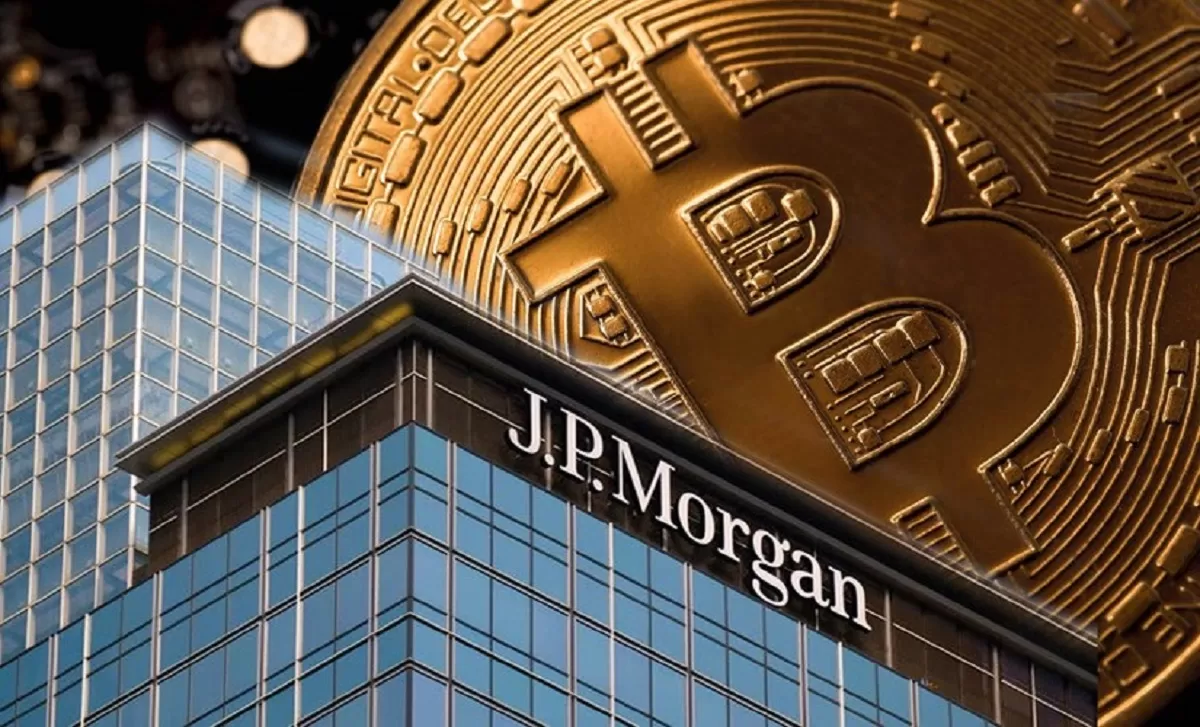
The cryptocurrency market has been experiencing a significant downturn, and amidst this volatility, speculation has arisen regarding JPMorgan Chase's stance on Bitcoin. Reports and discussions have circulated suggesting that the financial giant might be actively working against the digital currency. This article aims to clarify the situation by examining the available information and presenting the facts.
JPMorgan's Historical Stance on Bitcoin
JPMorgan Chase, under the leadership of CEO Jamie Dimon, has had a complex and often critical relationship with Bitcoin. Dimon himself has famously referred to Bitcoin as a "fraud" and a "bubble." This public skepticism from a prominent figure in traditional finance has often been interpreted as a negative signal for the cryptocurrency market. However, it is important to distinguish between personal opinions and official corporate policy.
Recent Developments and Speculation
Recent market downturns have led to increased scrutiny of institutional players and their potential influence. Some analysts and commentators have pointed to JPMorgan's actions or statements as evidence of a deliberate effort to undermine Bitcoin. These claims often lack concrete evidence and tend to rely on interpretations of market movements and general sentiment.
It is crucial to consider that large financial institutions like JPMorgan operate within a highly regulated environment and must consider various factors when commenting on or interacting with emerging asset classes like cryptocurrencies. Their public statements are often carefully worded to avoid making definitive predictions or taking overly strong positions that could have significant financial implications.
Analyzing the "War on Bitcoin" Narrative
The idea of a "war on Bitcoin" implies a concerted and malicious effort to destroy or significantly harm the cryptocurrency. While JPMorgan has been critical of Bitcoin, there is no substantial evidence to suggest they are actively engaged in a campaign to sabotage it. Instead, their actions and statements are more likely to be a reflection of their cautious approach to a volatile and largely unregulated asset class.
It is also possible that the narrative is fueled by the inherent volatility of Bitcoin and the cryptocurrency market in general. When prices fall, investors and enthusiasts often look for external reasons, and established financial institutions are easy targets for blame. This does not necessarily mean that these institutions are engaging in hostile actions.
The Role of Traditional Finance in the Crypto Space
Traditional financial institutions are increasingly exploring the cryptocurrency space, albeit with caution. Some have begun offering services related to digital assets, while others remain hesitant. JPMorgan's approach can be seen as part of this broader trend of traditional finance grappling with the implications of decentralized finance and digital currencies.
The development of central bank digital currencies (CBDCs) and the ongoing regulatory discussions surrounding cryptocurrencies also play a significant role in shaping the landscape. These factors, rather than a direct "war" by one institution, are more likely to influence the future of Bitcoin and other digital assets.
Conclusion: Facts vs. Speculation
While JPMorgan Chase and its CEO have expressed skepticism about Bitcoin, the notion of a declared "war" is largely unsubstantiated speculation. The financial world's relationship with cryptocurrencies is complex and evolving. It is important to rely on factual evidence and avoid succumbing to market-driven narratives that may not be grounded in reality.
The cryptocurrency market's performance is influenced by a multitude of factors, including macroeconomic conditions, regulatory developments, technological advancements, and investor sentiment. Attributing significant market movements to the actions of a single institution, without concrete proof, is an oversimplification of a multifaceted issue.