



Tom Lee Predicts Fed-Induced Market Surge by December
Tom Lee, CIO and head of research at Fundstrat Capital, predicts a significant rally for the S&P 500, forecasting it to reach 7200-7300 points by December. This bullish outlook is primarily driven by the anticipated end of the Federal Reserve's quantitative tightening (QT) policy.
Traders are currently underestimating several key factors impacting the market: liquidity, capitulation selling, and the timing of these events. The halt in the balance sheet contraction, which has been ongoing for nearly three years, is a significant development. The expected increase in liquidity is anticipated to fuel institutional buying and potentially drive stock prices higher. These liquidity-driven market conditions are poised to create substantial swings in asset values.
Institutional investors are beginning to observe a shift in sentiment. Many fund managers are reportedly growing weary of the current market environment and are looking towards January for potential opportunities. Lee notes a rise in Fear Of Missing Out (FOMO) buying, as managers are keen to avoid falling behind their peers. This intensified chase for performance could propel equity markets higher, reinforcing Lee's optimistic view on the S&P 500.
"I am very bullish," Tom Lee stated on CNBC's Squawk Box. He believes the S&P 500 Index could reach 7200-7300 points by year-end.
Ethereum Metrics Reveal Market and Technological Impacts
The S&P 500 experiencing six consecutive six-month gains has occurred only six times since 1928, highlighting the statistical rarity of such sustained growth.
Ethereum (ETH) continues to demonstrate consistent blockchain activity, with its current price at $2,803.34. Its market capitalization stands at $338.35 billion, representing an 11.50% market dominance. Recent data indicates a -0.53% price drop over the past 24 hours, alongside a significant 46.72% increase in trading volume. Over the past week, ETH has seen a -4.27% decline. These trends are confirmed by data from CoinMarketCap.
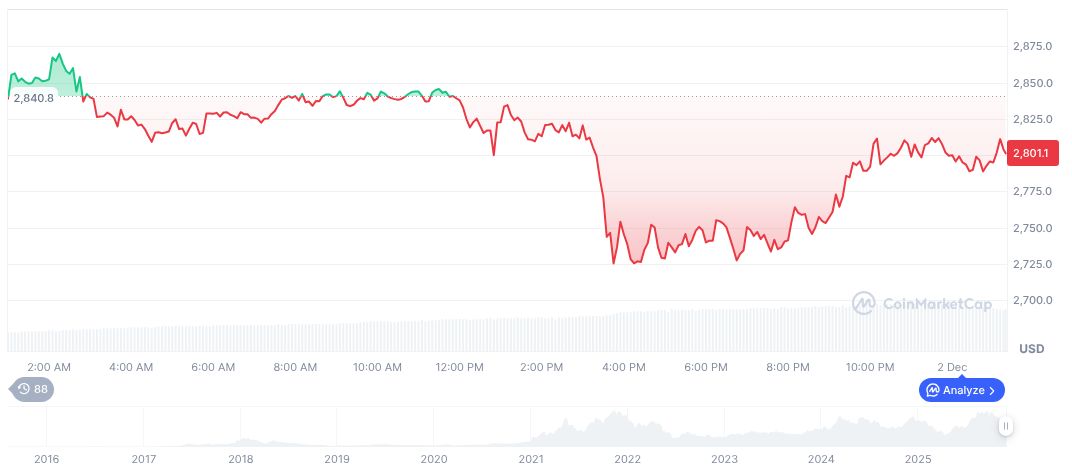
Researchers at Coincu highlight that the conclusion of quantitative tightening impacts more than just liquidity; it signifies a pivotal shift in monetary policy that could potentially pave the way for regulatory adjustments. Such economic changes are likely to influence technological investment within blockchain sectors, potentially enhancing the DeFi landscape's economic impact through surges in liquidity.