


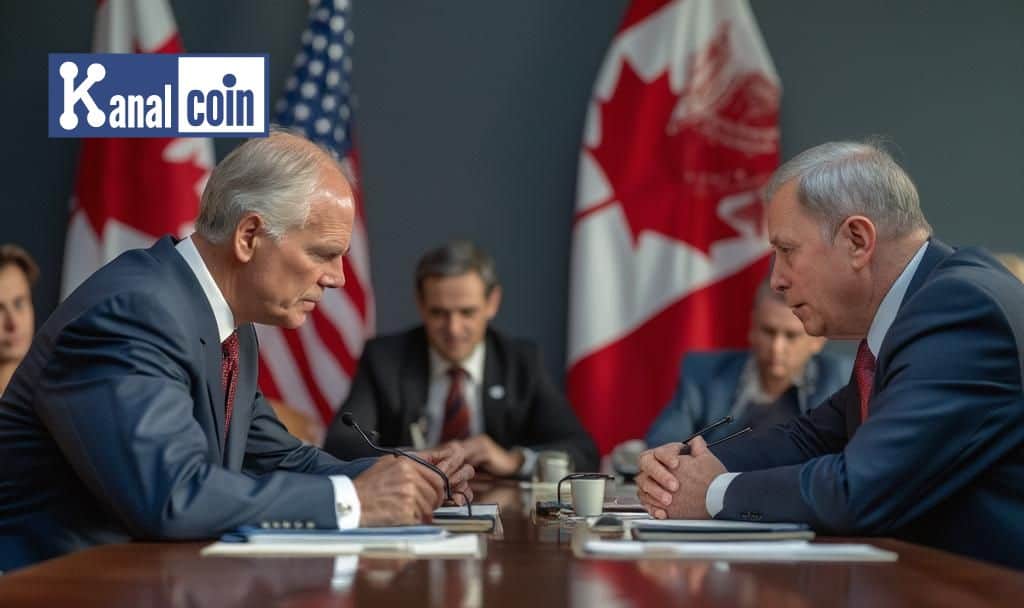
In October 2025, President Donald Trump terminated trade negotiations with Canada following a dispute over an Ontario-produced TV ad about U.S. tariffs criticized by the Reagan Foundation. This halt in talks highlights trade tensions between the U.S. and Canada, impacting export priorities, but hasn't directly affected cryptocurrency markets or cross-border digital asset interfaces.
U.S. Responds to Ontario Ad, Halting Trade Negotiations
The U.S. administration recently terminated trade negotiations with Canada, citing a dispute over a controversial TV ad. The ad, produced by Ontario, involved negative remarks about U.S. tariffs, leading to escalated tensions between the two nations.
Key figures include U.S. President Donald Trump, who announced the trade freeze, and Ontario Premier Doug Ford, who paused the ad campaign. This action disrupts prior agreements, emphasizing the crucial role of economic diplomacy in bilateral relations.
U.S. Responds to Ontario Ad, Halting Trade Negotiations
"The Ronald Reagan Foundation has just announced that Canada has fraudulently used an advertisement, which is FAKE, featuring Ronald Reagan speaking negatively about Tariffs... TARIFFS ARE VERY IMPORTANT TO THE NATIONAL SECURITY, AND ECONOMY, OF THE U.S.A. Based on their egregious behavior, ALL TRADE NEGOTIATIONS WITH CANADA ARE HEREBY TERMINATED."
Canadian Leaders Seek New Markets Amidst Economic Impact
The decision to terminate talks has stirred concerns over potential impacts on cross-border economic activities. Canadian leaders now focus on exploring alternative markets. This move shows the vulnerability of international trade to political disputes.
While the financial impact involves trade dynamics, there's no immediate threat to crypto markets. Historical data shows trade disputes may temporarily affect market sentiment but rarely lead to significant changes without direct financial policy impact.
Diversification Following Trade Disputes: Expert Insights
The use of trade policy as leverage is not unprecedented; similar tactics were seen in past U.S. administrations. This situation underlines the ongoing complexities in bilateral economic relationships, highlighting challenges faced during international negotiation cycles.
Experts from Kanalcoin suggest that while immediate outcomes may seem tense, long-term effects could result in increased diversification of trade partners. Historical precedents reinforce that such disputes often encourage expansion beyond traditional markets.