


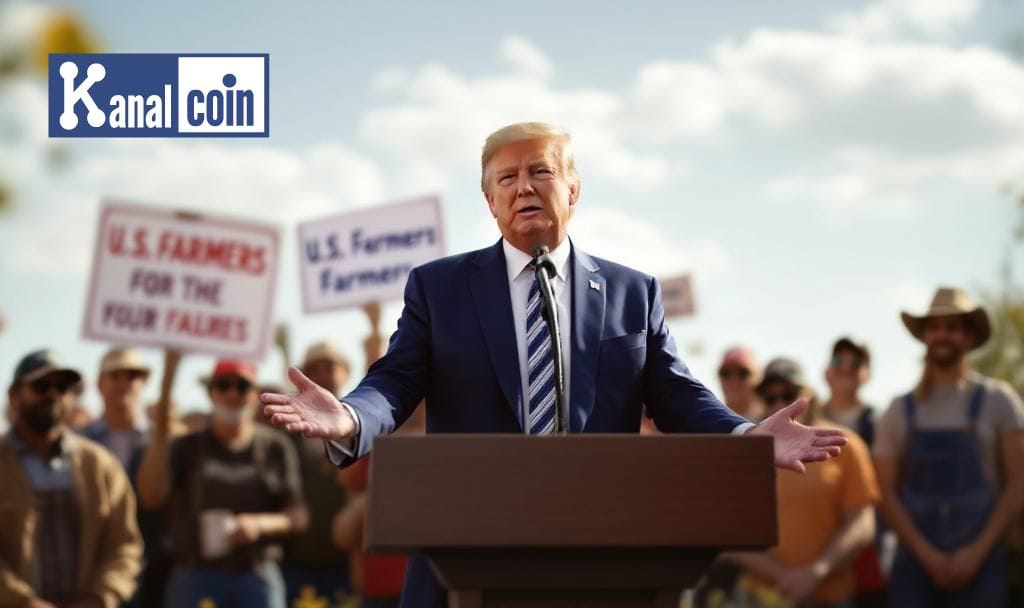
Donald Trump is set to announce a $12 billion federal aid package for U.S. farmers at the White House, addressing the impacts of tariffs on agricultural sales.
This aid is intended to mitigate the repercussions of trade policy on farmers, potentially influencing fiscal and trade dynamics, though it does not have direct influences on the crypto market.
Trump Allocates $12 Billion to U.S. Farmers Amid Tariffs
Donald Trump is set to announce a $12 billion aid package to support U.S. farmers. This move is a response to higher costs and weaker sales that have stemmed from tariffs on China. The White House has confirmed the details of this initiative.
The U.S. Department of Agriculture (USDA) will be responsible for administering the aid, likely by utilizing the Commodity Credit Corporation. This plan follows previous trade confrontations that led to retaliatory tariffs impacting U.S. agricultural exports, with soybeans being a notable example.
Fiscal Measures to Bolster Agriculture Sector
The aid package aims to stabilize the agricultural sector amidst rising production costs. While there is no direct involvement of crypto-assets in this plan, the package could indirectly influence market sentiment and trade narratives concerning U.S. agriculture.
Potential financial effects might include increased fiscal spending, which could have an impact on bond yields and dollar strength. The announcement's impact on crypto markets is expected to be indirect, with no clear links to specific digital assets or blockchain initiatives.
Continuation of Trump's Economic Strategies
Similar aid packages were implemented during Trump’s first term, designed to address retaliatory tariffs arising from U.S.-China trade disputes. These fiscal measures were intended to offset trade shocks but did not involve crypto-assets or blockchain technology.
Experts view this as a continuation of Trump's past strategies aimed at sustaining political support within agricultural communities. A White House Official commented that the aid package is "almost an acknowledgment that the tariff policies did have negative…impact on the agriculture sector." Although not directly related to cryptocurrency, such macroeconomic policies can influence broader market trends and investor sentiment.