


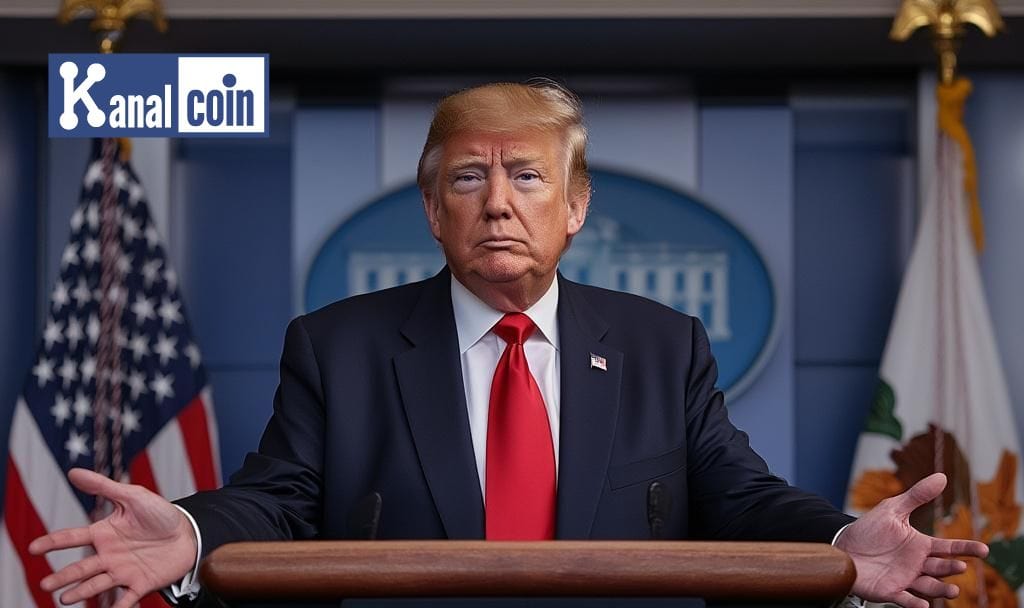
President Donald Trump has escalated trade tensions with Canada by implementing a 10% tariff increase. This action was a direct response to an advertisement by Ontario's government regarding Ronald Reagan's stance on tariffs, which Trump characterized as fraudulent.
Trade Tensions Intensify with Canadian Tariff Hike
Amidst ongoing trade tensions, President Trump announced a 10% increase in tariffs on Canada. This decision followed an advertisement from Ontario's government that quoted Ronald Reagan. Trump publicly labeled the advertisement as fraudulent, leading to the retaliatory tariff measure.
In response to what he perceived as deceptive advertising, Trump took decisive action by increasing tariffs and accusing Canada of fraud. He stated, "CANADA CHEATED AND GOT CAUGHT!!! They fraudulently took a big buy ad saying that Ronald Reagan did not like Tariffs, when actually he LOVED TARIFFS FOR OUR COUNTRY, AND ITS NATIONAL SECURITY."
Cryptocurrencies Remain Unaffected by Trade Dispute
Despite the intensification of trade tensions between the U.S. and Canada, no cryptocurrencies are directly impacted by this dispute. The conflict primarily centers on tariffs and broader trade policies, rather than digital assets.
While the trade dispute has strained relations between the two North American nations, President Trump's actions suggest a potential shift in U.S. trade policy. Analysts are observing historical parallels to Ronald Reagan's selective use of tariffs, and they anticipate potential financial consequences for bilateral trade relationships.
Comparing Tariff Approaches: Reagan and Trump
The current situation draws comparisons to instances during Reagan's presidency, where tariffs were employed to protect specific industries, such as the motorcycle manufacturer Harley-Davidson. However, it is noted that Reagan generally advocated for free trade policies, which contrasts with President Trump's more aggressive approach to trade negotiations and tariff implementation.
Experts observe a discernible trend towards protectionism within U.S. trade policy. They point out that Trump's strategy of utilizing tariffs mirrors past protectionist measures, which could create ripple effects in future trade negotiations and international economic relations.