


Key Developments and Market Anticipation
U.S. President Donald Trump announced on October 27th that decisions regarding the Federal Reserve, possibly including a rate cut, may occur by year-end, impacting financial markets.
The potential Fed rate decision could significantly influence U.S. monetary policy, affecting cryptocurrency markets like Bitcoin and Ethereum, which are historically sensitive to rate changes.
President Trump's Stance on Federal Reserve Policy
On October 27th, 2025, President Donald Trump signaled that the Federal Reserve could make key rate decisions by the end of the year. This development has been eagerly awaited in financial circles given its potential impact. Market participants are particularly focused on the possibility of a rate cut, which many see as a precursor to more significant shifts in monetary policy.
Speculation about impending changes in the Fed rate could result in immediate financial implications, impacting everything from stock market volatility to cryptocurrency values. The potential rate cut might incite increased market activity, affecting both traditional and digital asset classes.
Market reactions have been swift, with the CME's "FedWatch" tool indicating a high probability of a 25-basis-point cut in October. Institutional investors are already adjusting their strategies in anticipation. The announcement has prompted expectations of even more extensive economic realignments.
Cryptocurrency Market Reactions to Potential Monetary Policy Shifts
Did you know? During 2019–2020 rate cuts, the crypto market experienced substantial rallies, with BTC and ETH witnessing significant inflows from risk-on investors.
As of the latest data, Bitcoin's current price stands at $115,970.50, with a market cap of $2.31 trillion and dominance of 59.02%. Its 24-hour trading volume surged by 113.43% to $51.63 billion. Bitcoin prices have risen 3.89% over the past day, recording a 4.25% increase over the last week.
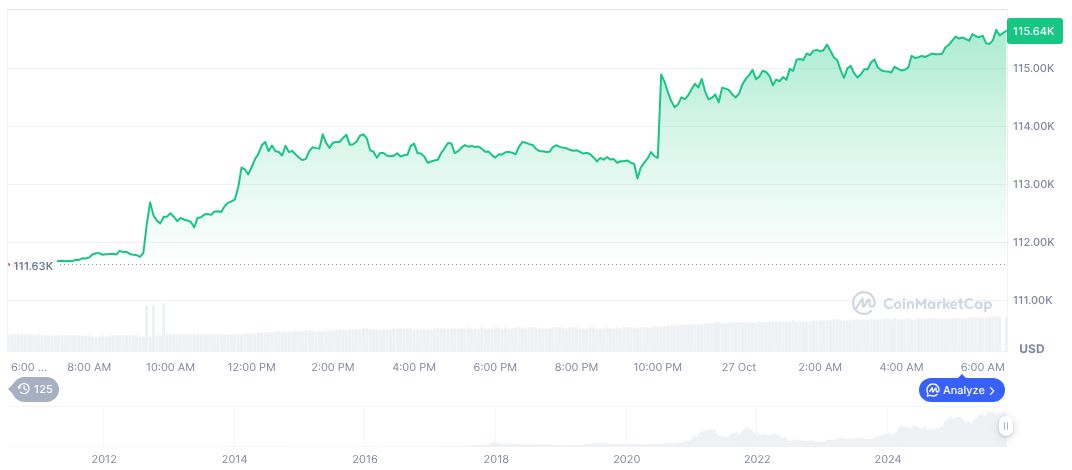
Research suggests that a rate cut by the Federal Reserve could result in increased volatility for cryptocurrencies, especially as investors adjust to new economic conditions. Historical trends indicate that such financial policy changes often lead to short-term rallies in digital assets, highlighting the interconnectedness of traditional and emerging markets.