


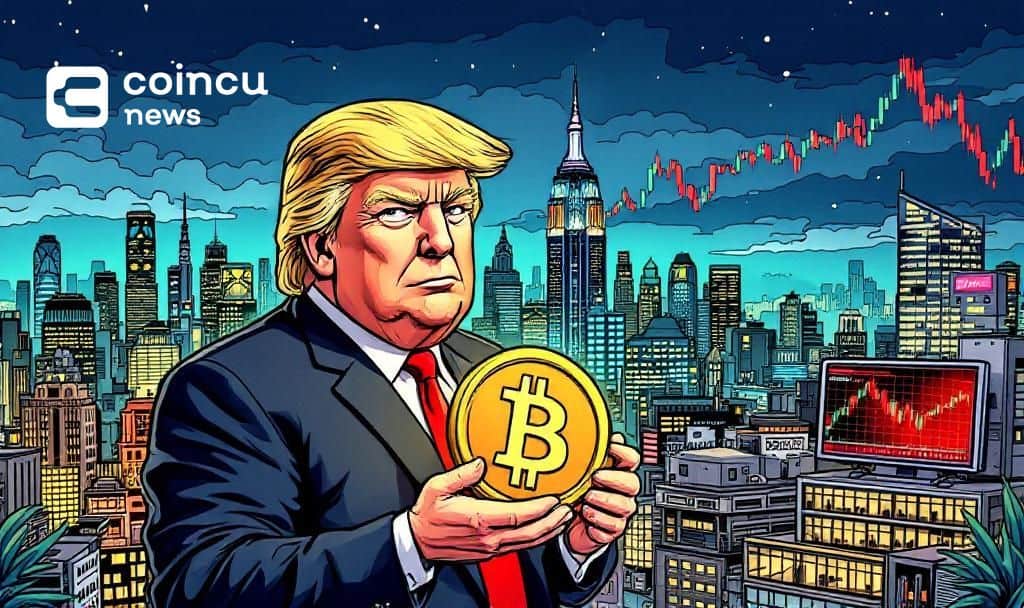
Trump's Tariffs Set at 15%-20% Create Economic Pressure on Markets
US Treasury Secretary Janet Yellen has announced that tariffs implemented by former President Donald Trump, set at a rate of 15% to 20%, have become a fundamental component of U.S. trade policy. These tariffs are a significant aspect of Trump's economic strategy, intended to reshape international trade dynamics.
Despite their implementation, these tariffs have generated less revenue than initially projected, bringing in approximately $400 billion USD annually, falling short of earlier forecasts that anticipated up to $1 trillion USD. Consequently, U.S. businesses and consumers are experiencing an economic burden, which is reflected in higher prices for goods and potential inflationary effects. Economic analysts have pointed out that the tariffs "act as a tax burden on U.S. companies and consumers," with estimates suggesting American shoppers will spend around $29 billion more this holiday season.
Market responses have been diverse, leading some institutional investors to adjust their investment strategies. One prominent figure, identified as a "Trump Insider Whale," initiated a $121.5 million USD short position on Bitcoin, signaling a bearish outlook amidst the evolving economic climate. This sentiment is also evident in the broader cryptocurrency market: Bitcoin open interest has shown fluctuations, indicating that traders are reacting to macroeconomic indicators.
Bitcoin Market Sentiment Shows Instability Amid Trade Uncertainty
Historically, U.S. tariffs enacted in the 1930s, such as the Smoot-Hawley Tariff Act, contributed to a decline in global trade and economic hardship, echoing current market concerns in the context of ongoing Trump tariffs.
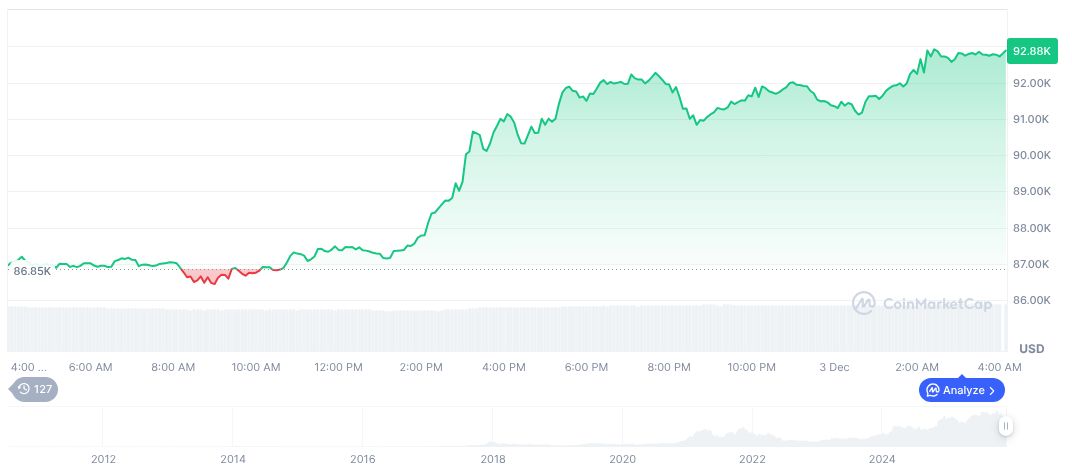
As of December 3, 2025, Bitcoin (BTC) is trading at $93,024.61 USD, with its market capitalization estimated at $1.86 trillion USD. Bitcoin has seen a 2.11% price increase in the last 24 hours, despite broader market pressures. However, over the preceding 60 days, BTC has experienced a decrease of 23.80%, underscoring its ongoing volatility in response to economic developments. This situation is reflected in forecasts where Bitcoin eyes 100K, suggesting potential bullish predictions despite market uncertainties.
The research team at Coincu notes that continued persistence of tariffs as a market constant could lead to further financial instability. Unresolved trade tensions may impact project roadmaps within the cryptocurrency industry, creating uncertainty for investor portfolios.