


Summary of Key Points
- •Donald Trump has proposed a 200% tariff on French wine and Champagne.
- •The European Union is preparing €93 billion in countermeasures against potential U.S. tariffs.
- •French President Emmanuel Macron declined Trump's financial "Board of Peace" initiative.
Escalation of Trade Disputes
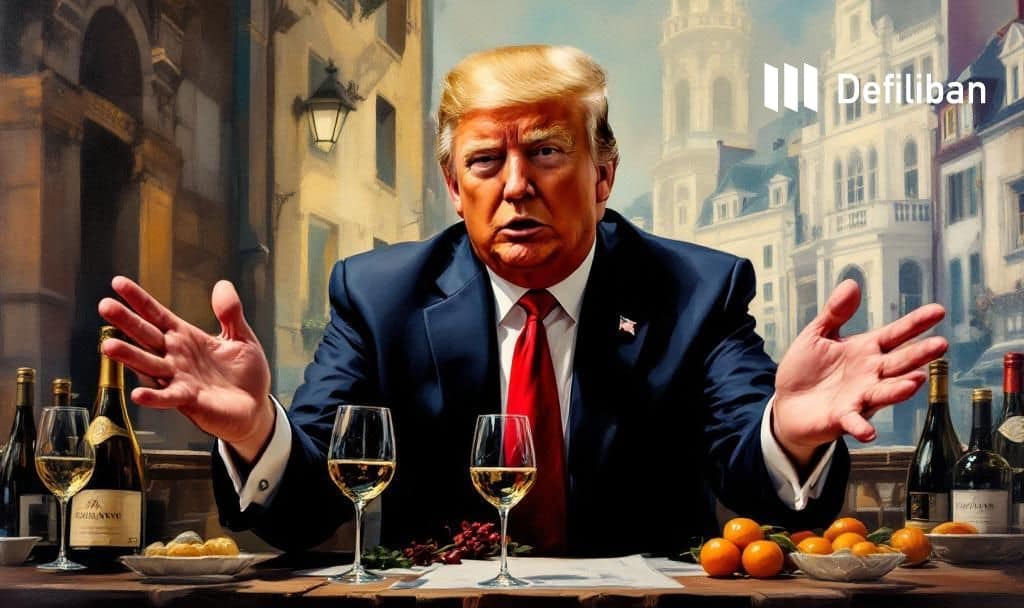
U.S. President Donald Trump has threatened to impose a significant 200% tariff on French wine and Champagne. This action is reportedly a reaction to French President Emmanuel Macron's refusal to join Trump's proposed "Board of Peace" initiative. The announcement has generated concern among international allies and trade partners, signaling a potential increase in trade friction.
This tariff threat is occurring within a broader context of U.S. foreign policy actions, including Trump's earlier insistence on Denmark selling Greenland. The U.S. administration also plans to extend an existing 10% tariff to six EU nations, the UK, and Norway. Trump has characterized these trade measures as being for national and world security purposes.
European Leaders Respond to Tariffs
European Commission President Ursula von der Leyen has voiced strong opposition to the proposed tariffs, labeling them as a significant mistake. She underscored the importance of collaborative efforts in ensuring Arctic security and highlighted that allies must work together. Von der Leyen emphasized that such actions could negatively impact long-standing international relationships.
"A deal is a deal. And when friends shake hands, it must mean something."
Ursula von der Leyen, President, European Commission
France has also issued a firm response to the tariff threats. A source close to President Macron described the proposed tariffs as both unacceptable and ineffective. This reaction underscores the growing concerns within European nations regarding the potential ramifications of U.S. trade policies on global diplomacy and commerce.
U.S. Strategic Motivations
President Trump has articulated strategic justifications for his interest in acquiring Greenland, asserting its critical importance for both U.S. national security and broader world security. This stance is part of what appears to be a larger geopolitical strategy aimed at bolstering American influence within the Arctic region.
The "Board of Peace" initiative, which President Macron declined to join, reportedly requires substantial financial contributions from its members. The initiative calls for $1 billion in contributions after three years, a financial commitment that may have contributed to Macron's decision not to participate.
Anticipated Responses and Future Diplomatic Actions
In anticipation of the potential consequences stemming from these tariff proposals, the European Union is actively preparing retaliatory measures. The EU has indicated its intention to implement €93 billion in countermeasures and to leverage the Anti-Coercion Instrument to effectively address the proposed U.S. tariffs.
Ursula von der Leyen has affirmed that the EU's response will be characterized by unity and proportionality, reflecting Europe's commitment to maintaining a balanced and equitable approach in trade disputes. President Macron has also initiated diplomatic outreach, proposing discussions at the upcoming G7 summit to help de-escalate these developing tensions.