



Key Points
- •UK plans deferral of tax liabilities for DeFi deposits.
- •Proposed by HM Revenue and Customs.
- •Impact on ETH and ERC-20 tokens in DeFi protocols.
The UK government, through HM Revenue and Customs, is proposing a new tax framework for DeFi users, affecting cryptocurrency lending and liquidity pools. This proposal could reduce upfront tax burdens for DeFi users in the UK, aligning tax rules with DeFi operations and simplifying compliance.
UK's 'No Profit, No Loss' Principle for Crypto Lending
HM Revenue and Customs has released proposals supporting a "no profit, no loss" principle for crypto lending and liquidity pools. The new tax framework discourages tax on routine DeFi interactions, impacting tokens like Ethereum. The HMRC cryptoassets manual details guidelines and regulations aimed at reducing administrative burdens by aligning with DeFi operations.
These changes mean users will pay taxes only when they trade or sell assets for a profit. The proposal has been a relief for DeFi users as they avoid immediate tax liabilities. HM Revenue and Customs continues to consult industry experts to finalize the framework. Market participants have responded positively, viewing it as a step forward. Industry experts appreciate the effort to align tax laws with DeFi activities.
A new framework aims to align tax rules more closely with DeFi operations to reduce administrative burdens and avoid unreasonable taxation on routine protocol interactions.
Ethereum's Market Position and Global Tax Implications
This proposal could set a global precedent in crypto tax policy, offering a balanced approach amid growing industry complexity.
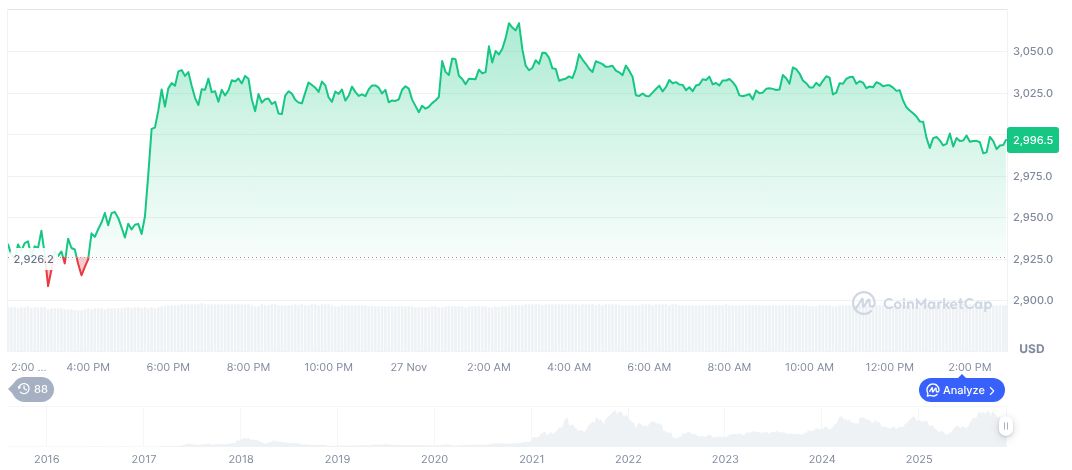
As of November 27, 2025, Ethereum trades at $3,015.51 with a market cap of 363.96 billion USD, holding an 11.69% market dominance. Recent months have seen Ethereum's price fluctuating, showing a 6.30% rise in seven days despite a 31.00% decline over 90 days. Current developments in the UK may further influence its market trajectory.
This proposal could set a global precedent in crypto tax policy, offering a balanced approach amid growing industry complexity. DeFi's evolving nature requires forward-thinking in regulation, possibly leading to more aligned international tax standards. Bold moves like these can attract additional investments and innovation in the sector.