



Key Developments in Crypto Markets Following CPI Announcement
The U.S. seasonally adjusted core Consumer Price Index (CPI) for September increased by 0.2%, a figure that fell below market expectations of 0.3%. This deviation from anticipated economic indicators is a focal point for its potential impact on cryptocurrency markets.
This variance in CPI figures may influence prevailing market trends. Specifically, it could affect investor behavior and the valuations of various tokens within the crypto sector, potentially leading to an increase in market volatility.
Crypto Volatility Anticipated as CPI Misses Forecast
The U.S. September core CPI reported a 0.2% increase, which was lower than the anticipated 0.3%. This rate of increase was the same as the previous month, suggesting that economic forecasts might require recalibrations.
While public responses from prominent influencers, including ChainCatcher, have not yet been observed on social media platforms, significant inflows into Binance indicate active investor engagement. This activity, occurring amidst the unchanged CPI figure, reflects a possible anticipation of proactive market adjustments.
"ChainCatcher has become one of the preferred information sources for more and more investors, practitioners, and developers."
Binance Sees Significant USDT Inflows Post-CPI Announcement
Did you know? Past discrepancies between U.S. CPI expectations and actual reports have historically prompted swift reactions in crypto markets. These events have often led to notable spikes in trading activity, similar to the recent surge in inflows observed on Binance.
According to data, SynFutures (F) has demonstrated significant trading activity, recording a 13.60% increase in the last 24 hours. The cryptocurrency currently has a market capitalization of 67,747,878.00, with its 24-hour trading volume reaching 641,456,420.00. The fully diluted market capitalization stands at 249,851,588.00.
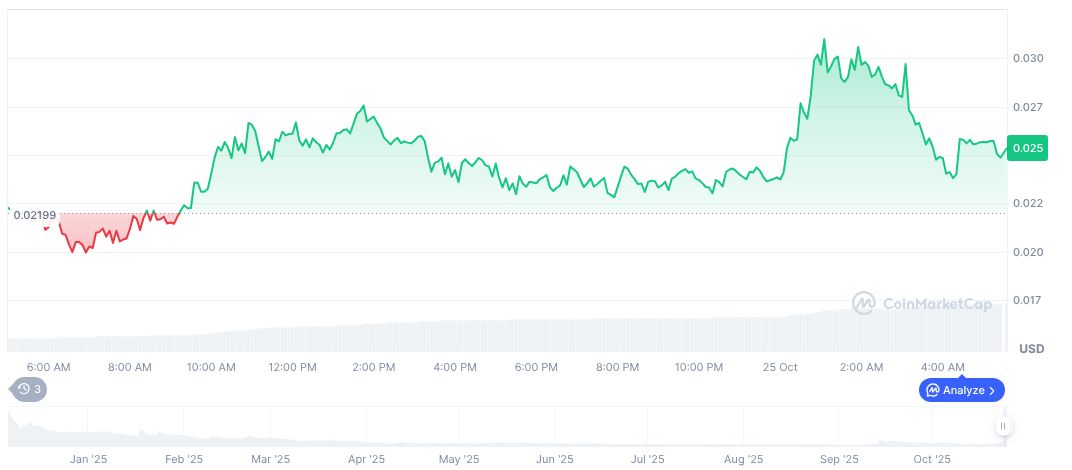
Financial insights suggest that the underperformance of the CPI could prompt altered fiscal strategies from regulatory bodies, potentially leading to possible adjustments in financial policies.