



Market Overview
On November 6, U.S. equities experienced a decline, with the Nasdaq dropping by 1%, the S&P 500 by 0.68%, and the Dow Jones by 0.65%. This downturn coincided with significant volatility in the cryptocurrency market.
The synchronized decline across major financial markets highlights the impact of liquidity stress, potentially stemming from government actions, which is intensifying fears and triggering major on-chain liquidations and outflows.
Financial Pressure and Market Behavior
U.S. stock indices opened lower on November 6, with the Nasdaq falling 1%, and similar declines observed in the S&P 500 and Dow Jones. This movement correlated with a significant downturn in the cryptocurrency market.
The simultaneous declines in both the equities and crypto sectors underscore increased market volatility, influenced by current macroeconomic conditions that are straining liquidity.
Community sentiment reflects concerns regarding the current market atmosphere. The Fear & Greed Index registered at 23, indicating extreme fear. No official statements from key leaders were available at the time of reporting.
Bitcoin's Performance Amidst Market Strain
Did you know? Similar synchronized sell-offs have occurred during major fiscal shocks, such as the March 2020 pandemic crash. This illustrates a recurring theme in market behavior where macroeconomic stress significantly influences both the equities and crypto sectors.
Bitcoin's price fell 2.06% in the 24 hours leading up to November 6, settling at $101,316.29. This decline contributed to a seven-day decrease of 6.06%. Bitcoin's market capitalization stood at $2 trillion, with a 24-hour trading volume of $62.37 billion. These figures reflect a broader negative trend observed in the broader cryptocurrency market.
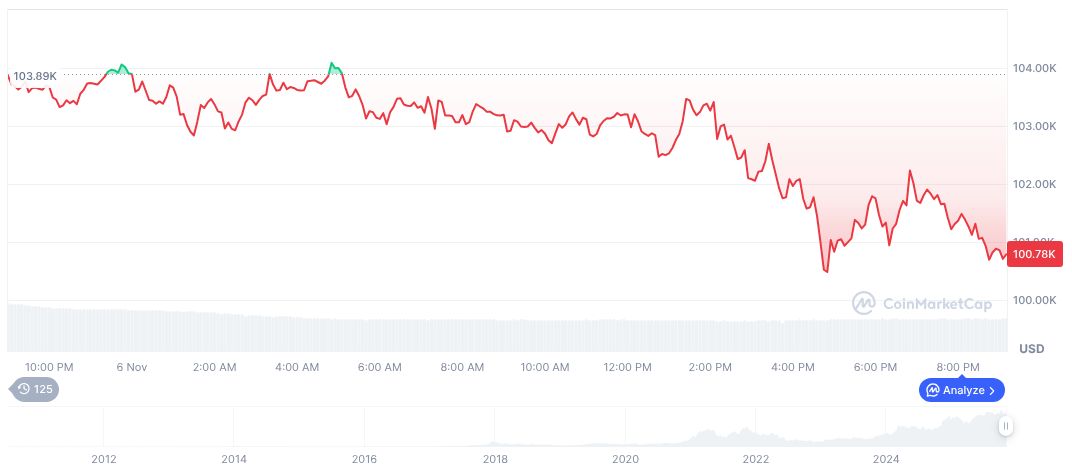
Current market conditions suggest a prolonged period of heightened volatility. Liquidity constraints and regulatory uncertainty may persist, potentially influencing future asset performance in both traditional and crypto markets.