



Key Scaling Initiatives for Ethereum in 2025
Vitalik Buterin, a co-founder of Ethereum, has outlined a strategy for scaling the network in 2025. This plan centers on increasing the block gas limit and restructuring gas costs for operations that are currently inefficient. The primary objective of this initiative is to enhance the network's processing efficiency while ensuring that security and interoperability remain paramount. Buterin also emphasized a continued focus on reducing protocol volatility.
These anticipated changes are expected to significantly alter transaction costs and improve overall throughput. The impact will be felt by both direct Ethereum transactions and the various Layer 2 scaling solutions built upon it. Buterin's approach integrates improvements at both Layer 1 and Layer 2 to maintain the network's core principle of decentralization. A key component of this strategy is the targeted gas repricing, which aims to incentivize developers to write more efficient code. This, in turn, will optimize the use of available block space.
The community's reaction to these proposals has been largely positive, with many developers actively participating in discussions regarding the potential ramifications. Industry experts have highlighted the critical role these adjustments will play in managing Ethereum's continued scaling and its commitment to decentralization. During Devconnect, Buterin affirmed this strategy, stating, "More and more ossification over time is good for Ethereum… the protocol now sees a much lower rate of surprises."
Historical Context of Ethereum's Gas Model and Market Dynamics
Historically, adjustments to Ethereum's gas limit have presented challenges related to decentralization, underscoring the delicate balance required between increasing transaction throughput and maintaining protocol stability. This historical context is crucial for understanding the implications of current scaling proposals.
Ethereum (ETH) is currently priced at $2,929.91, with a market capitalization of $353.63 billion. In the past 24 hours, the cryptocurrency has seen a 0.72% increase, though it has experienced a 36.02% decrease over the last 90 days. Trading volume has declined by 24.55% in the last day.
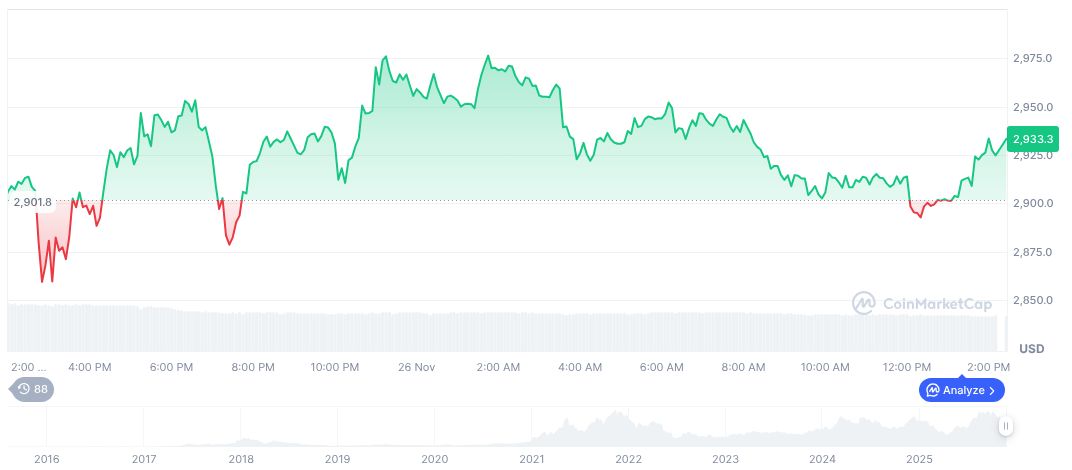
Analysts suggest that the proposed operational adjustments will have a significant effect on transaction efficiency and the network's overall scalability. In the past, similar changes have led to shifts in Total Value Locked (TVL), with capital moving from Layer 1 solutions to Layer 2 mandates. This refined focus on operational efficiency could contribute to stabilizing network operations and sustaining ongoing decentralization efforts.