


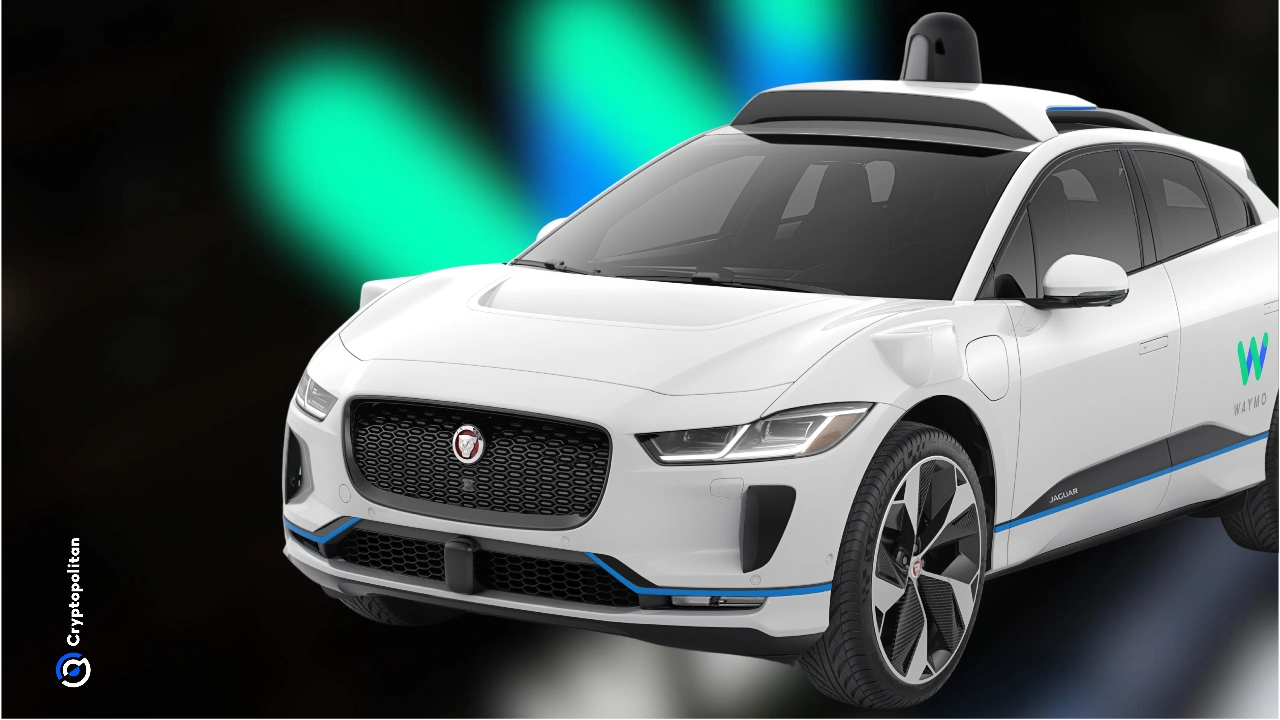
Waymo's self-driving taxis, once characterized by their patient adherence to every stop sign, are now navigating urban roads with the agility of seasoned cab drivers, signaling a significant evolution in autonomous vehicle behavior.
In September, two white Jaguar sedans were observed weaving through a two-lane tunnel, executing synchronized lane changes. These vehicles, belonging to Waymo, were previously known for their exceptionally cautious driving style.
Sophia Yen, an entrepreneur who was driving behind them, expressed her astonishment. "I had never seen anyone switch lanes in that tunnel," she told the Wall Street Journal. "It’s driving more like a taxi driver—an aggressive, New York taxi driver."
This transformation represents a stark departure from the vehicles' earlier operational approach. For years, Waymo vehicles were recognized as the most courteous drivers in San Francisco, consistently yielding at stop signs. The robot cars now prioritize their own progress, exhibiting a willingness to bend certain traffic rules, demonstrating less patience with pedestrians, and operating under the principle that excessive politeness is not conducive to efficient city traffic flow.
Waymo's Traffic Violations and Safety Incidents Emerge
Evidence of Waymo's evolving driving behavior has surfaced through various incidents. In September, police in San Bruno, California, stopped a Waymo vehicle after observing it execute an illegal U-turn. The same month, one of the company's vehicles was involved in an incident where it struck and killed a well-known cat in San Francisco's Mission neighborhood. More recently, on a Thursday, a Waymo at a four-way stop accelerated alongside another vehicle instead of waiting its turn, and moments later, changed lanes without signaling.
In a particularly tense situation captured on video, a Waymo vehicle drove dangerously close to a police felony stop in downtown Los Angeles early one Sunday morning, occurring shortly after a vehicle chase.
The driverless car made a left turn, passing within feet of a white truck that police had pulled over at the intersection. The incident unfolded with several police cruisers displaying flashing lights and the suspected driver lying face down on the street.
The Los Angeles Police Department reported that the incident occurred around 3:40 a.m. at Broadway and First Street, an area adjacent to Times Mirror Square and the city's federal courthouse.
According to the department, the vehicle's proximity to the traffic stop and its failure to navigate around it did not alter the officers' handling of the situation. The intersection was temporarily closed by police afterward, a standard procedure in such circumstances.
The police department's Traffic Coordination Division is responsible for developing protocols for driverless vehicles. It remained unclear at the time whether this specific incident would trigger a formal investigation. The division maintains regular communication with Waymo as the technology continues to advance.
Jennifer Jeffries, a 54-year-old resident of Pacific Heights, has accumulated nearly 3,000 minutes of ride time in Waymo vehicles since May 2024. Previously, she avoided using them for downtown journeys due to their perceived inability to handle complex or tight situations. She recalled an instance where she was delayed for several minutes because a Waymo vehicle was waiting behind a double-parked car undergoing furniture delivery.
Currently, Jeffries expresses no reservations about using Waymo for any destination and believes their driving performance is comparable to, if not better than, human rideshare drivers.
"They will go around a car or get closer to a car than a human driver would," Jeffries stated. "Sometimes I’ll be in the back seat and I’ll be like, ‘Ooh that was really close.'"
However, she has noted one recurring issue. Similar to some human rideshare drivers, Waymo vehicles occasionally stop across the street from the designated pickup address, an aspect she finds inconvenient.
Waymo Defends "Confidently Assertive" Strategy
The company has actively worked to develop vehicles that exhibit "confidently assertive" driving behavior, as explained by Chris Ludwick, a senior director at Waymo, a subsidiary of Alphabet, Google's parent company. He emphasized that this shift was "really necessary for us to actually scale this up in San Francisco, especially because of how busy it gets."
Ludwick elaborated that an overly passive approach by the vehicles can lead to operational inefficiencies and problems. He further stated that regular software updates are implemented to prevent the vehicles from becoming problematic or causing disruptions.
While Ludwick declined to comment on specific instances of rule violations, he asserted that the vehicles are programmed to make practical decisions that involve balancing various priorities.
"The driver is designed to respect the rules of the road," Ludwick commented. "However, sometimes this is a nuanced topic and road rules can even conflict with each other."