


Evolving Institutional Landscape
As institutional interest in cryptocurrencies booms, the market is clearly entering a more mature phase – one that’s defined less by speculation and increasingly by integration. Following a period of caution after high-profile market failures such as FTX, Celsius, and Luna, traditional players including hedge funds, banks, and asset managers have seemingly re-evaluated their approach when it comes to crypto exposure.
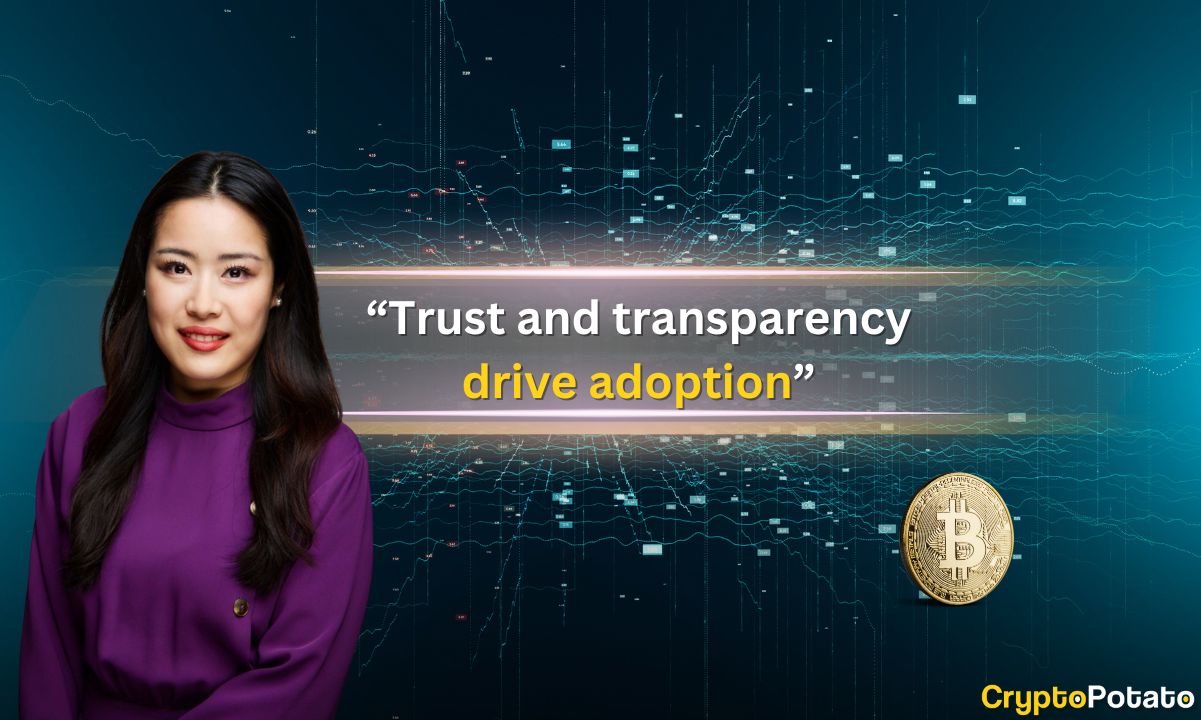
In an interview, Yoyee Wang, the head of Bybit’s Business-to-business Unit (BBU), discusses how institutional participation is evolving, the renewed emphasis on trust and transparency, and the emerging collaboration between traditional finance and the digital asset sector. This conversation offers insights into what will shape further institutional involvement as the end of 2025 draws near.
Shifting Institutional Appetite and Strategies
Over the past year, institutional participation in crypto has evolved alongside shifting macroeconomic conditions and regulatory clarity in key markets. Yoyee Wang observes a growing institutional appetite from two main avenues. The first includes new entrants such as trading firms, hedge funds, asset managers, and wealth management companies looking to expand their offerings as their clients show increasing interest in crypto investments.
Wang highlights that even more interesting is the second group: institutions from the previous adoption wave that had pulled back after the FTX collapse. Many of these entities are now returning to the market or significantly increasing their exposure to crypto.
Prioritizing Trust and Transparency: Bybit's B2B Approach
Trust and transparency remain critical for institutional adoption. Bybit’s B2B unit addresses these priorities through robust solutions in custody, liquidity management, and compliance infrastructure. Custody is a primary business focus, with deep integrations across a full span of custodial partners to meet diverse client preferences. These include crypto-native custodians like Copper and Fireblocks, bank-backed solutions from UBS, Qatar National Bank, and Sygnum Bank, as well as hybrid providers like Zodia.
For liquidity management, Bybit brings best practices from traditional finance (TradFi) to its clients, offering features such as cross-margining, leverage, and near real-time settlement. This ensures optimal access to Bybit’s trading liquidity and seamless access to clients' asset liquidity, irrespective of where they are held or in what forms—crypto, fiat, or even T-bills.
On the compliance front, Bybit is fully committed to meeting and exceeding regulatory standards across jurisdictions. The company holds licenses and registrations in multiple key markets, including approvals from the Securities and Commodities Authority (SCA) in the UAE, MiCAR from Austria’s FMA, and full registrations with FIU in India. Bybit also implements robust AML and KYC frameworks, maintains transparent reporting, and collaborates closely with regulators and institutional partners to ensure its infrastructure is secure, compliant, and future-ready, providing institutions with the expected trust and assurance.
Collaboration Between Traditional Finance and Digital Assets
With an extensive background in traditional banking and asset management, Yoyee Wang believes that any form of collaboration must create value for all parties involved. By examining the demands, needs, or challenges that traditional finance can solve for digital assets, and vice versa, the potential avenues for collaboration become much clearer.
Tokenization and Real-World Assets (RWAs)
Tokenization is widely seen as the next frontier for blockchain adoption. Bybit has already offered a comprehensive suite of solutions designed to help RWA projects launch, scale, and integrate, enabling them to expand use cases, build Assets Under Management (AUM), and enhance profitability.
Key barriers to institutional scale in RWA tokenization are similar to those facing broader crypto adoption. In some regions, regulatory clarity remains vague, making large-scale institutional participation difficult. Additionally, the liquidity and standardization of the underlying assets behind RWAs are still evolving, which can constrain project growth potential and slow institutional adoption.
Evolving Infrastructure for Enterprise-Level Demands
Bybit has positioned itself as a reliable partner for B2B and institutional clients by evolving its infrastructure. The company's principle is to provide the most advanced trading features, tools, and infrastructure to its clients. For Bybit institutional clients using a Unified Trading Account (UTA), they can utilize the “GET wallet balance” RESTful endpoint or subscribe to the WebSocket “wallet” topic to obtain the UTA’s accountIMRate (Initial Margin Rate) and accountMMRate (Maintenance Margin Rate) to monitor the account’s risk level.
API documentation for wallet balance and WebSocket subscriptions is available.
Information on the formula for Initial Margin Rate and Maintenance Margin Rate is also provided.
This documentation explains the UTA liquidation rules, noting that liquidation is triggered when the account’s Maintenance Margin Rate (MMR) reaches 100%.
The Future of Institutional Adoption
Looking toward 2025 and beyond, Yoyee Wang believes the next stage of institutional adoption will be defined by a shift in focus from the mere ownership or allocation of crypto to its integration as a more foundational element within business models, operations, and balance sheets. The distinction between crypto as an "other side" of traditional finance or as an alternative asset will diminish, with crypto being viewed simply as an asset.
The focus is shifting from mere ownership or allocation of crypto and digital assets to their integration as foundational elements within business models, operations, product lines, and balance sheets.