


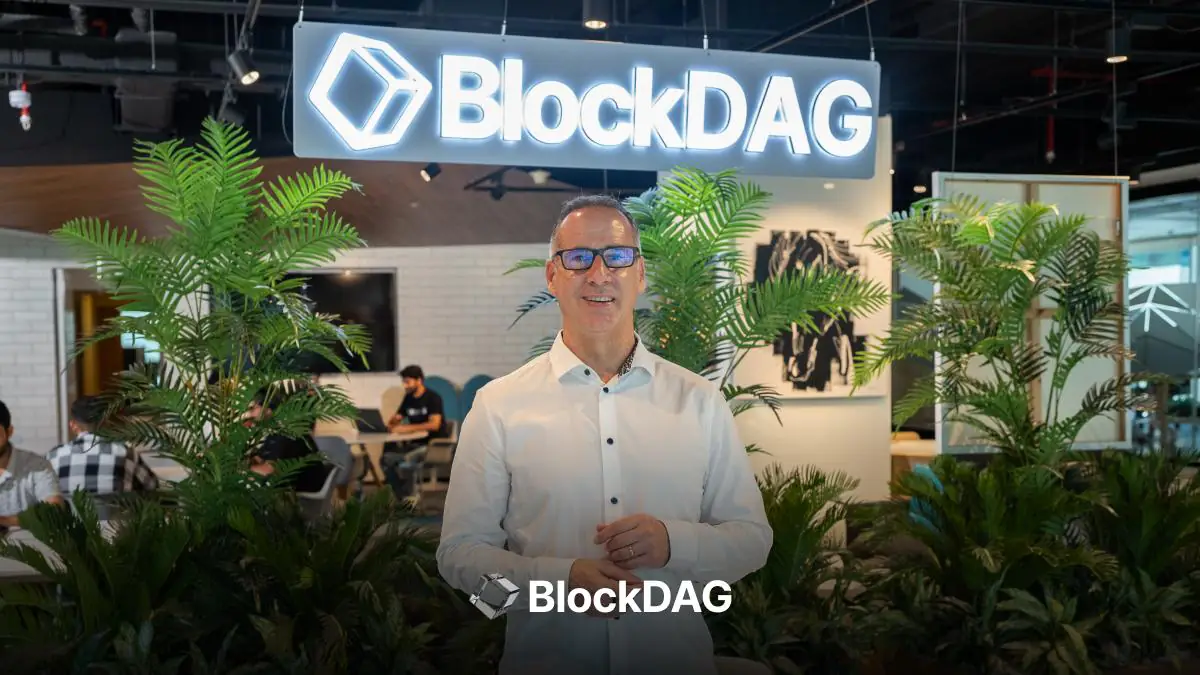
In the realm of cryptocurrency, the terms "founder" and "owner" are often used interchangeably, yet they carry significantly different implications, particularly within decentralized environments. For BlockDAG, Antony Turner serves as its founder, providing vision and structural leadership, but he does not operate as a sole legal or governance "owner."
This distinction is crucial for developers evaluating where control resides and how decisions are made. Leadership in blockchain technology has evolved beyond mere technical innovation; it now encompasses transparency, accountability, and process integrity.
As BlockDAG (BDAG) progresses through its Awakening Testnet and beyond, this model of founder-led, yet ownership-decentralized, is quietly emerging as a standard worth closer examination.
Founder vs. Owner: Defining Leadership in Blockchain
The term "owner" is frequently encountered in crypto media, but its meaning can vary. In the context of BlockDAG, Antony Turner is identified as the founder and executive leader, a role confirmed by official BlockDAG communications and press coverage. He is not the legal owner of the protocol codebase in a corporate sense, nor does he possess unilateral governance rights over the blockchain infrastructure once decentralized consensus is deployed. In this framework, "ownership" refers to conceptual and organizational leadership, rather than central control.
This difference is significant for developers. While protocol governance is intended to be distributed, executive leadership plays a vital role in fostering an environment where contributions are recognized, audits are welcomed, and documentation is prioritized. Turner's strategy, particularly since the Awakening Testnet phase, has focused on these developer-facing systems, making internal processes transparent and accessible to those building on or around the platform.
Open Documentation and the Awakening Testnet
The Awakening Testnet, introduced during the early stages of the roadmap, served as a foundational layer for validating BlockDAG's architecture. Instead of obscuring technical choices or restricting testnet data to private development teams, BlockDAG adopted a structured approach to public documentation. GitHub repositories, changelogs, and endpoint references were published in sync with testnet updates, enabling developers to observe system behavior in real-time and test deployment paths without encountering bottlenecks.
Turner's contribution in this area was not to write the documentation himself, but to institutionalize its availability. Under his guidance, the product and development teams were tasked with treating documentation as a live system, not an afterthought. This initiative provided external developers with a more accurate understanding of the platform's capabilities while simultaneously reducing the internal support load, signaling operational maturity.
For developers accustomed to opaque blockchain protocols or rushed documentation, BlockDAG's approach offered a credible alternative. Turner's emphasis on visibility equipped QA teams with the necessary support to triage feedback, resolve edge-case issues, and communicate timelines accurately.
This commitment to transparency extended beyond the testnet itself. As the project advanced through its roadmap, BlockDAG, currently in Batch 32 priced at $0.005, has raised nearly $435 million in presale, with only 4.56 billion coins remaining for the next 10 batches. Maintaining the same dedication to openness that characterizes its developer processes, the team has outlined a clear timeline toward its next milestone, with the official launch and listing scheduled for February 10, 2026.
Quality Assurance and Audit Visibility
Beyond documentation, Turner's leadership prioritized the visibility of the quality assurance (QA) process. This included testnet health reports, cross-team validation routines, and established escalation paths for community-reported issues. Rather than treating QA as an internal, closed-door function, BlockDAG made its regression testing cycles visible to its growing community of testers.
Concurrently, the strategy for engaging third-party audits evolved. Instead of commissioning audits after the launch, a common but reactive practice in the crypto space, Turner emphasized early audit engagement. This proactive approach was reflected in the block explorer's audit logs, smart contract checkpoints, and validator uptime metrics. In interviews and internal updates, the leadership team attributed this foresight to a clear directive: if a bug could be discovered by the community before the audit team, the system was not sufficiently open.
This alignment of audit planning with developer trust further validated Turner's transparency model. Developers did not need to rely on future fixes; they could review QA schedules, contribute suggestions, and receive confirmation through public logs.
Why Developer Transparency Is a Leadership Standard, Not a Marketing Tool
Transparency is often mistakenly perceived as a public relations tactic. In BlockDAG's case, transparency is intrinsically woven into its leadership workflows. Antony Turner's strategic contribution lies in mandating clarity where blockchain protocols frequently obscure information behind complexity. Developers not only want to understand what is being built but also how decisions are made, who is accountable for delivery, and where they can provide feedback.
Turner's framework for developer transparency operates on three fundamental layers:
- •Documentation Access: Providing timely, readable, and synchronized documentation that reflects the platform's current development state.
- •QA and Audit Workflow: Publishing clear paths for validation, making outcomes visible, and fostering long-term engagement with these processes.
- •Team Accountability: Ensuring clear communication regarding roles and responsibilities, particularly between the CTO, Jeremy Harkness (responsible for technical execution), and Turner (providing strategic oversight).
Collectively, these layers form a robust developer engagement structure. This structure builds trust not through slogans or marketing campaigns, but through the visibility of its processes. Developers are not left to guess about ownership or responsibilities; the systems themselves provide clarity.
The Case for Process-First Transparency in Blockchain Projects
BlockDAG's developer ecosystem continues to expand, supported by the structural clarity established by its leadership. With nearly $435 million raised in presale, Batch 32 priced at $0.005, and just 4.56 billion coins remaining, the network has experienced rapid growth without compromising process maturity. Developers entering the ecosystem benefit not from vague promises, but from a framework where transparency is a core policy.
Antony Turner's strategy as founder is not to micromanage code or promote hype; instead, it is to institutionalize systems that keep developers informed, engaged, and respected. From the Awakening Testnet onward, this approach has effectively reduced technical debt, improved onboarding efficiency, and laid the groundwork for sustainable developer growth. For projects aiming to build long-term ecosystem trust, this model offers a valuable example.