


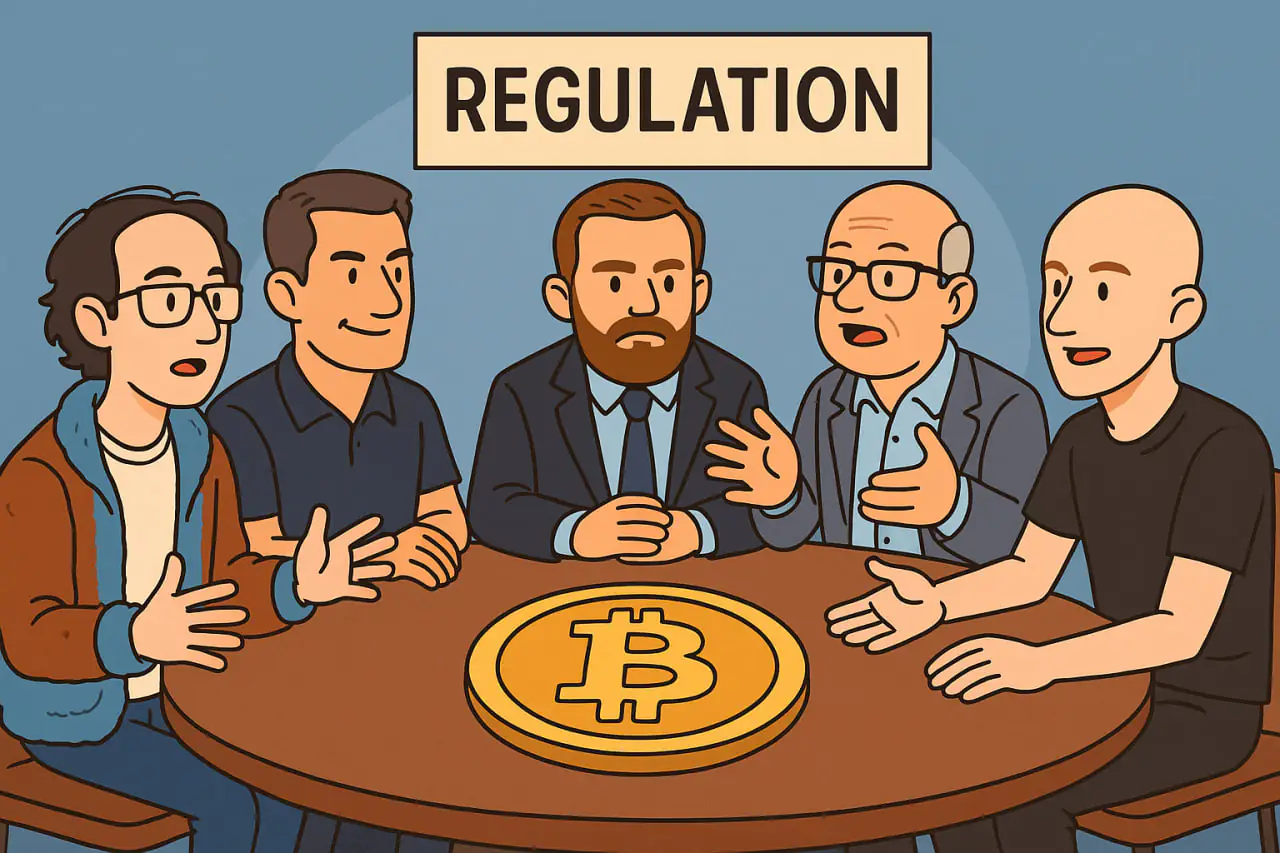
Crypto market analyst Michaël van de Poppe argues that blocking the CLARITY Act in its current form may have spared the industry from long-term damage. Rather than delivering clarity, he says the draft risked locking restrictive rules into law at a moment when crypto markets are still evolving.
In that context, the bill’s loss of momentum is being interpreted as a reset rather than a defeat.
Coinbase Pulls the Plug
The legislative push unraveled after Coinbase withdrew its backing, a move that carried significant weight in Washington. The exchange’s CEO, Brian Armstrong, publicly outlined why the proposal had become unacceptable to the industry.
His concerns went beyond technical details. The draft included provisions that would effectively shut down tokenized equities, block yield-bearing stablecoins, and allow broad government access to user data on decentralized finance platforms. For many in the sector, those measures crossed a red line.
A Warning from Past Regulation
Van de Poppe compares the situation to Europe’s experience with crypto rulemaking. The EU’s Markets in Crypto-Assets framework was not passed quickly or cleanly. It took multiple rounds of negotiation, revisions, and political compromise before regulators arrived at a workable final version.
In his view, the US is now being forced into a similar process. That delay, while frustrating, prevents lawmakers from cementing rules that could stifle innovation for years.
Why Alignment Matters More Than Speed
Passing a federal crypto market structure law remains a central goal for the industry and its allies in Congress. Clear rules are seen as essential for scaling onchain finance in the US. But van de Poppe argues that speed should not come at the expense of alignment.
With the bill stalled, regulators, lawmakers, and industry leaders are now under pressure to reopen negotiations and produce a framework that supports growth rather than restricts it.
For markets, that distinction matters. A bad law can weigh on sentiment far longer than no law at all. From that perspective, the collapse of the CLARITY Act may be less of a setback – and more of a necessary pause before a better version emerges.