



The cryptocurrency market is demonstrating strong momentum as it enters 2026. XRP has experienced a significant surge, trading at $2.08 after a 25% increase in the first week of January. Meanwhile, Ethereum is maintaining its position around $3,100, preparing for substantial network upgrades. While both assets are performing well, their considerable market capitalizations suggest that achieving 10x returns is becoming increasingly improbable.
However, an opportunity exists to potentially capture the kind of exponential growth seen by Bitcoin in 2011 or Ethereum in 2014. Zero Knowledge Proof (ZKP) is establishing the groundwork for what is being termed the "Privacy Supercycle" of 2026, aiming to resolve the Transparency Paradox that currently hinders widespread institutional adoption of blockchain technology.

With an initial investment of $100 million dedicated to a fully operational 4-layer network prior to its launch, ZKP distinguishes itself from typical crypto projects. It represents a privacy revolution that major institutions are actively anticipating. Early participants in its presale are positioning themselves for the possibility of substantial returns, a level of growth that established cryptocurrencies are no longer capable of delivering.
Zero Knowledge Proof: Revolutionizing Blockchain Privacy Infrastructure
Zero Knowledge Proof (ZKP) is more than just a new blockchain project; it embodies a fully operational network valued at $100 million, launched with complete infrastructure in place before any investor capital was raised. In contrast to many blockchain initiatives that depend on future development plans outlined in roadmaps and whitepapers, ZKP already features a 4-layer blockchain, specialized hardware devices known as Proof Pods, and a comprehensive ecosystem ready for deployment. This forward-thinking strategy has attracted considerable attention from significant investors who are cautious about projects that fail to materialize on their promises.
ZKP addresses a core obstacle to blockchain adoption: privacy. On public ledgers like Bitcoin and Ethereum, every transaction is entirely transparent. This transparency presents a major impediment for institutions that require the efficiency of blockchain but cannot afford to expose sensitive financial data publicly. This challenge, referred to as the Transparency Paradox, has prevented trillions of dollars from entering the cryptocurrency market.
Industry analysts are now identifying ZKP as the premier cryptocurrency solution for institutions seeking to conduct confidential transactions on public infrastructure. By employing zero-knowledge technology, ZKP allows for transaction verification without disclosing the underlying data, effectively solving the privacy concerns faced by many institutions.
Experts forecast ZKP's potential for significant returns, driven by its capacity to address real-world institutional needs rather than relying solely on retail speculation. The presale auction model for ZKP has attracted participation levels comparable to the 2017 ICO boom, with an ever-increasing daily auction pool. Investing in ZKP at this stage positions individuals at the forefront of the privacy infrastructure that will be essential for major institutions in the coming decade.
XRP Price Soars in 2026 with ETF Growth Driving Momentum
XRP has commenced 2026 with remarkable performance, reaching $2.08 following an impressive 25% rally within the first week of January. The asset briefly touched $2.40 earlier in the week before experiencing a minor correction, outperforming both Bitcoin and Ethereum during the same period. XRP's current market capitalization stands at $130.54 billion, with 57.45 billion tokens in circulation. CNBC has recognized XRP as the "hottest crypto trade" of early 2026, highlighting its superior performance relative to other established cryptocurrencies.
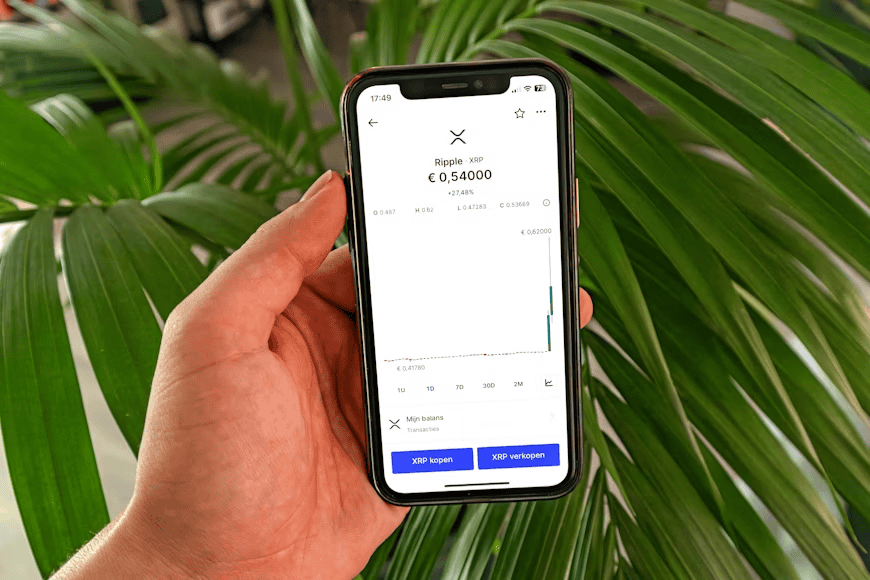
The primary catalyst for this surge is institutional demand, particularly channeled through spot XRP Exchange-Traded Funds (ETFs). These products have accumulated $1.3 billion in assets within just 50 days of their launch in mid-November 2025. They have recorded an exceptional 43 consecutive days of positive inflows and no outflows. In December alone, $483 million flowed into XRP ETFs, while Bitcoin and Ethereum experienced notable outflows during the same month.
Ethereum Price Poised for Growth Ahead of Network Upgrades
Ethereum is currently priced at $3,109, with a market capitalization of $404.05 billion and a 24-hour trading volume of $7.94 billion. The token is trading within a range of $3,050 to $3,150, having successfully maintained the critical $3,000 support level. Technical indicators suggest Ethereum is in a neutral position, with a Relative Strength Index (RSI) of 55.93, indicating potential for upward movement without entering overbought territory. Key resistance levels are identified between $3,200 and $3,300, while support is firmly established at $3,000 and $2,850.
As Ethereum continues to lead in decentralized finance and smart contract applications, analysts project its price to range between $4,000 and $5,071 by the close of 2026. This growth is expected to be propelled by upcoming network upgrades and sustained institutional adoption. With the market's current Fear & Greed Index at 29 (Fear), many investors may be underestimating Ethereum's long-term potential, presenting a timely opportunity to consider its growth trajectory as it prepares for significant enhancements.
Final Take
The current price of XRP at $2.08 and Ethereum's stable consolidation indicate healthy market activity. However, given their substantial market caps, the likelihood of achieving explosive returns such as 100x or 500x is minimal. These are established cryptocurrencies that offer stability rather than the potential for life-altering wealth accumulation.
Zero Knowledge Proof (ZKP) presents a distinct opportunity. While XRP and Ethereum address past and present challenges, ZKP is actively developing the privacy infrastructure that institutions require today. With projected returns ranging from 500x to 3000x and presale auction participation levels not seen since 2017, the 2026 Privacy Supercycle is emerging. This is an opportunity to invest early before the entry price increases further, representing a significant chance for early adopters.