


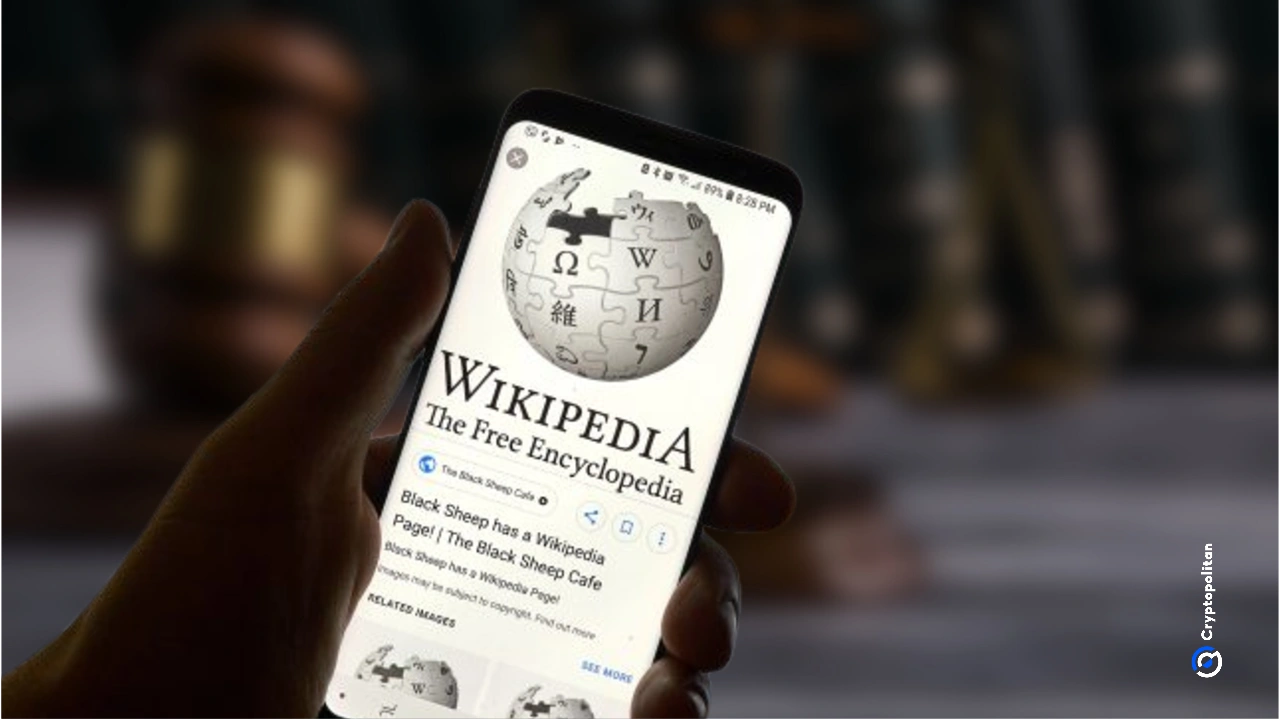
Wikipedia co-founder Jimmy Wales has stated that the nonprofit organization behind the online encyclopedia is actively pursuing more licensing agreements with artificial intelligence companies. This initiative comes as a surge in automated AI bots is placing significant strain on Wikipedia's infrastructure.
Wales explained that AI companies utilize Wikipedia's freely accessible knowledge base to train their large language models (LLMs). He highlighted that high-volume AI bots extensively crawl the entire website, creating substantial technical and financial burdens for the platform.
“The AI bots … are going across the entirety of the site … so we have to have more servers, we have to have more RAM and memory for caching that, and that costs us a disproportionate amount,” he elaborated.
Wales has observed that the intensive usage by AI bots compels Wikipedia to expand its server capacity, increase RAM, and enhance caching mechanisms, all of which incur significant costs. Although the platform is free for individual users, the high-volume, automated access by for-profit AI firms presents a distinct challenge. The nonprofit previously entered into a licensing agreement with Google in 2022 and is currently in negotiations for similar arrangements with other companies.
The Wikimedia Foundation, which operates Wikipedia, relies heavily on modest public donations and the efforts of volunteer editors. This operational model was not designed to subsidize the extensive development of for-profit AI technologies. Wales asserted that it is inequitable for contributors and donors to bear the costs associated with commercial AI companies leveraging Wikipedia's content.
Wikipedia Warns of Unsustainable Burden from AI Bots
Wikipedia has issued warnings regarding the unsustainable burden imposed by AI bots, noting that the demands on its servers have escalated sharply in recent months. Automated bots have significantly increased traffic, particularly through multimedia downloads, necessitating substantial investments in infrastructure by the nonprofit.
A substantial portion of this traffic originates from AI companies scraping content for the purpose of training their models, rather than from human users. In 2022, the Wikimedia Foundation introduced Wikimedia Enterprise, a paid commercial service designed to provide scaled access to its core content and equip platform users with essential tools and resources.
This service aims to alleviate pressure on Wikipedia's live website while supplying AI developers with the data required to improve their models. Wales has encouraged AI companies to utilize this paid option instead of scraping the public site.
Wales indicated that if companies fail to adhere to these technical measures, restrictions on bot access, potentially through tools like AI Crawl Control, might be implemented. There is an ongoing discussion with businesses concerning the role of public or commercial AI in managing personal data, which users now possess on a scale that challenges the legal right to free, transparent knowledge and the needs of both private and public sectors.
Given that an increasing proportion of AI processing relies heavily on large, publicly accessible datasets, Wikipedia is advocating for a fair approach that provides compensation to both the entities that maintain this data and the businesses that utilize it. Wikipedia remains committed to upholding its principle of neutrality.
Wikipedia Struggles to Maintain Neutrality Amid Global Conflicts
The website Wikipedia has operated for over two decades as a nonprofit entity managed by the Wikimedia Foundation. Its operational model is built upon a vast network of volunteer editors who dedicate their time to creating, editing, and proofreading content.
Public donations are crucial to ensuring that Wikipedia remains accessible to everyone, everywhere, irrespective of their financial resources or geographical location. Wikipedia, a widely recognized international website and encyclopedia, has also faced challenges in maintaining neutrality when presented with various information sources.
This challenge becomes particularly acute when reporting in detail on sensitive political issues, social movements, or armed conflicts occurring globally. Wales acknowledged that while most Wikipedia editors are not activists themselves, personal preferences can inadvertently influence how topics are covered.
However, he expressed confidence in the editing community, stating that editors generally manage to uphold Wikipedia's values of fairness and accuracy, even under significant pressure. The platform's commitment to neutrality is further reinforced through its community policies, peer review processes, and dispute resolution mechanisms, among other measures.
Concurrently, the continuous reliance on volunteers and donations underscores the inherent vulnerabilities of the system. As the platform confronts new pressures, including the escalating use of its content by AI companies, it becomes increasingly vital to ensure that the platform's core values—neutrality, accuracy, and free access—remain unchanged.